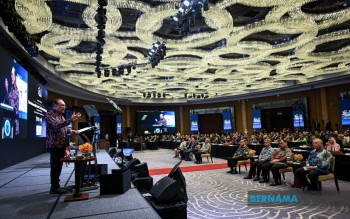
Prime Minister Datuk Seri Anwar Ibrahim has reiterated Malaysia's commitment to establishing a sovereign cloud infrastructure as the country grapples with balancing data security concerns against the realities of global digital interdependence. Speaking at the 39th Asia-Pacific Roundtable in Kuala Lumpur, Anwar articulated the strategic imperative for Southeast Asian nations to exercise greater autonomy over their digital assets and information systems as the region becomes increasingly reliant on critical technological infrastructure controlled by foreign entities.
The Prime Minister's remarks point to growing anxieties across the region about data sovereignty, particularly in light of international legislation that permits foreign governments and corporations to access information stored on their servers regardless of where that data originated. Anwar specifically referenced the United States Cloud Act, which has created diplomatic tensions by enabling American companies and authorities to retrieve data across borders. He acknowledged that while such legal frameworks represent the sovereign decisions of other nations, Malaysia and its Southeast Asian neighbours must take proactive steps to insulate their most sensitive information from potential external access or interference.
Anwar framed the sovereign cloud concept as an ingenious middle path that allows Malaysia to fortify protections around critical security infrastructure and personal citizen data through dedicated digital firewalls and localized storage systems, while simultaneously maintaining openness to foreign investment and technological collaboration. This dual approach reflects the pragmatic reality that complete digital isolation is neither feasible nor desirable for a nation aspiring to compete in the global economy. Rather than retreating from international engagement, Malaysia would selectively route its most sensitive data through domestically controlled systems while permitting continued foreign participation in less critical digital sectors.
The proposal comes at a particularly consequential moment for Southeast Asia, as regional governments increasingly recognize that digital infrastructure has become as strategically important as physical borders. Countries including Singapore, Indonesia, and Thailand have undertaken similar initiatives to establish national cloud ecosystems. Malaysia's move would signal to both domestic constituencies and international partners that the government takes seriously its responsibility to protect citizen privacy and national security interests. Such infrastructure also creates opportunities for Malaysian technology companies to develop expertise in cloud services, potentially positioning the nation as a regional hub for secure data management.
Yet Anwar's characterization of the sovereign cloud initiative also reveals the inherent tensions Southeast Asian policymakers face when navigating great power competition and technological nationalism. The Prime Minister was careful to emphasize that establishing a sovereign cloud does not signal Malaysia's rejection of global digital cooperation or a retreat into protectionism. Instead, he framed it as a necessary adaptation to an interconnected world where openness and security must coexist, albeit imperfectly. This language suggests an awareness that overly restrictive data policies could deter the foreign investment that Malaysia desperately needs to drive economic development and create employment.
Beyond data infrastructure, Anwar used the forum to address complementary concerns about how Malaysia and ASEAN should exercise agency within a digital ecosystem increasingly shaped by powerful external actors. He highlighted the political, economic, personal, and sexual abuses that flourish on social media platforms operating under minimal regulatory oversight. The Prime Minister argued that democratic governments have a legitimate responsibility to establish safeguards protecting their citizens, particularly young people vulnerable to online exploitation and manipulation. This framing positions data sovereignty not merely as a technical or geopolitical issue but as a matter of citizen protection and social wellbeing.
Anwar's comments also underscored Malaysia's broader strategic positioning in an era of intensifying great power competition. He reaffirmed Malaysia's openness to investments from the United States, China, and Germany, signalling that the country intends to benefit from technological contributions across the geopolitical spectrum rather than aligning exclusively with any single power. This calculated fence-sitting reflects ASEAN's traditional approach of maintaining relationships with all major powers while avoiding formal military alliances. For Malaysia specifically, such a posture maximizes opportunities for technology transfer and investment while limiting the diplomatic costs of choosing sides.
The Prime Minister contextualized Malaysia's data sovereignty initiative within the broader concept of ASEAN centrality, suggesting that regional cooperation on digital issues strengthens each member state's negotiating position vis-à-vis global technology giants and powerful governments. He emphasized that Malaysia's strength derives not from any pretence of great power status but rather from its integration within ASEAN's collective framework. This framing implies that a Malaysian sovereign cloud would be most effective as part of a coordinated regional approach, where ASEAN member states coordinate standards, best practices, and potentially share infrastructure to maximize security and efficiency.
Anwar's characterization of Malaysia as a small nation that derives its influence through regional collective action offers important perspective on how Southeast Asian states can maintain relevance in a world dominated by technological superpowers. Rather than pursuing middle-power status through individual technological achievement or military capability, Malaysia positions itself as a bridge-builder and consensus-seeker within ASEAN. This approach has historically enabled Malaysia to punch above its weight in international forums while avoiding the security dilemmas that arise when smaller nations attempt to compete directly with larger powers.
The sovereign cloud proposal also has implications for Malaysia's ongoing digital economy ambitions. As the government seeks to position the country as a Southeast Asian technology hub, investing in secure, nationally-controlled cloud infrastructure could attract multinational companies worried about data security and regulatory compliance. Companies operating in sensitive sectors such as finance, healthcare, and telecommunications might prefer to route operations through Malaysian facilities that offer both security and compliance with local regulations. This economic dimension adds another layer of justification beyond the security and sovereignty arguments Anwar articulated.
Looking forward, the implementation of a Malaysian sovereign cloud will require sustained investment, technical expertise, and potentially international partnerships with trusted technology providers. The government will need to balance the desire for complete data autonomy against the practical reality that truly independent cloud infrastructure requires world-class cybersecurity capabilities and redundancy systems that demand substantial capital expenditure. Malaysia may ultimately determine that selective partnerships with friendly nations or carefully vetted private sector actors provide the optimal combination of security, efficiency, and cost-effectiveness.
Anwar's emphasis on legitimate government safeguards against digital abuse also raises important questions about how Malaysia will implement such protections while respecting civil liberties and freedom of expression. The line between security and surveillance is notoriously difficult to police, and authoritarian regimes have historically exploited data protection rationales to justify repressive monitoring. Malaysia will need to establish clear legal frameworks, independent oversight mechanisms, and robust judicial review processes to ensure that the sovereign cloud infrastructure protects citizens rather than enabling state overreach.
Ultimately, Malaysia's sovereign cloud initiative reflects a mature understanding that technological sovereignty requires deliberate institutional development and strategic patience. The Prime Minister's measured rhetoric, emphasizing both protection and openness, suggests recognition that developing countries cannot simply insulate themselves from global technological flows. Instead, Malaysia must learn to manage interdependence carefully, building domestic capabilities while remaining engaged with international partners. For other Southeast Asian nations facing similar pressures, Malaysia's approach offers a potential blueprint for balancing security concerns with economic dynamism and democratic values.

