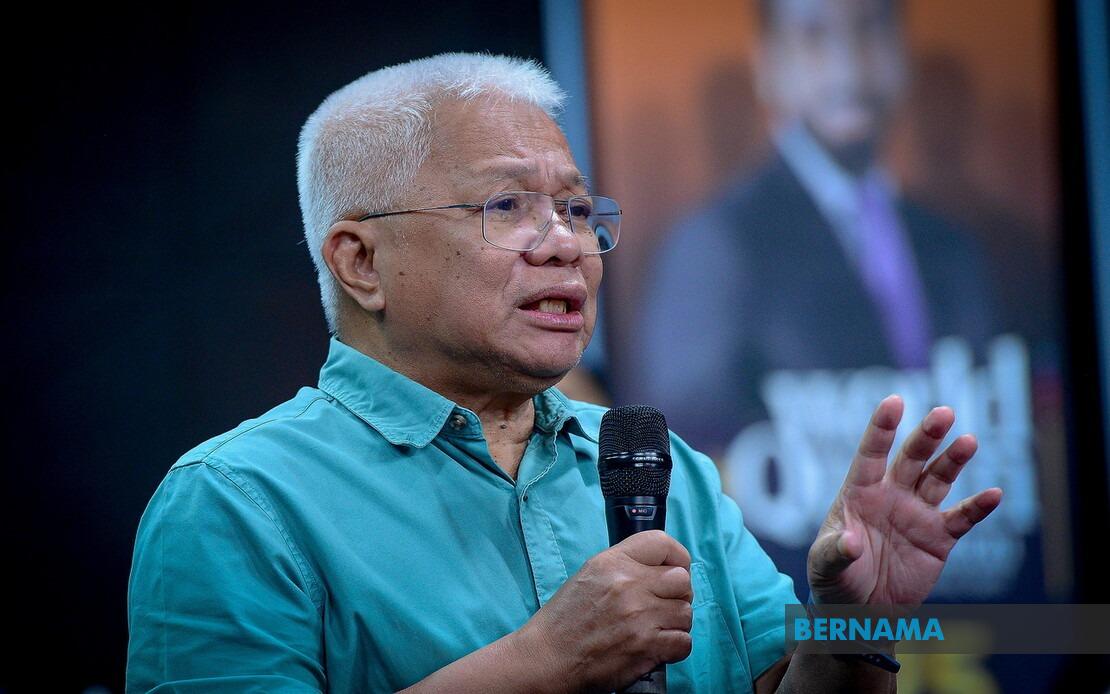
With Malaysia's centenary independence just three decades away, Datuk Hussamuddin Yaacub, founder of Yayasan Warisan Ummah Ikhlas and Yayasan Sinar Untuk Malaysia, has issued an urgent plea for the country to transcend its current partisan and ideological rifts in pursuit of a collective national purpose. Speaking during the 69th National Day commemoration in Kuala Lumpur, Hussamuddin emphasised that the Malaysia inherited by the next generation in 2057 is being forged today through the choices and priorities that society establishes now.
The timeframe facing the nation presents an uncomfortably narrow window for transformation. A single generation separates the present moment from Malaysia's 100th independence anniversary, meaning that young Malaysians today will themselves become the custodians and beneficiaries of whatever progress—or stagnation—has occurred during these pivotal three decades. This generational reality should concentrate the collective mind on what truly matters for long-term national development and stability.
Hussamuddin articulated a concern that resonates across Southeast Asia's broader governance landscape: the disproportionate allocation of political and social energy toward disputes rooted in race, religion, and ideology at the expense of institutional strengthening and systemic improvement. The observation cuts particularly deep in the Malaysian context, where such divisions have periodically inflamed public discourse and distracted from pragmatic solutions to concrete problems affecting living standards, economic competitiveness, and social cohesion. He underscored that remedying weak institutions and correcting broken systems cannot await resolution of these deeper fault lines, nor should institutional reform become hostage to ideological consensus.
The call to combat corruption and restore institutional integrity forms the philosophical core of Hussamuddin's message. He rejected the notion that citizens should passively accept such failings through silence, negotiation, normalisation, or forgiveness. Instead, he positioned fighting systemic rot as a moral imperative and practical necessity, framing institutional decay as a burden that will literally become the inheritance of Malaysia's grandchildren if left unaddressed. This framing transforms what might be viewed as narrow governance issues into intergenerational justice concerns, potentially resonating more broadly across society.
Critically, Hussamuddin relocated the origins of #Malaysia100 from government offices in Putrajaya to households and family units throughout the country. This devolution of responsibility represents a sophisticated understanding that lasting national transformation cannot be decreed from above but must be cultivated through the values instilled in children and the ethical frameworks that parents and educators transmit across generational lines. The emphasis on home-based value inculcation also implicitly acknowledges that formal state institutions alone cannot bear the full weight of moral and social renewal—families themselves must become laboratories for developing integrity, compassion, and principled leadership.
The metaphor of values as a ceremonial baton passed between relay runners captures the essence of Hussamuddin's vision and carries particular resonance in Malaysian civic culture. Rather than viewing national development purely through material metrics—skyscrapers, technological advancement, economic growth—he insisted that integrity and compassion must develop in parallel with physical progress. Without this ethical foundation, he warned, Malaysia risks becoming a nation that appears impressive from external appearances while deteriorating internally, its institutional and moral structures weakened by unseen damage analogous to wood eaten by termites.
This balance between material and moral development addresses a perennial concern for middle-income and upper-middle-income nations aspiring to global significance. Malaysia's relatively impressive physical infrastructure and technological adoption mask longstanding challenges related to governance quality, institutional reliability, and public trust—concerns that earlier rapid development often deferred rather than resolved. Hussamuddin's framework suggests that Malaysia's success in achieving its centenary vision depends not on accelerating infrastructure projects but on fundamentally addressing the governance and integrity deficits that undermine citizen confidence in institutions and leaders.
The appeal to diverse segments of society—across racial, religious, and ideological lines—to take ownership of the next 30 years represents an attempt to reframe national purpose as transcending traditional political coalitions. By emphasizing individual and organisational responsibility for determining family, institutional, and national fate, Hussamuddin positioned every Malaysian, regardless of background or party affiliation, as a stakeholder in the legacy handed to future generations. This inclusive framing could potentially attract support from across the political spectrum, though its receptivity will likely depend on whether political leaders can subordinate immediate partisan interests to longer-term national imperatives.
For Malaysian readers and observers across Southeast Asia, Hussamuddin's message carries implications that extend beyond rhetorical calls for unity. The specific challenge he identified—that divisive politics currently consumes disproportionate social energy—reflects structural problems within Malaysia's electoral and institutional systems that cannot be resolved through exhortation alone. Whether genuine reform of these systems can occur within the three-decade timeframe, or whether such change might require more fundamental recalibration of political incentives, remains an open question that will substantially influence whether #Malaysia100 emerges as a unified aspiration or merely another unfulfilled national slogan.
The underlying tension within Hussamuddin's argument centres on whether institutional reform can genuinely proceed on the trajectory he advocates while deep political divisions persist, or whether addressing such divisions must first precede systematic institutional renewal. His insistence that both must occur simultaneously, regardless of ideological differences, represents an optimistic reading of Malaysian civil society's capacity for compartmentalised progress. Demonstrating this capacity will require political will extending well beyond foundation statements and into concrete policy choices over the coming years.

