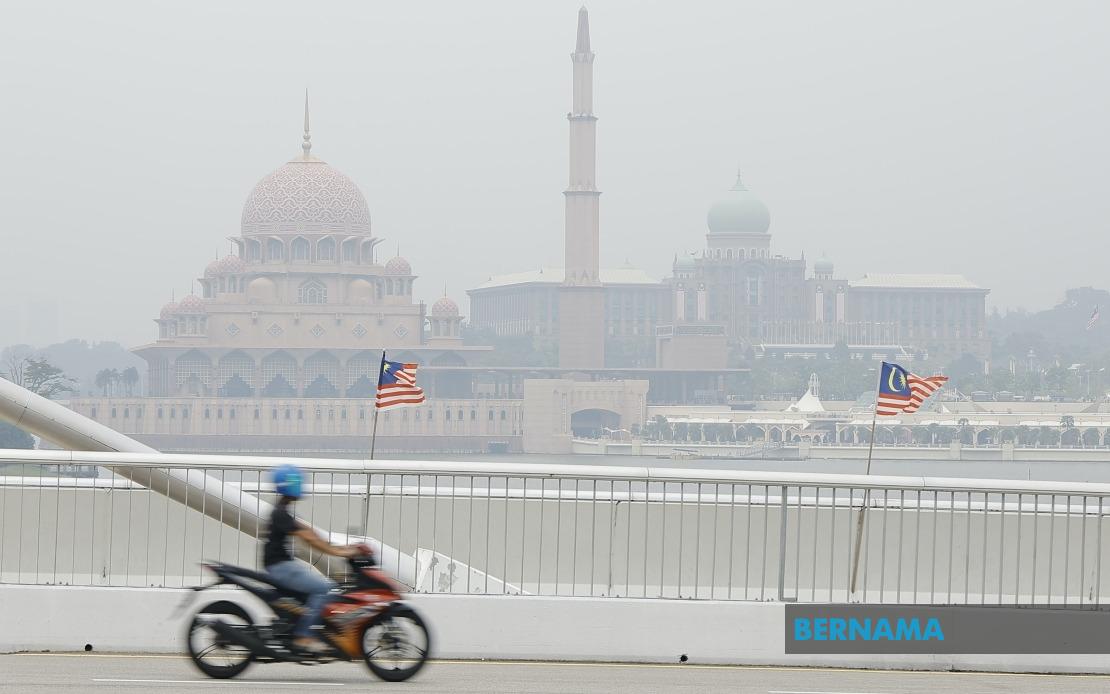
Malaysia must abandon its reactive approach to haze management and instead embrace predictive forecasting capabilities to safeguard public health, according to Associate Professor Dr Azman Azid, a researcher in air quality and environmental issues at Universiti Sultan Zainal Abidin's Besut Campus. Speaking at the campus in Kuala Nerus, Azman argued that the infrastructure and data needed to build such a system already exist within the country, waiting only to be integrated into a coherent warning framework that can detect deteriorating air quality 48 to 72 hours in advance.
The urgency of Azman's call is underscored by recent health ministry findings that paint a troubling picture of haze's human toll. Between epidemiological weeks 32 and 33, Malaysia recorded a staggering 259 per cent surge in asthma cases, jumping from 61 documented cases to 219. This dramatic spike illustrates a critical blind spot in current policy: while government agencies meticulously track the Air Pollutant Index and monitor smoke movement, they have largely overlooked the cascade of respiratory illnesses that follows deteriorating air conditions. The data suggests that Malaysia's existing haze protocols are structured around atmospheric measurements rather than human health outcomes, a distinction with profound implications for how the nation should reorganise its response mechanisms.
Azman's proposed framework represents a fundamental reorientation of Malaysia's operational priorities. He envisions a system that transforms Malaysia's relationship with air quality from one of passive monitoring to one of active anticipation. By integrating hotspot data indicating fire locations, satellite imagery revealing smoke plumes, meteorological information on wind patterns, atmospheric trajectory models predicting air mass movement, current API readings, disease surveillance patterns, and measurements of fine particulate matter smaller than 2.5 micrometres, Malaysia could construct a comprehensive early warning apparatus. Such a system would permit hospitals and clinics to elevate preparedness protocols days before pollutant concentrations peak, allowing medical facilities to stockpile medications, augment staffing, and establish protocols for surge cases. Schools could simultaneously adjust activity schedules to protect children during vulnerable periods.
The technical feasibility of Azman's proposal rests on Malaysia's existing meteorological infrastructure. The country already operates sophisticated weather forecasting systems capable of predicting rainfall patterns, typhoons, and temperature anomalies weeks in advance. Extending this proven capability into the haze domain requires no revolutionary technology but rather intelligent aggregation of datasets already collected by separate government agencies. The Ministry of Environment, the Malaysian Meteorological Department, the Ministry of Health, and various state environmental bodies all gather relevant information independently. The missing piece is the institutional mechanism and political will to synthesise these streams into actionable intelligence accessible to the public and decision-makers alike.
Critically, Azman emphasises that an early warning system need not displace the existing API framework but should complement it. The API serves an essential function in communicating real-time air quality to citizens, allowing individuals to adjust behaviour and activities based on current conditions. However, as Azman points out, relying solely on API readings represents a fundamentally reactive posture. By the time API figures climb to hazardous levels, pollutants already permeate the atmosphere, respiratory damage is underway, and medical systems scramble to respond. A predictive haze forecast system would operate in a different temporal domain, providing authorities and the public with advance notice of when and where degraded air quality will manifest, enabling prevention-focused interventions rather than emergency responses.
The transboundary dimension of Malaysia's haze problem adds another layer of complexity that Azman addresses directly. Through the ASEAN Agreement on Transboundary Haze Pollution, Malaysia formally acknowledges that air pollution does not respect political boundaries and that collaborative regional action is essential. Yet current cooperation among Southeast Asian nations remains largely superficial, limited to sharing data after pollution events have already occurred and damage has been inflicted. Azman calls for far deeper integration encompassing joint fire-source mapping, coordinated smoke trajectory forecasting, technology exchange between nations, mutual firefighting assistance, and harmonised response protocols. This would require moving beyond the traditional state-centric model where each nation manages its own territory independently toward a more interconnected framework where the region operates as an integrated atmospheric system requiring unified governance approaches.
The role of domestic enforcement in preventing haze episodes cannot be divorced from predictive capabilities. Azman stresses that Malaysia must simultaneously strengthen and enforce legislation governing open burning, bush fires, and peatland management. Peatlands are particularly critical because their combustion releases disproportionate quantities of particulates and hazardous compounds while simultaneously damaging carbon sinks essential to climate regulation. Currently, enforcement inconsistency and gaps in monitoring allow fires to proliferate unchecked, creating the emissions that subsequently require forecasting and management. A comprehensive strategy must therefore address the root cause of transboundary haze through stricter domestic prevention while simultaneously developing the forecasting systems to manage unavoidable pollution events originating in neighbouring jurisdictions.
The sustainability challenge extends beyond firefighting to land use patterns across Southeast Asia. Azman recognises that short-term haze mitigation through enforcement and forecasting cannot solve a problem fundamentally rooted in landscape transformation. Agricultural expansion, particularly large-scale plantations and industrial clearing operations, creates tinderbox conditions during dry seasons. Without addressing the underlying economic incentives driving land conversion and agricultural intensification, regional haze episodes will recur cyclically. This reality positions haze prevention not merely as an environmental or public health issue but as a development governance challenge requiring integration across agriculture, environment, economic, and health policy domains.
From a Malaysian perspective specifically, the implementation of an early warning system carries implications for healthcare planning and resource allocation. The 259 per cent surge in asthma cases during a single fortnight suggests that respiratory disease burden concentrates during haze episodes, creating predictable but currently unmanaged surges in healthcare demand. By implementing advance warning systems, the Ministry of Health could shift from crisis-driven allocation toward anticipatory resource positioning. Hospitals could pre-position medications, arrange temporary staffing, and prepare isolation facilities during forecast windows. This would reduce treatment delays, improve clinical outcomes, and enhance system efficiency by permitting planned rather than emergency procurement.
The economic dimension of early warning also merits consideration. Businesses could adjust operations in advance of poor air forecasts rather than responding to actual pollution. Schools could reschedule outdoor examinations and sports days before air quality degrades. Construction projects could pause during forecast hazard windows, reducing worker exposure. Citizens could plan medical appointments and travel around forecasted pollution events. These micro-level adaptations across the economy, when aggregated, represent substantial cost savings compared to the economic disruption of unforecasted air quality crises.
For Southeast Asian nations grappling with rapid development and intensifying climate variability, Azman's framework offers a template for evidence-based environmental governance. The integration of meteorological science, epidemiological surveillance, satellite technology, and regional cooperation represents a sophisticated approach to transboundary environmental challenges that respects national sovereignty while acknowledging ecological interdependence. Malaysia, as a relatively developed nation with technical capacity and regional influence, could pioneer such integration and establish models that other ASEAN members might subsequently adopt, positioning the country as a leader in regional environmental management rather than merely a victim of external pollution.

