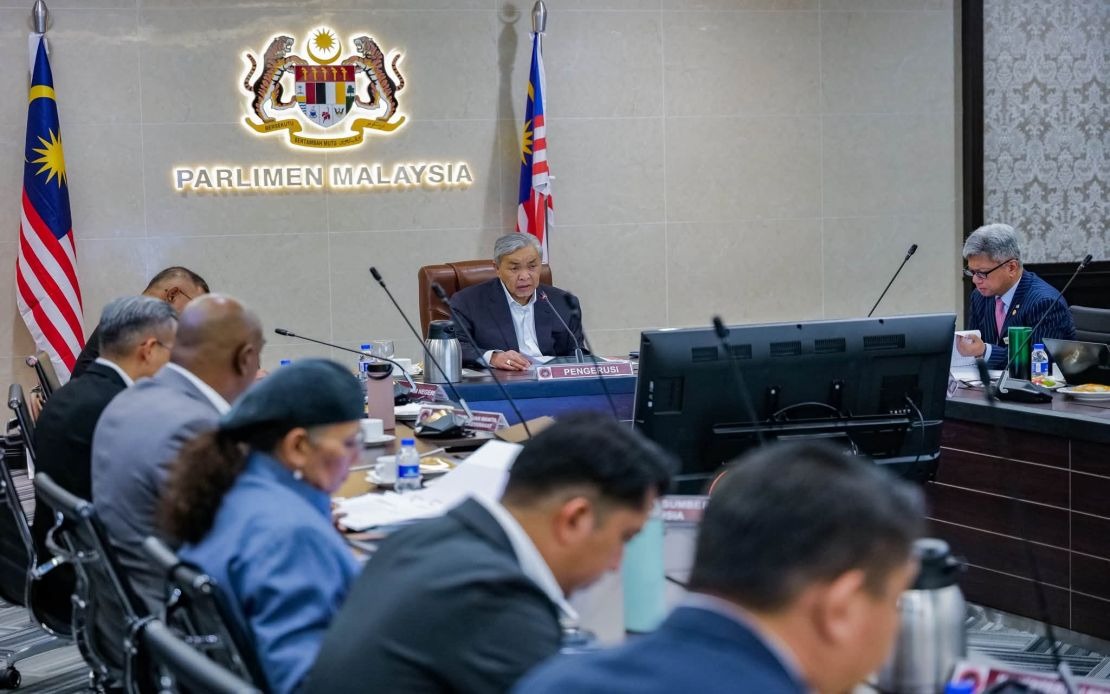
Malaysia faces mounting pressure to refine how it manages refugee flows while maintaining robust safeguards for national security, according to Deputy Prime Minister Datuk Seri Dr Ahmad Zahid Hamidi. Speaking after chairing the 6th Meeting of the High-Level Committee on the Management of Refugees and Asylum Seekers, Ahmad Zahid underscored that the country's approach cannot treat refugee administration as a purely bureaucratic exercise divorced from broader security considerations.
The context for his remarks reflects a deteriorating global situation. With more than 122 million people forcibly displaced by conflict and instability worldwide, countries throughout the region are grappling with unprecedented humanitarian demands. Malaysia, as a middle-income nation and established hub in Southeast Asia, faces particular exposure given its geographic position and existing asylum-seeker populations. Yet the government must navigate a delicate equilibrium: fulfilling its international humanitarian obligations whilst protecting citizens and maintaining public order.
Ahmad Zahid framed refugee management as inherently a sovereignty issue, not merely an administrative one. This perspective reveals the government's determination to avoid the perception that asylum policies might be implemented passively or without careful national interest considerations. The framing matters significantly for public confidence, particularly in Malaysia where concerns about demographic change and resource allocation frequently surface in political discourse. By emphasising that every decision must be guided by "the interests of the people and Malaysia's sovereignty," the Deputy Prime Minister signals that humanitarian compassion and security vigilance are complementary rather than contradictory objectives.
The recent committee meeting focused on reviewing implementation of existing policies and mechanisms designed to ensure the refugee framework remains "systematic and aligned with national interests." This language suggests an evolution beyond basic reception protocols toward a more integrated, strategic approach. The government appears keen to demonstrate that it is not simply reacting to refugee arrivals but actively shaping the terms of engagement through structured mechanisms.
A significant component of this framework involves the Refugee Registration Document, known locally as the DPP. This documentation system represents a crucial mechanism for identifying, tracking and managing refugee populations, providing both humanitarian actors and government agencies with reliable data. The committee's review of the DPP's implementation suggests the government is seeking to enhance the system's effectiveness, whether through technological upgrades, inter-agency coordination improvements, or streamlined verification procedures.
Beyond registration, the committee examined guidelines governing access to fundamental services including education and healthcare. These are particularly sensitive areas in Malaysia's refugee discourse. Providing schooling and medical care to children and vulnerable asylum-seekers reflects humanitarian principles, yet such programmes inevitably create political complications when domestic citizens face service limitations or perceive preferential treatment. The government's stated intention to make guidelines "better coordinated, legally compliant and easier for relevant agencies to administer" suggests an attempt to establish clearer parameters that protect both refugee rights and public confidence in equitable resource distribution.
The emphasis on legal compliance is particularly noteworthy. By anchoring refugee policies firmly within Malaysia's legal framework rather than operating through ad hoc humanitarian arrangements, the government aims to create institutionalised processes that are transparent and predictable. This approach should theoretically reduce room for political controversy whilst ensuring that decisions rest on clear criteria rather than discretionary judgement. For regional observers, it signals that Malaysia intends to remain an active participant in global humanitarian efforts whilst maintaining control over the terms and scale of its commitment.
For Malaysia specifically, the refugee management challenge carries distinctive characteristics. Unlike wealthy Western nations, Malaysia cannot absorb large-scale permanent resettlement without significant social and economic disruption. The refugee population in Malaysia—predominantly from Myanmar, Syria, Palestine and other crisis zones—faces protracted uncertainty about their status and future prospects. Meanwhile, Malaysian society increasingly experiences fatigue regarding open-ended asylum situations, particularly as economic pressures mount on ordinary citizens.
The Deputy Prime Minister's call for balanced management reflects this underlying tension. By positioning refugee policy as a matter requiring both humanitarian responsibility and security discipline, Ahmad Zahid acknowledges legitimate competing interests whilst attempting to chart a middle course. This strategy may help sustain public support for refugee programmes by demonstrating that generosity is neither unlimited nor unconditional, but rather calibrated to national capacity and priorities.
Regionally, Malaysia's approach carries implications for how Southeast Asian nations collectively address displacement crises. The region hosts large refugee populations, yet most countries remain reluctant to sign the 1951 Refugee Convention. Malaysia's development of its own systematic framework, combining humanitarian provision with security safeguards, could serve as a model for other nations wrestling with similar dilemmas. Success would demonstrate that principled refugee management is compatible with national interest protection, potentially encouraging other governments toward more structured approaches rather than arbitrary or restrictive responses.
Moving forward, the effectiveness of Malaysia's refined refugee management framework will depend on implementation quality. Coordinating education and healthcare access across multiple government agencies requires genuine institutional collaboration, not merely policy pronouncements. Similarly, the DPP registration system must function reliably without either excluding genuinely vulnerable populations or creating security gaps. The government's acknowledgment that these dimensions require continued attention suggests recognition that refugee management demands ongoing calibration and investment.
For Malaysian readers and policymakers, the broader lesson is that refugee management need not involve choosing between humanitarian values and security interests. Instead, systematic frameworks, clear legal foundations, and coordinated inter-agency efforts can advance both objectives. As global displacement crises intensify and Malaysia's refugee population likely grows, this integrated approach becomes increasingly essential for maintaining both humanitarian principles and public confidence.

