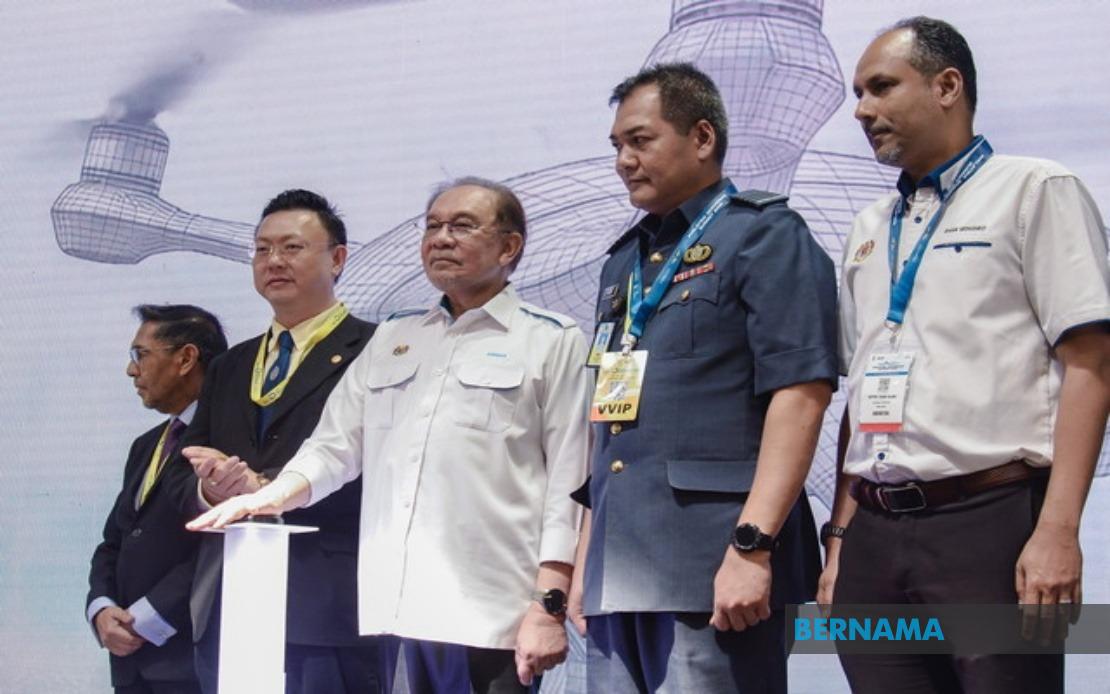
Prime Minister Datuk Seri Anwar Ibrahim has emphasised the urgent need for Malaysia to accelerate development and adoption of emerging technologies, particularly in the unmanned aerial vehicle (UAV) or drone sector, as a strategic lever for strengthening the nation's economic standing on the global stage. Speaking at the closing ceremony of MyDrone Expo 2026 in Sepang, Anwar underscored that technological advancement in high-growth industries is no longer optional for countries seeking sustained economic competitiveness, but rather a foundational requirement.
The drone industry represents far more than a standalone sector, Anwar explained, as it functions at the convergence of artificial intelligence, digital transformation, and advanced manufacturing. This intersection creates what he characterised as a powerful multiplier effect, generating innovation across multiple domains while simultaneously driving productivity improvements and opening new revenue streams. For Malaysia, which has historically relied on traditional export industries, the pivot toward technology-intensive sectors signals a necessary evolution in how the country generates value and maintains its position as a regional economic hub.
The sheer scale of the opportunity is difficult to ignore. The global unmanned aerial vehicle market is projected to exceed USD55 billion by 2030, while the emerging low-altitude economy—a broader ecosystem encompassing all commercial activities conducted at lower altitudes—is increasingly becoming a significant attractor of international investment and venture capital. Nations that establish themselves early as leaders in this space stand to capture disproportionate economic benefits, from manufacturing and export opportunities to high-skilled employment and technology licensing revenues. Malaysia's geographical position, existing manufacturing infrastructure, and regional expertise in electronics and engineering sectors position it to compete effectively, provided the necessary policy and regulatory groundwork is laid promptly.
To translate ambition into concrete outcomes, Anwar has directed Cabinet ministers, policymakers, research institutions, and related government agencies to provide comprehensive regulatory and ecosystem support to drone industry players. This directive moves beyond rhetorical commitment, placing explicit responsibility on multiple government levels to coordinate and implement enabling policies. The government's support extends beyond traditional defence and military applications—where drone technology has long been established—to encompass civil and commercial uses that can drive broader economic benefit. Anwar specifically highlighted agriculture and plantation operations as immediate near-term applications where drone technology can enhance productivity and reduce operational costs for Malaysian enterprises.
Realising this potential requires more than policy statements. The government has committed to upgrading the regulatory framework governing UAV operations, a move that addresses one of the primary barriers to industry expansion. Clear, predictable, and internationally aligned regulations reduce investment risk and provide manufacturers and service providers with the certainty needed to commit capital to Malaysian operations. Simultaneously, enhanced research funding channels resources toward indigenous technology development rather than relying exclusively on imported solutions. Strengthening testing and certification infrastructure ensures that Malaysian-developed and manufactured drone systems meet international standards, facilitating export and building trust among global customers.
The MyDrone Expo 2026 itself provided tangible evidence of Malaysia's emerging position within the global drone ecosystem. The three-day event surpassed organisational expectations, attracting more than 100 exhibition booths and drawing thousands of industry delegates and visitors from 46 countries. This international participation reflects both the legitimacy Malaysia is building within drone industry circles and the recognition that the country represents a meaningful market and potential manufacturing hub. The presence of companies and institutions from nearly fifty nations suggests that global industry leaders view Malaysia as sufficiently relevant to justify participation and investment.
Building a truly competitive drone sector demands more than government support and regulatory clarity. Industry observers emphasise that Malaysia must develop a robust talent pipeline capable of sustaining long-term innovation and growth. This requires deliberate collaboration between private sector enterprises, government research establishments, and universities. Anwar has explicitly called for the kind of integrated academic-industry partnership that has proven successful in other technology domains. Malaysia's existing faculties in artificial intelligence and quantum computing demonstrate that the nation can establish world-class research capabilities when resources are concentrated and coordinated, providing a proven model for drone industry development.
The regulatory and policy framework represents perhaps the most immediate area where government action can unlock growth. Businesses often cite regulatory uncertainty as a primary deterrent to investment in emerging sectors. By signalling clear government commitment and establishing transparent approval pathways for drone operations and manufacturing, Malaysia can rapidly reduce perceived risk. This is particularly important given the sophisticated nature of drone technology and the legitimate safety and security considerations involved. A regulatory environment perceived as both supportive of innovation and rigorous in safety standards builds confidence among both investors and the public.
Looking outward to the broader regional context, Malaysia's drone industry initiative carries implications beyond national borders. Other Southeast Asian nations are pursuing similar strategies, creating both competitive pressure and opportunities for regional collaboration. Should Malaysia establish itself as a drone technology and manufacturing leader within ASEAN, it could attract investment and talent from across the region, strengthening its position as Southeast Asia's technology centre. Conversely, if neighbouring nations move faster in building regulatory frameworks and supporting infrastructure, Malaysia risks losing both investment and its most talented technology professionals to competitors.
The convergence of artificial intelligence, digital technologies, and advanced manufacturing represented by the drone industry exemplifies the broader economic transition Malaysia must navigate. Traditional manufacturing and commodity exports face structural challenges from automation, competition, and shifting global trade patterns. Technology-intensive sectors offer higher margins, greater value capture, and stronger employment prospects. By prioritising drone industry development alongside existing initiatives in AI and quantum computing, Malaysia is signalling a deliberate shift toward a knowledge and innovation-based economy. The speed with which this transition occurs will substantially determine whether Malaysia maintains or enhances its regional economic leadership over the coming decade.

