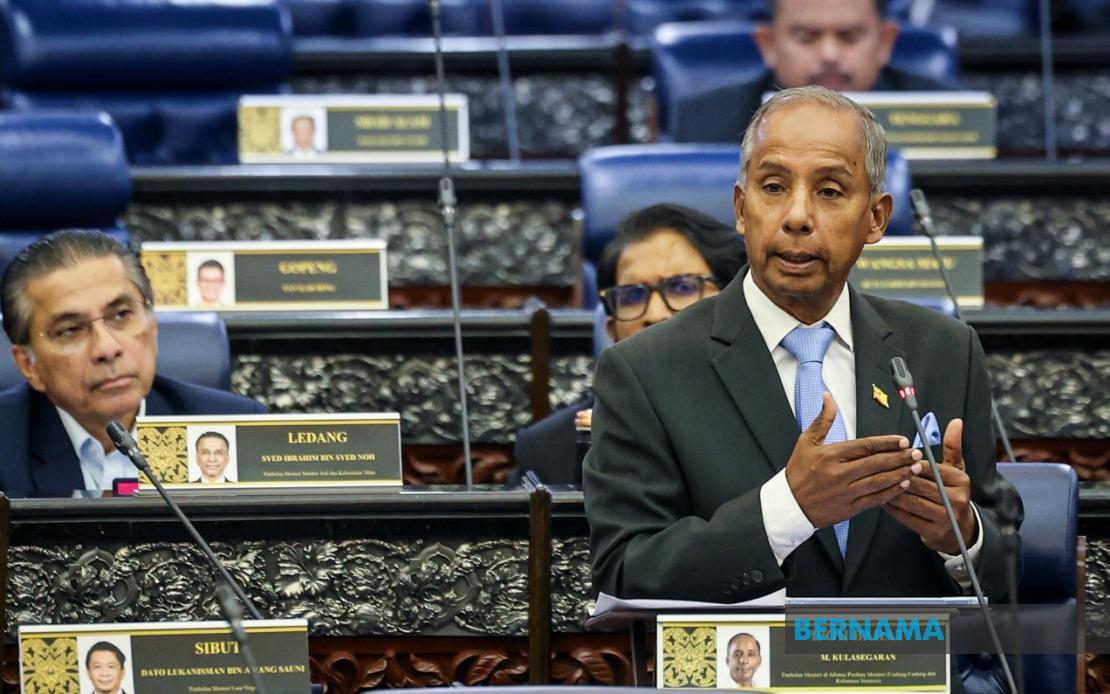
The Malaysian government is undertaking a substantial review of Section 97 of the Child Act 2001, with plans to introduce a defined detention framework that would better serve the interests of child offenders, victims, and public safety alike. Deputy Minister in the Prime Minister's Department (Law and Institutional Reform) M. Kulasegaran outlined the initiative during parliamentary proceedings, emphasising that the examination forms part of a broader legislative overhaul initiated following the 2023 abolition of mandatory death and life sentences for offences committed by minors.
The review is being conducted by a specially constituted committee that has already convened multiple times to assess the provision's current application and implications. Kulasegaran indicated that the body's deliberations are expected to produce concrete recommendations for legislative amendment, creating what he described as necessary consistency across Malaysia's justice system whilst ensuring equitable treatment for all parties affected by juvenile offences. The current text of Section 97 prevents courts from imposing capital punishment on individuals who were children at the time of their alleged transgression, instead permitting detention at the pleasure of the ruler or state head.
The motivation behind this review becomes starkly apparent when examining the lived experiences of those detained under the provision. During recent official visits to correctional facilities in Semporna and Sandakan, Kulasegaran encountered individuals whose cases exemplify the provision's shortcomings. One inmate has spent nearly 25 years in custody after entering prison at age 17, having since become entirely disconnected from contemporary life and unfamiliar with basic modern technology. Such cases underscore a critical gap in Malaysia's juvenile justice framework: the absence of temporal boundaries means affected individuals may languish indefinitely without clear pathways toward release or rehabilitation milestones.
Current figures reveal that 40 individuals remain incarcerated under Section 97 across Malaysian prisons. These cases represent a significant cohort whose detention lacks the definitional clarity that characterises sentences imposed under other provisions. The situation highlights potential tensions between the state's obligation to protect citizens and its duty to ensure proportionate treatment of offenders, particularly those whose criminal responsibility and culpability may have been diminished by youth and developmental immaturity.
Malaysia's commitment to the Convention on the Rights of the Child adds international dimensions to this domestic policy concern. The CRC framework emphasises that detention should serve as a last resort and that child offenders warrant rehabilitative approaches prioritising their eventual reintegration into society. By establishing fixed detention periods rather than indefinite confinement, Malaysia would strengthen alignment between its statutory framework and these international obligations, demonstrating tangible progress toward rights-based juvenile justice.
The parliamentary exchange revealed that the government recognises the fundamental tension inherent in contemporary penological thinking: punitive measures must coexist with recognition of children's developmental capacity for reform. This philosophical positioning reflects global trends toward restorative justice models that acknowledge youthful offenders' neurological development and potential for behavioural change. By introducing temporal boundaries, Malaysia would operationalise this principle within its legal apparatus.
Culasegaran's remarks emphasise that proposed amendments would maintain careful equilibrium among three competing imperatives: delivering justice for victims, safeguarding community welfare, and advancing child welfare and rehabilitation prospects. This tripartite framework acknowledges that reform cannot privilege any single interest at the expense of others; rather, sophisticated legislative design must accommodate legitimate concerns across all constituencies. The committee's work represents an attempt to translate this philosophical balance into workable legal mechanisms.
The 2023 abolition of mandatory capital and life sentences for child offenders marked a watershed moment in Malaysian criminal jurisprudence, signalling governmental recognition that youth diminishes culpability and warrants differentiated legal treatment. However, that reform exposed gaps requiring further attention—specifically, the need for defined parameters around the alternative detention mechanism. Without clear temporal boundaries, the provision risks operating arbitrarily, with release determinations dependent upon subjective royal or gubernatorial discretion rather than objective criteria.
Regional context adds significance to Malaysia's reform trajectory. Neighbouring jurisdictions and international bodies increasingly scrutinise juvenile justice practices, particularly regarding indefinite detention of minors. By proactively revising its legislative framework, Malaysia positions itself as a jurisdiction committed to evidence-based, rights-respecting approaches to child offenders. This matters for Malaysia's regional standing and diplomatic relationships with bodies monitoring human rights compliance.
The practical implications extend beyond those currently detained. Establishing clear detention periods creates prospective guidance for courts sentencing child offenders under Section 97, introducing predictability into an otherwise discretionary framework. Such clarity benefits judicial administration, allows sentenced individuals and families to plan rehabilitative pathways, and demonstrates governmental commitment to transparent, rule-based justice rather than arbitrary confinement. Implementation will require careful calibration to ensure that fixed periods remain proportionate to offence severity while maintaining flexibility for cases meriting exceptional consideration.
For Malaysian civil society and human rights advocates, this review represents a meaningful opportunity to influence juvenile justice modernisation. Input from penological experts, child welfare specialists, victims' advocates, and rehabilitative practitioners could substantially enhance the committee's recommendations. The broader legislative context—including parallel reforms to criminal procedure and sentencing frameworks—suggests receptiveness to comprehensive juvenile justice rethinking.
Implementing revised Section 97 provisions will require legislative drafting, stakeholder consultation, and coordination across judicial, correctional, and executive agencies. Training programmes for judges, prosecutors, and correctional officials will be essential to ensure consistent application of new temporal parameters. Transitional provisions will need careful consideration to address cases of individuals already detained under the existing indefinite framework.
Ultimately, this review reflects growing international recognition that child offenders warrant distinctive legal treatment grounded in developmental psychology and restorative justice principles. By establishing clearer detention parameters, Malaysia would advance juvenile justice standards whilst maintaining appropriate public safety safeguards—a balance that increasingly defines progressive criminal justice reform across the Asia-Pacific region.

