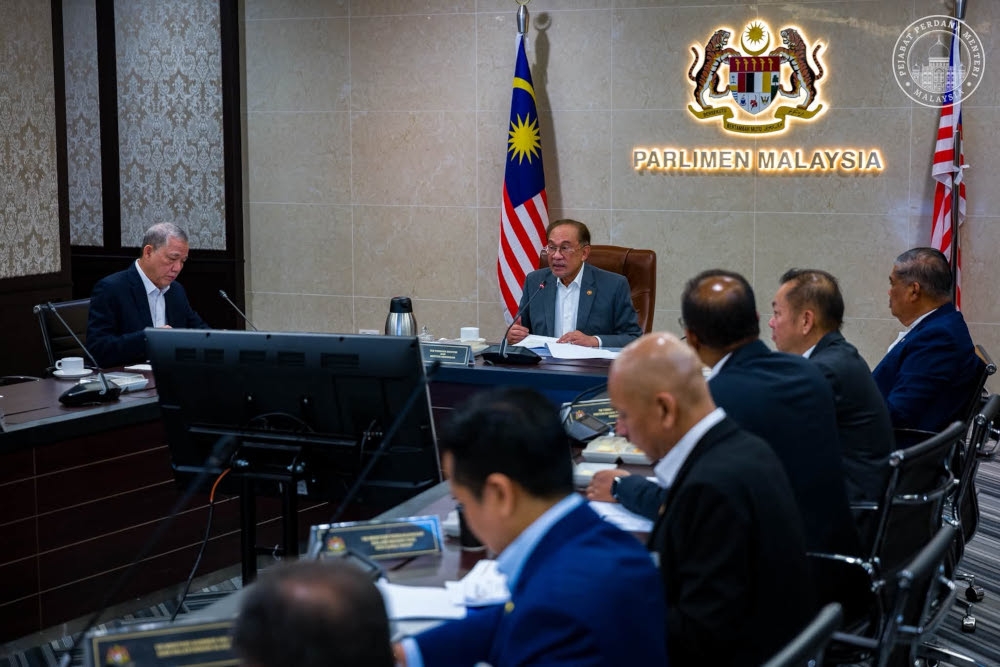
Prime Minister Datuk Seri Anwar Ibrahim has issued urgent directives to the Ministry of Agriculture and Food Security to activate comprehensive contingency strategies as forecasters warn of an intensifying El Niño weather phenomenon threatening agricultural output across Malaysia. The directive underscores growing apprehension within the government about food production stability during the anticipated climatic event, which historical precedent suggests could substantially constrain yields for major crops and livestock operations throughout the country.
El Niño events, characterised by warmer ocean temperatures in the Pacific and their downstream effects on global weather patterns, typically trigger prolonged dry spells across Southeast Asia. For Malaysia, this translates into reduced rainfall during critical growing seasons, elevated evaporation rates stressing irrigation systems, and heightened wildfire risk in peatland regions—conditions that have historically depressed agricultural productivity and forced price adjustments in local markets. The timing of Anwar's intervention reflects acknowledgement that proactive policy action during the lead-up period offers the most effective pathway to mitigating eventual supply disruptions.
The agriculture ministry has been tasked with establishing monitoring systems to track crop health and soil moisture conditions in real time, enabling early intervention when deterioration becomes evident. Officials are simultaneously being directed to engage with farmers to promote adoption of drought-resistant crop varieties and improved water management practices that can sustain productivity even as precipitation declines. These measures represent a shift toward preventive rather than reactive governance, where anticipatory resource allocation and technical guidance precede crisis conditions rather than following them.
Storage and strategic reserves form another critical pillar of the response framework. The government intends to bolster food reserves ahead of the El Niño period, ensuring that even if domestic production contracts significantly, supply chains remain sufficiently buffered to prevent acute scarcity or destabilising price volatility. This stockpiling approach has proven essential in previous climate-induced supply crunches, where inadequate reserves forced Malaysia into emergency import arrangements that proved costlier and more logistically complex than pre-positioning inventory would have been.
The directive also encompasses coordination with regional trading partners and international suppliers to ensure diversified sourcing arrangements should domestic shortfalls materialise. Malaysia's vulnerability to climate-related agricultural disruption extends beyond self-sufficiency metrics; the nation's food import dependency means that price movements in global commodity markets during El Niño periods often translate into consumer-level inflation that ripples through the broader economy. By establishing backup supply agreements before demand pressures intensify, the government aims to insulate Malaysian consumers from the price spikes that frequently accompany global crop failures.
Domestic livestock production merits particular attention given the sector's sensitivity to feed availability and heat stress during El Niño events. The government's strategy involves ensuring adequate reserves of animal feed and water while promoting herd management practices that minimise mortality rates and maintain breeding stock during periods of nutritional constraint. Poultry and aquaculture operations, which represent substantial employment and protein sources for lower-income households, require targeted support to prevent collapse that could exacerbate food security concerns and nutritional outcomes across vulnerable populations.
The communication dimension of this response cannot be understated. By publicising the government's preparations, Anwar signals to farmers, agribusiness operators, and consumers that the state is taking climate-driven risks seriously—a message that encourages private sector adaptation and reduces panic-driven behavioural responses that often amplify supply disruptions. When businesses perceive government capacity and commitment to managing crises, they are more inclined to invest in resilience measures themselves rather than engaging in defensive hoarding or opportunistic price-setting.
Malaysia's experience with previous El Niño events, particularly the severe 1997-1998 episode that triggered agricultural losses and regional haze, informs the current policy approach. That historical episode exposed coordination weaknesses between agricultural agencies, water management authorities, and disaster response mechanisms—gaps that subsequent governments have worked to address. The current directive appears to reflect lessons learned from that period, emphasising inter-agency alignment and proactive resource deployment rather than siloed departmental responses.
The broader Southeast Asian context amplifies the significance of Malaysia's preparations. Neighbouring Indonesia and Thailand, both major rice and palm oil producers, face similar El Niño exposure, meaning regional supply disruptions could prove more severe than individual national responses might mitigate. Malaysia's food security consequently depends partly on the adaptive capacity of trading partners, creating implicit incentives for collaborative regional frameworks that pool information, coordinate strategic reserves, and manage price volatility through harmonised policy responses. Anwar's directive represents the Malaysian component of a wider regional adjustment that unfolds across Southeast Asia.
For investors and businesses dependent on agricultural input supply chains or food commodities, the government's preparations signal stabilising intent that should theoretically moderate speculative pressures on prices. However, global commodity markets often remain dominated by macro factors beyond any single nation's control, meaning Malaysia's domestic protections operate within constraints set by international agricultural markets and climate science. The real test of the response framework will emerge once El Niño impacts fully materialise—the current phase remains about prevention and preparedness rather than management of actual crisis conditions.
The directive also carries implicit recognition that climate change is rendering historical weather patterns an unreliable guide for agricultural planning. Successive El Niño events have shown variable intensity and regional impact, challenging predictability and suggesting that resilience—the capacity to adapt and recover—matters as much as precise forecasting. Malaysia's strategy thus encompasses both anticipatory measures based on expected patterns and flexible response mechanisms that can adjust to actual conditions as they develop, reflecting mature acknowledgement of uncertainties inherent in climate-driven agricultural risk.

