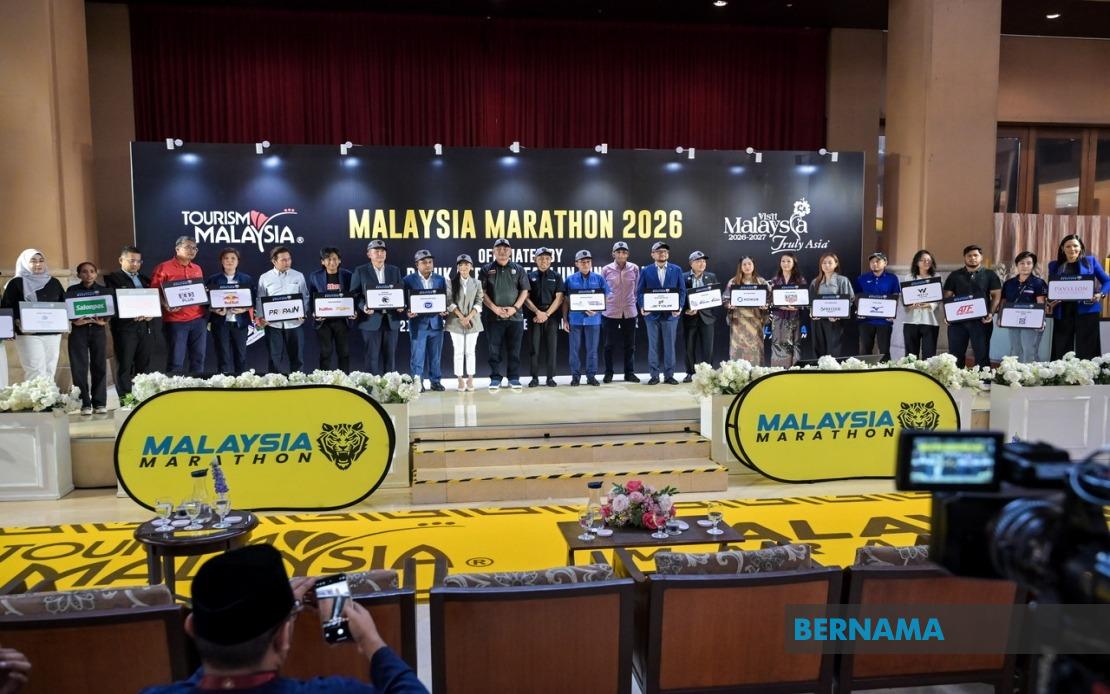
The inaugural Malaysia Marathon 2026, set to take place on August 30, is establishing itself as a significant competitive platform for distance runners across the region by introducing substantial financial incentives for athletes who can surpass existing national records. The event organisers are offering a combined prize purse of RM50,000 specifically for Malaysian competitors who achieve record-breaking performances in both the 21-kilometre and 42-kilometre distance categories, signalling a strategic investment in developing the nation's elite running talent.
Eddy Casmady, president of Malaysia Marathon, explained that the financial incentive represents more than mere prize money—it functions as a deliberate motivational framework designed to inspire local runners to push beyond their current limits. Speaking at the race launching ceremony, Casmady articulated the organising committee's vision of nurturing Malaysia's competitive distance running ecosystem by removing financial barriers that might otherwise deter elite athletes from attempting record-breaking efforts. The reward structure reflects growing recognition within Malaysian sporting circles that international-calibre performances require substantial institutional support and tangible recognition.
A notable achievement in the race's development has been the formal recognition of the course by World Athletics, the sport's international governing body. The marathon route, which underwent rigorous measurement and certification procedures, has received official accreditation—a prerequisite for any record attempts to gain international validity. This certification ensures that any performances achieved during the Malaysia Marathon 2026 will be formally recognised in global athletics record books, elevating the event's status and attracting serious contenders seeking to establish their names in international rankings.
The route itself presents substantial technical challenges that will test participants' endurance and tactical capabilities. The course departs from Pavilion Kuala Lumpur and concludes near the KLCC area, traversing Kuala Lumpur's urban landscape while incorporating a notably demanding elevation gain. Organisers have highlighted a particularly steep section along the AKLEH corridor, where runners will face approximately 900 metres of continuous climbing. This topographical feature transforms the Malaysia Marathon from a purely flat, speed-oriented course into a mountainous endurance challenge, requiring competitors to possess both aerobic capacity and strength-specific preparation uncommon in many Southeast Asian marathons.
The elevation profile is expected to deter some participants while creating genuine excitement among serious distance runners accustomed to training in more challenging terrain. For Malaysian athletes specifically, mastering this particular course design could provide competitive advantages in international marathons featuring similar undulating landscapes. The climbing sections mean that time predictions based on other Malaysian racing experiences may not translate directly, requiring participants to undertake course-specific preparation and strategy development.
The inaugural event has attracted remarkable participation numbers that underline Malaysia's growing prominence within regional running communities. Organisers expect 25,000 total participants distributed across multiple distance categories: 2,000 runners in the full 42-kilometre marathon, 8,000 selecting the half-marathon 21-kilometre option, 5,000 tackling the 10-kilometre challenge race, and 10,000 enjoying the non-competitive 5-kilometre leisure run. This tiered structure democratises participation, allowing casual recreational runners to participate in the same event as elite competitors, creating a celebratory atmosphere while maintaining distinct categories for serious racing.
International representation adds another dimension to the Malaysia Marathon's inaugural significance. More than 2,300 participants hail from outside Malaysia, including elite athletes from Japan and Nigeria—nations with strong distance running traditions. This international composition will expose domestic runners to global competitive standards while positioning Malaysia as an emerging destination for distance running events. The presence of established international athletes potentially creates benchmarking opportunities for Malaysian competitors while adding prestige and media attention to the inaugural event.
A particularly novel element distinguishes Malaysia Marathon 2026 from conventional marathon competitions: the participation of HONOR humanoid robot in the 10-kilometre event. This technological integration represents a contemporary approach to event promotion and engagement, generating media interest and public curiosity beyond traditional running circles. While the robot's participation in the formal race remains largely symbolic, it reflects broader trends of incorporating emerging technologies into major sporting events and appeals to Malaysia's positioning as a technology-forward nation.
The record-breaking opportunity carries substantial implications for Malaysian athletics development. Breaking national records in distance running has historically proven challenging, requiring rare combinations of individual talent, systematic training, environmental advantages, and competitive opportunity. By concentrating resources on a single well-organised event with official World Athletics recognition, Malaysia Marathon 2026 creates concentrated opportunity for record-breaking attempts. Success stories from this inaugural edition could catalyse increased investment in distance running programmes, inspire younger athletes to pursue marathon-specific training, and establish Malaysia as a credible location for serious competitive marathoning within Asia.
The economic dimensions of hosting Malaysia Marathon 2026 extend beyond sporting performance. The concentration of 25,000 participants from domestic and international backgrounds will generate tourism revenue, hospitality demand, and commercial opportunities for Kuala Lumpur businesses. International participants typically remain in host cities for multiple days, supporting hotels, restaurants, and retail establishments. The media coverage surrounding record-breaking attempts and elite performances contributes to broader destination marketing that can benefit Malaysian tourism positioning throughout the region.
For Malaysian runners specifically, the RM50,000 record-breaking incentive arrives at a strategically significant moment. Rather than requiring athletes to travel internationally or compete in established foreign marathons to pursue records, the home-based opportunity reduces logistical complexity while providing familiar environmental conditions. Malaysian athletes targeting national records can train extensively on the actual competition course, understand its peculiarities, and develop specialised strategies in advance. This advantage potentially levels competitive dynamics between Malaysian athletes and their international counterparts accustomed to competing on foreign terrain.
The organisational maturity evident in Malaysia Marathon 2026's structure—encompassing World Athletics certification, tiered distance options, international recruitment, technological integration, and substantial prize structures—indicates professional standards that position this event as a serious competitive platform. Beyond the inaugural 2026 edition, the marathon appears positioned to establish itself as a regular fixture within Malaysia's sporting calendar, potentially developing into a recognised circuit event alongside other major regional marathons. Success in 2026 could establish templates for subsequent editions while creating momentum for Malaysian distance running more broadly.

