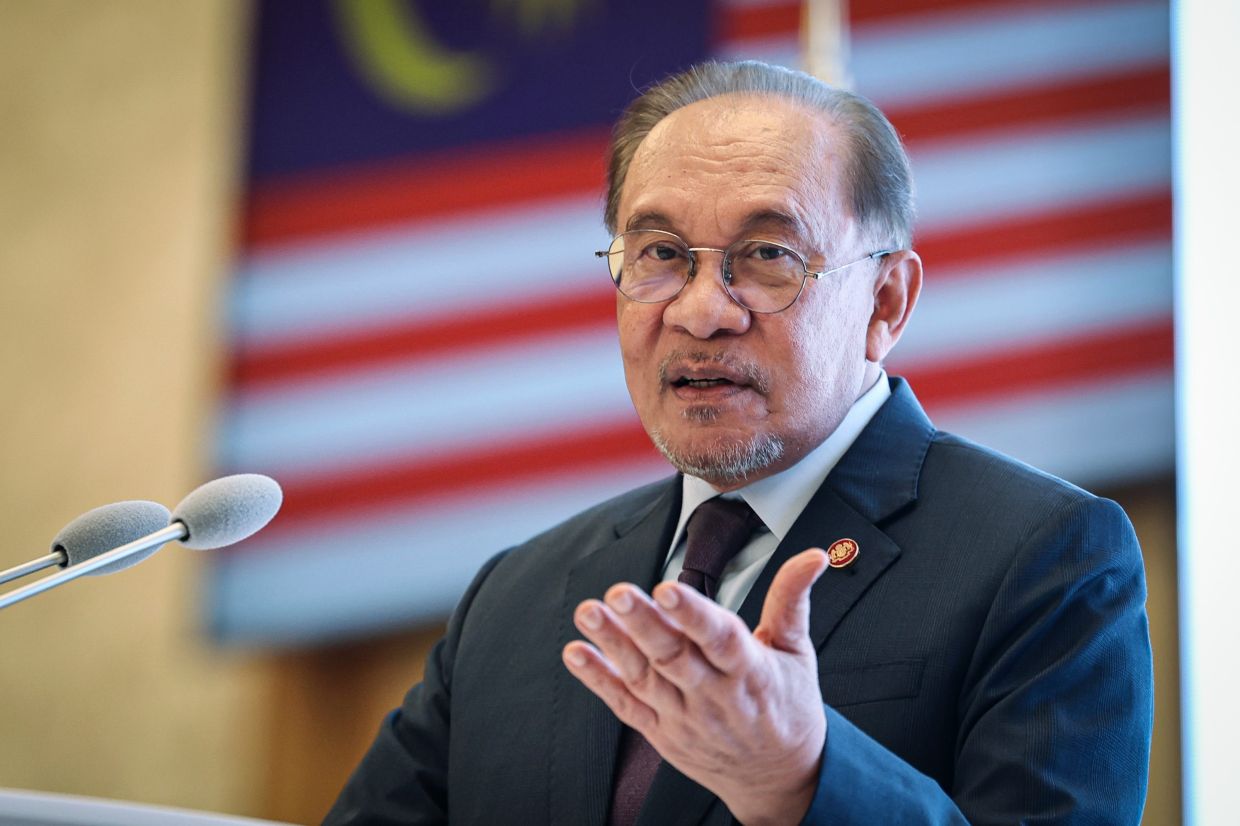
Malaysia's strategic positioning along vital global trade corridors has become the linchpin of its economic diplomacy, according to Prime Minister Datuk Seri Anwar Ibrahim, who stressed that this advantage underpins the country's ability to project influence in an increasingly complex international marketplace. Speaking at the 39th Asia-Pacific Roundtable, Anwar, who simultaneously holds the Finance Ministry portfolio, articulated how the nation's geography and commercial networks translate into tangible diplomatic leverage that extends far beyond conventional trade negotiations.
The Prime Minister outlined the government's deliberate approach to fortifying connections with established economic partners through multilateral frameworks designed to harmonize tariffs and improve market access. Malaysia's participation in the ASEAN Free Trade Area, the Regional Comprehensive Economic Partnership (RCEP), and the Comprehensive and Progressive Agreement for Trans-Pacific Partnership (CPTPP) reflects a comprehensive strategy to position itself as a bridge between developed and developing economies. These agreements, Anwar emphasized, serve not merely as commercial instruments but as mechanisms for creating more balanced investment flows that benefit all participating nations.
Central to Malaysia's foreign policy doctrine remains unwavering commitment to ASEAN centrality, a principle Anwar reiterated despite acknowledging reservations that some member states may harbour. He argued that the regional bloc must continue serving as the primary platform through which Malaysia pursues both national interests and the broader objectives of regional peace, stability, and shared prosperity. This emphasis reflects recognition that Southeast Asia's cohesion and economic integration remain fundamental to Malaysia's long-term security and prosperity, particularly as great power competition intensifies in the region.
Recognizing the limitations of relying predominantly on traditional partnerships, the government has embarked on an ambitious diversification strategy targeting emerging and underexploited markets across West Asia, Central Asia, Latin America, and Africa. This geographical expansion represents a fundamental shift in Malaysia's economic engagement patterns, moving beyond the Asia-Pacific focus that has historically dominated commercial relationships. The initiative reflects pragmatic acknowledgment that economic resilience depends on cultivating multiple revenue streams and reducing dependency on any single trading partner or region.
Anwar highlighted the sophisticated intersection of economic strategy and geopolitical calculation that characterizes Malaysia's outreach to these nascent markets. Rather than pursuing transactional deals, the government emphasizes genuine collaboration in high-growth sectors including the halal economy, digital infrastructure, agricultural development, and green technology initiatives. This sectoral targeting demonstrates understanding that competitive advantages in emerging markets often require Malaysia to leverage its unique strengths rather than competing on price or scale alone.
Energy cooperation emerged as a particularly strategic priority within this broader framework. During an official visit to Turkmenistan, Malaysia's national oil company Petronas concluded agreements with Turkmenistan's state entities to explore and develop two major gas fields, signifying meaningful progress in securing long-term hydrocarbon supplies. Complementing this arrangement, both nations signed a comprehensive framework for hydrocarbon development that incorporates provisions for technical expertise exchange and human capital development, suggesting the partnership extends beyond simple resource extraction to encompass institutional and technological collaboration.
The strategic importance of these energy initiatives cannot be overstated for Malaysia and the broader Southeast Asian region. As regional economies continue rapid industrialization and energy consumption grows steadily, securing reliable supplies from politically stable sources insulates the nation against supply disruptions emanating from volatile Middle Eastern producers. The Turkmenistan engagement simultaneously opens dialogue channels with Central Asian states, a geopolitically significant region increasingly courted by major powers seeking influence and investment opportunities.
Anwar articulated a comprehensive vision of Malaysia's economic future grounded in portfolio diversification rather than concentrated reliance on historical partnerships. He argued that such diversification transcends mere commercial calculation, constituting instead a strategic imperative in an era of heightened global uncertainty characterized by geopolitical tensions, supply chain vulnerabilities, and unpredictable policy shifts among major trading powers. This perspective aligns with broader Southeast Asian anxieties regarding the sustainability of the post-World War II rules-based trading system and the rise of protectionist sentiment among developed nations.
The Prime Minister's remarks underscore a deliberate recalibration of Malaysia's economic engagement model that balances traditional strength in the Asia-Pacific against systematic cultivation of alternative partnerships and markets. By simultaneously deepening regional integration through ASEAN mechanisms while expanding southward and westward, Malaysia attempts to maximize its latitude and reduce vulnerability to external shocks. This dual-track approach reflects sophisticated understanding that small and medium economies can best protect their interests through judicious network diversification rather than alignment with single powers or blocs.
The three-day forum, organized by the Institute of Strategic and International Studies (ISIS) Malaysia and running from June 30 to July 2, provided a prominent platform for articulating these strategic priorities to an audience of policymakers, academics, and business leaders from across the Asia-Pacific region. Such venues facilitate dialogue regarding evolving regional economic architecture and allow Malaysia to position itself as a thoughtful voice advocating balanced approaches to trade and investment that benefit multiple stakeholders rather than narrowly advantaging dominant powers.

