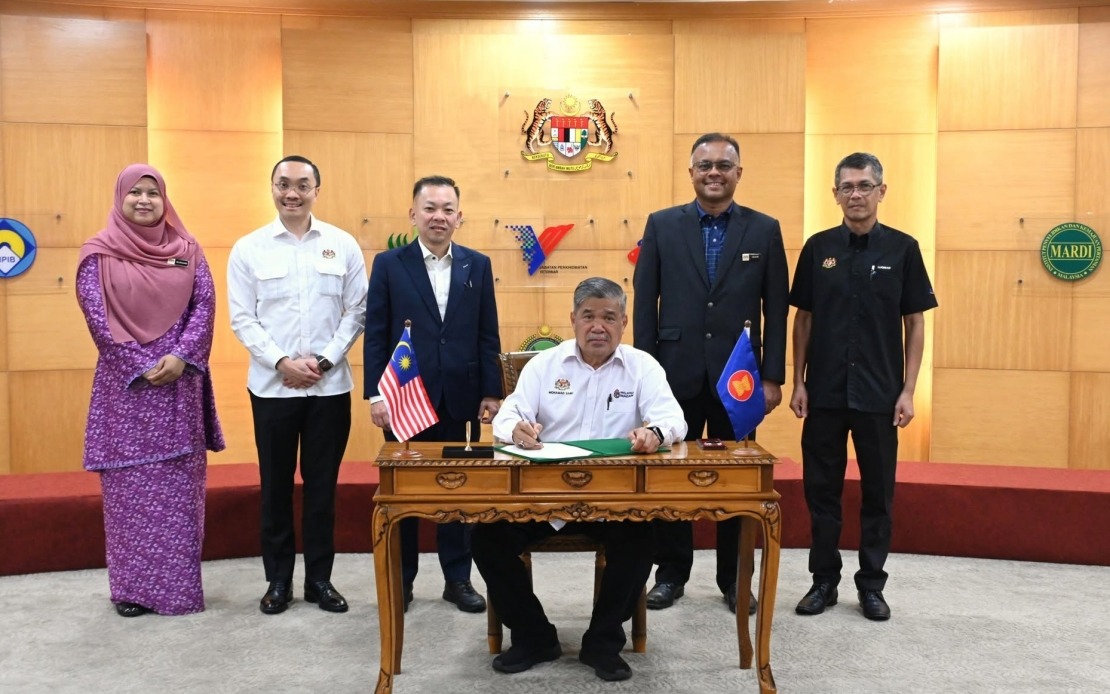
Malaysia has positioned itself to significantly expand its agricultural footprint across Southeast Asia through two strategic memorandums signed at the ASEAN Ministers on Agriculture and Forestry meeting. Agriculture and Food Security Minister Datuk Seri Mohamad Sabu sealed the agreements on behalf of the Malaysian government, with the twin pacts designed to unlock fresh commercial opportunities while simultaneously addressing the mounting vulnerabilities facing the region's food systems. The Ministry of Agriculture and Food Security confirmed that these accords will create pathways for Malaysian agri-food, agri-commodity and forestry exports whilst simultaneously providing the nation with access to advanced climate-resilient agricultural technologies increasingly vital in an era of weather volatility.
The first agreement, the ASEAN Cooperation in Agriculture and Forest Products Scheme, binds together all ten member states around a comprehensive framework anchored on five interconnected pillars. Central to this arrangement is the fortification of regional food security—a concern that has grown more acute as climate-induced disruptions threaten harvests across Southeast Asia. The scheme simultaneously aims to facilitate smoother trade flows for agricultural and forestry commodities between member nations, remove impediments to private sector investment in the sector, and commit participating governments to the sustainable stewardship of natural resources that underpin agricultural productivity.
Under this framework, Malaysia has been designated with specific leadership responsibilities that reflect its considerable commercial weight in regional agriculture. The Ministry of Plantation and Commodities will assume the Lead Country role for palm oil and cocoa, positioning Malaysia as the primary coordinator and advocate for these high-value commodities within ASEAN's collective trade strategy. Simultaneously, the Ministry of Agriculture and Food Security will spearhead coordination for agri-food products across the broader association. This dual leadership mandate grants Malaysia enhanced influence in shaping regional policy on crops ranging from rice and fruits to processed food items that constitute an increasingly important dimension of ASEAN's agricultural trade.
The strategic utility of Malaysia's coordinating role extends beyond mere administrative oversight. Through joint regional campaigns, ASEAN member states can now mount collaborative defences of their agricultural exports in global markets where palm oil and other Southeast Asian products have faced mounting scrutiny and protectionist sentiment. For Malaysian exporters, this translates into access to a pooled diplomatic and informational apparatus that can counter trade barriers, address sustainability concerns, and amplify market messaging across buyer nations. The agreement simultaneously commits participating countries to progressively opening market access for a diverse range of products including industrial crops, livestock, herbs, medicinal preparations, and forest-derived goods such as mushrooms, specialty nuts, and wild honey that have hitherto struggled to achieve meaningful cross-border penetration.
Complementing this intra-ASEAN architecture is the second, equally significant memorandum negotiated between the regional bloc and China. This five-year cooperation agreement spans eighteen distinct areas of collaboration, reflecting the deep integration of ASEAN agricultural systems with China's vast consumer market and technological capabilities. The partnership explicitly prioritises low-carbon and climate-smart agricultural methodologies, acknowledging that conventional production systems increasingly conflict with both environmental imperatives and consumer expectations for sustainably sourced food commodities.
The climate-smart agriculture dimension represents perhaps the most consequential element for Malaysia's long-term agricultural competitiveness. Southeast Asia confronts accelerating threats from increasingly erratic rainfall patterns, intensifying droughts, and unprecedented flood events that devastate growing regions with alarming frequency. The ASEAN-China accord addresses these vulnerabilities through coordinated initiatives in sustainable forest management, disaster risk management frameworks, and agricultural insurance mechanisms designed to stabilise farmer incomes and supply chain continuity when climate shocks strike. This represents a significant departure from the historically reactive posture that regional governments have adopted toward climate-related agricultural disruptions.
The transfer of climate-smart technology constitutes another critical dimension of the China partnership. Beijing's substantial investments in agricultural research and development have yielded methodologies and innovations for reducing agricultural emissions, enhancing water efficiency, and adapting cropping systems to altered environmental conditions. Through this MoU, Malaysian farmers and agribusinesses gain potential access to such technologies and the accompanying expertise that can accelerate the nation's transition toward lower-carbon production systems. This technological collaboration proves particularly valuable for Malaysia's palm oil sector, which has sustained sustained reputational damage over deforestation concerns and now requires demonstrable technological and operational innovations to credibly claim sustainability credentials in premium markets.
The cross-border pest and disease control provisions embedded within the ASEAN-China framework address vulnerabilities that transcend individual national borders. Crop diseases and agricultural pests respect no maritime boundaries, and coordinated regional surveillance, early warning systems, and rapid response protocols represent the only viable mechanism for preventing localised outbreaks from escalating into catastrophic regional crises. Similar logic underpins the enhanced research cooperation and trade information-sharing arrangements that will allow Malaysian agricultural policymakers and producers to benefit from insights into market trends, emerging consumer preferences, and technological developments across a vastly expanded geographic scope.
For Malaysian policymakers and agricultural stakeholders, these agreements represent a calibrated response to mounting competitive pressures and evolving market dynamics. The intra-ASEAN cooperation scheme leverages collective bargaining power to defend regional agricultural interests globally whilst simultaneously opening member markets to Malaysian exports across a widened product portfolio. The China partnership, by contrast, reflects recognition that technological modernisation and climate adaptation have become non-negotiable prerequisites for maintaining export competitiveness. Together, the two accords suggest a strategic acknowledgement that Malaysia's agricultural future depends neither on protectionism nor on isolationist approaches, but rather on deepening integration with regional partners whilst simultaneously embracing technological and environmental imperatives that increasingly shape global agricultural trade patterns.

