The Prime Minister's Department (Religious Affairs) has initiated an investigation into controversial claims that a Department of Islamic Development Malaysia (JAKIM) reference number was exploited to lend official credibility to marriage declaration letters distributed by the Malaysia Rohingya Ulama Council. The matter surfaced following the viral circulation of documents on social media platforms displaying the reference designation "JAKIM.PERH/LN.800-7(5)", prompting immediate scrutiny over whether the credentials were legitimate or fraudulently appropriated.
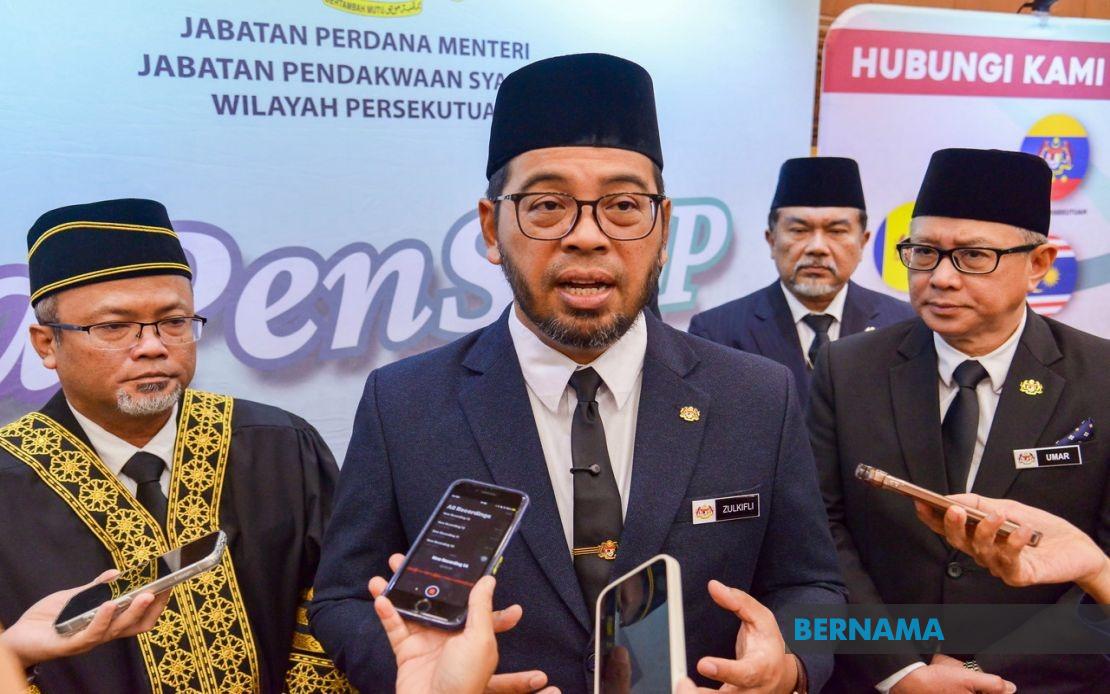
Dr Zulkifli Hasan, the minister overseeing the portfolio, acknowledged during remarks at the second Malaysian Syariah Prosecutors Conference (PePSSM) 2026 in Putrajaya on July 15 that his department had yet to compile sufficient information to commence a thorough review. His cautious initial response reflected the complexity of the situation, particularly given the involvement of multiple state-level religious authorities and the sensitive nature of documentation affecting the Rohingya community in Malaysia.
The Perak Islamic Religious Department (JAIPk) has since issued clarifications, explicitly stating that it does not recognise the disputed marriage declaration letter as a legitimate document. This authoritative rejection underscores a critical distinction within Malaysia's decentralised religious administration structure, where state religious departments maintain autonomous jurisdiction over marriage registration and validation processes. The department further clarified that marriages involving Rohingya individuals cannot be formally registered through conventional channels, citing ongoing policy deliberations among state religious authorities as the underlying reason for this restriction.
The incident highlights a broader vulnerability within Malaysia's Islamic institutional framework, where the proliferation of digital communication channels has created opportunities for the misuse of official references and credentials. The social media dissemination of the disputed documents demonstrates how easily fabricated or misleadingly presented religious authorisations can circulate among vulnerable populations seeking legitimate legal recognition for their personal status matters. For the Rohingya community, already operating within significant legal and administrative constraints in Malaysia, such fraudulent documentation could lead to false expectations regarding marital recognition and associated rights.
Beyond the immediate investigation, the matter connects to wider governance challenges that Dr Zulkifli identified regarding unaccredited religious teaching spreading across online platforms. The minister acknowledged that his department is actively reviewing mechanisms to address this issue, though he emphasised that regulatory responsibility ultimately resides with state governments, who maintain constitutional authority over religious instruction accreditation and licensing. This delineation of authority between federal and state levels reflects Malaysia's federal structure but also reveals potential coordination gaps that malicious actors might exploit.
The government is currently evaluating optimal approaches to curb unaccredited religious content online, taking into account the intricate legal and jurisdictional considerations involved. Dr Zulkifli noted that while the Prime Minister's Department ensures that individuals invited to contribute to departmental broadcasting and media activities possess proper accreditation, the challenge of monitoring and enforcing standards across the broader digital ecosystem remains substantially more complex. Religious enforcement officers (PPA) have encountered considerable difficulties in identifying and curtailing such activities, partly because social media platforms operate across jurisdictional boundaries and partly because defining accreditation standards consistently across all states presents practical obstacles.
In his broader address to the Syariah prosecutors gathered for the conference, Dr Zulkifli articulated the government's commitment to modernising Syariah legal frameworks to confront contemporary challenges, particularly those emerging in the cyber domain. He stressed that technological advancement has fundamentally altered the nature of crimes prosecuted within Islamic legal systems, requiring prosecutors and religious authorities to develop enhanced competencies in digital investigation methodologies. The expansion of criminal behaviour into online spaces demands that Syariah enforcement personnel acquire proficiency in digital forensics, data extraction and analysis, and technology-based evidence gathering.
Interdepartmental collaboration has become essential for effective Syariah prosecution in this evolving landscape. Dr Zulkifli emphasised the necessity of strengthening working relationships between the Prime Minister's Department (Religious Affairs), the Malaysian Communications and Multimedia Commission (MCMC), the Royal Malaysian Police (PDRM), and the Attorney General's Chambers. Such coordination enables prosecutors to access technical expertise, investigative resources, and prosecutorial support that individual religious departments might lack when handling technology-enabled offences.
The Rohingya marriage document controversy represents a microcosm of the vulnerabilities that emerge when institutional safeguards fail to keep pace with technological change and the sophistication of those seeking to exploit religious authority frameworks. The investigation announced by Dr Zulkifli will likely need to address how JAKIM reference numbers are generated, distributed, and protected against unauthorised use or reproduction. It may also prompt broader reviews of how religious institutions communicate official documentation in ways that reduce vulnerability to misrepresentation.
For Malaysian administrators and policymakers, the incident underscores the necessity of integrating cybersecurity and document authenticity protocols into religious institutional operations. The Rohingya community, despite their precarious legal status in Malaysia, deserves assurance that any marriage documentation they pursue will be processed through legitimate channels with verified institutional authority. The investigation's findings could influence how state religious departments coordinate with federal authorities in establishing clearer procedural guidelines for recognising marriage claims among populations without conventional citizenship documentation.
Looking forward, the government's commitment to enhancing Syariah prosecutors' technological capabilities suggests recognition that Islamic legal frameworks must evolve with societal changes. Training programmes, resource allocation, and institutional partnerships will determine whether Malaysia can effectively address cyber-related religious offences while simultaneously protecting vulnerable communities from fraudulent exploitation of religious authority. The resolution of the JAKIM reference number controversy will likely set important precedents for how similar cases are handled across Malaysia's federal-state religious governance structure.

