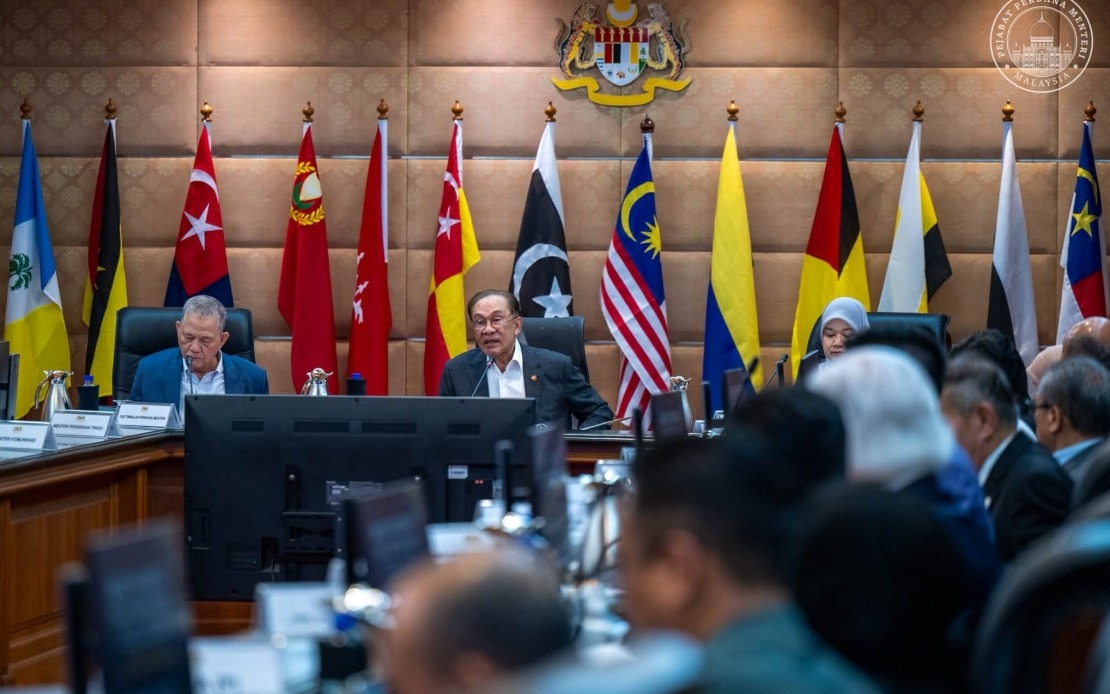
Prime Minister Datuk Seri Anwar Ibrahim has announced the creation of the National Education Council, a strategic body tasked with orchestrating comprehensive reforms across Malaysia's education landscape. The initiative reflects the government's determination to recalibrate the nation's education framework to align with contemporary global demands whilst maintaining its foundational cultural and moral anchors. Speaking after chairing the council's inaugural meeting in 2026, Anwar outlined an ambitious agenda that extends across both secondary and tertiary education sectors, signalling a whole-of-system approach to educational transformation.
The establishment of this council represents a significant institutional step in addressing longstanding concerns about Malaysia's education system. Rather than implementing piecemeal adjustments, the government has created a dedicated entity to ensure that reforms are coordinated, evidence-based, and responsive to the nation's evolving requirements. This structural approach suggests recognition that educational change requires sustained institutional engagement and multi-stakeholder coordination rather than ad-hoc policy interventions.
A central pillar of the council's mandate involves strengthening English proficiency as Malaysia's second language. This priority reflects both global economic realities and the competitive positioning of Malaysian graduates in international labour markets. Enhanced English capability has become essential for Malaysian workers seeking opportunities in multinational corporations, technology sectors, and knowledge-based industries. However, the government has been careful to frame this not as linguistic displacement but as supplementary capacity, explicitly protecting the role of Bahasa Malaysia as the national language. This balancing act addresses concerns from various constituencies about cultural preservation whilst acknowledging practical competitiveness imperatives.
The council's first substantive meeting examined national education direction across the full spectrum of Malaysian schooling and higher education. According to Anwar, discussions centred on elevating educational quality at the district level, indicating recognition that achievement gaps between urban and rural areas remain a persistent challenge. This localised focus suggests the council will not adopt a one-size-fits-all approach but instead tailor interventions to regional contexts and capacities, potentially addressing longstanding disparities in educational outcomes across Malaysia's diverse geography.
Enhancing the Bumiputera education agenda emerged as another key priority, underscoring the government's commitment to ensuring equitable educational access and advancement for indigenous Malays and Sabah and Sarawak natives. This reflects both affirmative action principles embedded in Malaysia's constitutional framework and pragmatic recognition that educational equity remains incompletely realised. The emphasis suggests the council will examine both access barriers and quality considerations to ensure Bumiputera students not only enrol in educational institutions but also graduate with credentials valued in employment markets.
Building a science, technology, engineering, and mathematics talent pipeline has been identified as crucial for meeting the nation's future economic requirements. This reflects global economic trends favouring STEM-skilled workforces, particularly as Malaysia aspires to move up value chains in manufacturing, semiconductor production, and digital services. The council's focus on talent development from foundational schooling through higher education indicates strategic thinking about creating sustainable human capital rather than attempting to remedy skills shortages reactively through adult retraining programmes.
Anwar emphasised that educational transformation must rest upon objective evaluation and diverse expertise rather than ideological commitments or bureaucratic inertia. His warning against complacency with existing systems carries implicit acknowledgment that Malaysian education has sometimes privileged stability over improvement, protecting established practices even when evidence suggests superior alternatives. This framing invites challenge to conventional thinking and positions the council as a vehicle for evidenced-based innovation.
The Prime Minister's insistence that national education embody Malaysia MADANI values whilst pursuing contemporary reforms articulates a vision of balanced development. Malaysia MADANI, the government's overarching prosperity framework, emphasises both material advancement and social cohesion anchored in shared values and cultural identity. Applied to education, this suggests the council will not treat curriculum modernisation as culturally neutral technical exercise but instead integrate it with deliberate transmission of Malaysian civic virtues, ethical principles, and national aspirations.
For Malaysian stakeholders and Southeast Asian observers, the council's establishment signals governmental seriousness about educational transformation. In regional context, where countries including Singapore, Vietnam, and Thailand have invested heavily in education systems, Malaysia's institutional commitment to comprehensive reform carries significance for national competitiveness. The breadth of the agenda spanning English proficiency, STEM development, equity, and quality suggests recognition that educational improvement requires simultaneous attention to multiple dimensions rather than sequential focus on individual priorities.
The council's role in bridging school and higher education represents an often-overlooked aspect of system coherence. Many education systems experience disconnects between secondary preparation and tertiary expectations, particularly regarding subject specialisation sequencing and skill development. By examining both levels within integrated framework, Malaysia's council can theoretically address such misalignments and ensure progression coherence for students transitioning through educational stages.
Successful implementation will depend partly on the council's composition, resource allocation, and political insulation from short-term electoral considerations. Educational transformation typically requires sustained commitment across multiple government cycles, as curriculum changes and quality improvements take years to manifest in student outcomes. The institutional design of the council will determine whether it functions as genuine reform engine or becomes another consultative body whose recommendations compete unsuccessfully against operational inertia.
The announcement also carries implications for Malaysia's private education sector, which serves significant student cohorts. Any comprehensive education strategy must address how public and private institutions interact, whether standards harmonisation occurs across sectors, and how quality assurance mechanisms apply across both systems. The council's scope presumably extends to these considerations, though the statement does not elaborate specifically on private education engagement.

