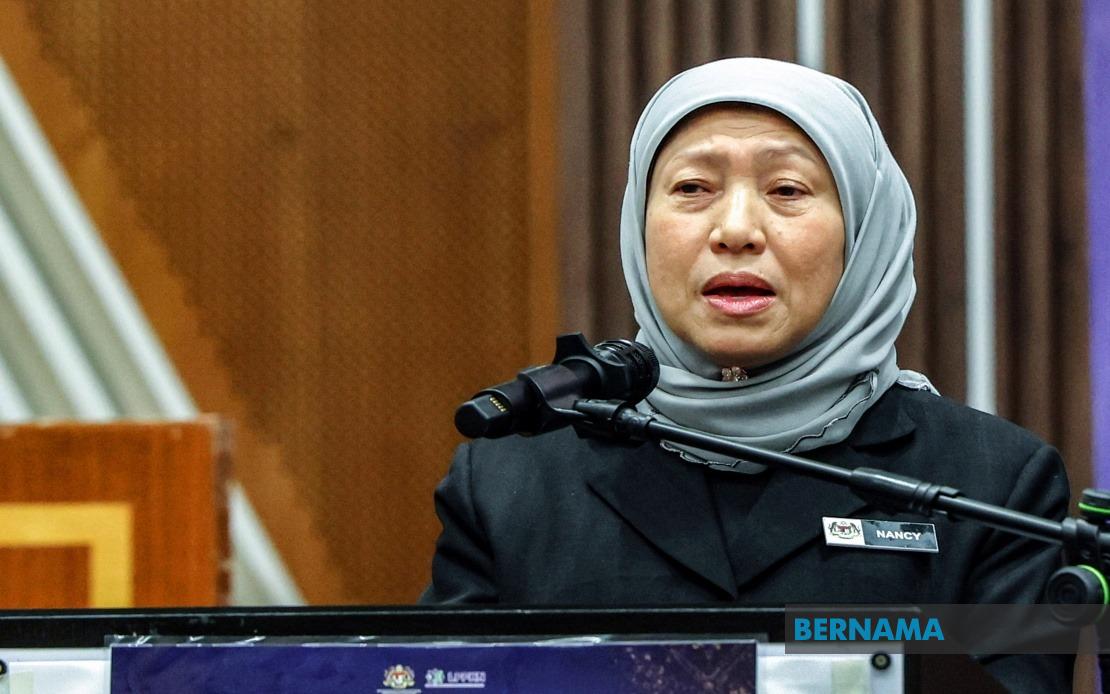
The Ministry of Women, Family and Community Development (KPWKM) is embarking on an ambitious 18-month national research initiative designed to fundamentally reshape how Malaysia understands and supports men's development, with particular focus on mental health challenges and family stability. Minister Datuk Seri Nancy Shukri announced the commencement of the National Gentleman Study this month, positioning it as a critical component of the government's broader National Gentleman Initiative that seeks to cultivate a generation of men grounded in emotional maturity, personal responsibility, and respect for women as equal partners.
The timing of this initiative reflects growing concern about the measurable toll that social and economic pressures are exacting on Malaysian men. Statistics cited by the Minister reveal that male suicide rates are approaching three times those of women, a disparity that signals deep psychological distress across the male population. Beyond suicide, the 2023 National Health and Morbidity Survey identified that 4.6 per cent of Malaysians aged 16 and above are managing depression, indicating a widespread mental health challenge that transcends gender but may manifest differently among men due to social conditioning and reduced help-seeking behaviour.
Financial strain emerges as a primary driver of male vulnerability and family breakdown. Household debt in Malaysia has reached 84.3 per cent of gross domestic product according to Bank Negara Malaysia, creating persistent economic anxiety that translates into relationship tension and domestic conflict. These economic pressures intersect with legal and social obligations, as evidenced by the 60,457 divorce cases recorded in 2024, a 4.1 per cent increase from the previous year. Analysis of these separations identifies financial stress, failure to meet maintenance obligations, and prolonged domestic conflict as principal contributing factors—all areas where male economic and emotional capacity directly impact family wellbeing.
A particularly troubling dimension of the crisis involves domestic violence perpetration. Royal Malaysia Police statistics reveal that 95 per cent of domestic violence perpetrators recorded between January and December 2025 were men, underscoring how unmanaged psychological stress, economic frustration, and inadequate emotional regulation culminate in harm to family members. This statistic complicates the empowerment agenda, as supporting male development must simultaneously address and prevent abusive behaviour patterns, requiring interventions that acknowledge both vulnerability and accountability.
The government's conceptual framework for men's empowerment deliberately departs from traditional notions of masculine dominance and economic supremacy. Rather than viewing male success through conventional measures of power and control, the National Gentleman Initiative emphasises emotional resilience, mental health stability, maturity in decision-making, and the capacity to shoulder family and societal responsibilities with integrity. Minister Nancy Shukri articulated this reorientation explicitly, stating that a gentleman is not defined by domination but by wisdom in leadership, willingness to share responsibilities, and genuine respect for women as equal contributors to family and national development.
The research methodology reflects contemporary best-practice governance through a Public-Private-People Partnership (4P) approach, creating a consultative forum that will systematically gather perspectives, lived experiences, and practical recommendations from diverse stakeholders across government, private enterprise, and civil society. This inclusive architecture recognises that male empowerment cannot be addressed through top-down policy alone; instead, effective solutions emerge when policymakers directly engage with the people experiencing these challenges, along with employers, health professionals, community leaders, and family support organisations who interact with struggling men daily.
The study's findings and recommendations will inform both immediate programme development and medium-to-long-term policymaking on men's empowerment across Malaysia. Given the interconnected nature of the challenges—mental health, financial stress, relationship breakdown, and violence—the research will likely generate insights applicable across multiple government portfolios, from health and labour to education and social welfare. The 18-month timeframe allows for comprehensive data collection and analysis while maintaining policy momentum, enabling the government to translate findings into concrete interventions within a reasonable timeframe.
For Malaysia and Southeast Asia more broadly, this initiative signals an important recognition that gender equality and family stability cannot be achieved by focusing exclusively on women's advancement. Instead, sustainable progress requires simultaneous investment in male psychological development, emotional literacy, and redefined masculinity that aligns with contemporary family structures and gender relations. The study acknowledges that men themselves are affected by rigid gender expectations and economic competitiveness that prioritise external achievement over internal wellbeing.
The regional context amplifies the relevance of this work. Across Southeast Asia, rapid urbanisation, economic volatility, educational expansion, and generational shifts in family values have disrupted traditional masculine roles without providing clear alternative templates for male identity and contribution. Malaysia's systematic study of these transitions offers potential lessons for neighbouring countries grappling with similar patterns of male mental health decline, family instability, and identity confusion among younger men navigating modernising societies.
Successfully implementing recommendations from this study will require sustained commitment to cultural change alongside policy reform. Shifting how society defines and celebrates masculinity demands engagement from educational institutions, media, religious communities, employers, and peer networks—the systems that primarily shape male self-perception and behaviour. The government's framing of gentlemanship as wisdom, responsibility, and respect provides a compelling alternative to both traditional dominance and contemporary confusion about male purpose, potentially resonating across Malaysia's diverse communities.
The stakes extend beyond individual wellbeing to national cohesion and development. When significant portions of the male population experience unmanaged mental health challenges, financial desperation, and family breakdown, the resulting social costs manifest in healthcare expenditure, criminal justice involvement, child welfare cases, and diminished human capital. Conversely, a generation of emotionally resilient men who see themselves as equal partners in family and community building could substantially strengthen Malaysia's social fabric and economic productivity. This study represents both an acknowledgment of crisis and an investment in preventive, dignity-centred solutions.

