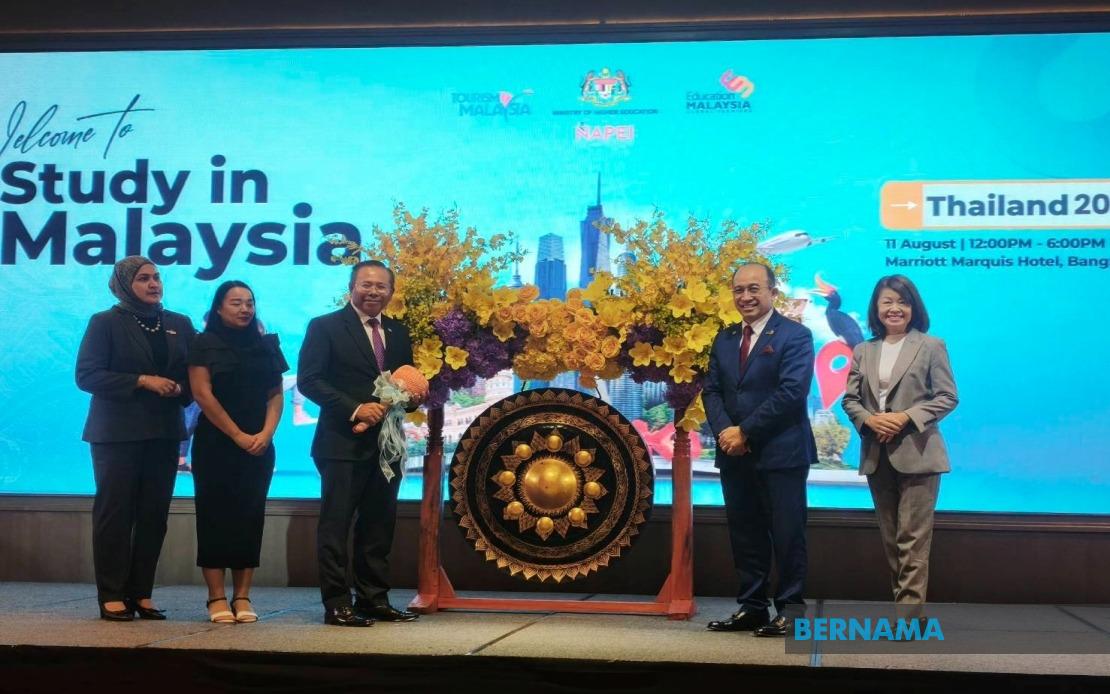
Malaysia has launched a concerted recruitment drive aimed at luring over 20 per cent more Thai students to its universities, banking on geographic proximity, competitive tuition fees and attractive post-graduation work pathways to compete effectively in Thailand's education market. The strategy reflects growing recognition among Malaysian policymakers that neighbouring Thailand represents a significant but underexploited source of international enrolments, with officials now moving beyond passive promotion to active, coordinated engagement across major Thai cities.
Education Malaysia Global Services (EMGS), the government agency tasked with internationalising Malaysia's higher education sector, is partnering with the Thai International Education Consultants Association (TIECA) to execute this expansion plan. TIECA, which functions as Thailand's primary professional body for education agents with 78 active member firms, provides EMGS with immediate access to Thailand's institutional networks of student advisers. This collaboration represents a strategic pivot from general marketing toward leveraging existing relationships and trusted local intermediaries who already counsel prospective students on overseas study options.
Currently, 634 Thai nationals are engaged in full-time studies across Malaysian institutions, according to EMGS data from 2025. The composition reveals a relatively balanced distribution, with slightly more than 60 per cent pursuing undergraduate degrees and approximately 40 per cent enrolled in postgraduate programmes. This enrollment profile differs markedly from some comparable Southeast Asian student flows to Malaysia, suggesting that Thai students view Malaysian universities as viable options across multiple qualification levels rather than pursuing specialised postgraduate niches.
The recruitment momentum has already shown measurable progress. Thai student numbers doubled from 300 in 2024 to 360 in 2025, representing a substantial year-on-year growth rate that EMGS executives believe can accelerate further through systematic engagement with Thai education consultants. This trajectory, if sustained at similar rates, would comfortably exceed the 20 per cent additional increase targeted in the coming cycle, though maintaining such acceleration will require sustained institutional effort and continued economic competitiveness relative to alternative destinations.
Novie Tajuddin, chief executive of EMGS, articulated Malaysia's competitive advantages during the launch of the Study in Malaysia Education Fair held across three Thai cities between August 9 and August 13. He emphasised three core factors driving Thai student interest: Malaysia's geographical proximity requiring minimal travel time and expense compared to distant Western destinations; the demonstrably lower cost of education relative to universities in developed nations; and the established reputation for educational quality across both public research universities and private institutions. For Thai families evaluating study-abroad options, these factors collectively reduce financial barriers while maintaining programme quality standards.
A significant policy incentive undergirding this recruitment strategy is Malaysia's one-year Graduate Pass, a post-study work visa permitting international degree holders to remain in Malaysia and secure employment in designated sectors. This pathway directly addresses a recurring concern among international students and their families regarding employment prospects after graduation. By guaranteeing eligible Thai graduates a structured opportunity to gain Malaysian work experience, the scheme effectively extends the value proposition of a Malaysian degree beyond classroom credentials to include tangible career development prospects within a rapidly industrialising Southeast Asian economy.
Malaysia's Ambassador to Thailand, Datuk Wan Zaidi Wan Abdullah, officiated the education fair launch and advanced an additional policy proposal during his remarks. He advocated that Malaysian public and private universities establish dedicated scholarship programmes targeted specifically at Thai students pursuing tertiary qualifications. Such schemes would function as financial instruments directly reducing out-of-pocket education costs for Thai families while simultaneously signalling institutional commitment to Thai student recruitment. Scholarship availability frequently influences student decision-making during the critical stages of application processes, particularly among middle-income families for whom full-fee university attendance remains a significant household investment.
The three-city fair structure—spanning Chiang Mai, Bangkok and Hat Yai—reflects a geographic strategy designed to reach Thai students across distinct regional markets. Chiang Mai and Ubon Ratchathani regions represent northern Thailand's urban centres where substantial student populations pursue secondary education and early tertiary options. Bangkok, as Thailand's capital and dominant educational hub, concentrates Thailand's most selective student cohorts and hosts extensive networks of education consultants. Hat Yai in southern Thailand provides regional coverage, accessing students for whom travel to northern venues proves inconvenient. This distribution acknowledges that Thai student mobility within Thailand itself varies by geography and economic capacity.
EMGS collaboration extends beyond external promotion to encompassing diplomatic coordination. The agency works actively with Thailand's Embassy in Malaysia to facilitate bilateral student engagement initiatives and strengthen institutional cooperation frameworks between Malaysian universities and their Thai counterparts. Such embassy-level engagement lends diplomatic credibility to education promotion efforts while creating institutional pathways for university-to-university partnership development, research collaboration and potential student exchange programmes that deepen relationships beyond immediate enrolment transactions.
The National Association of Private Educational Institutions (NAPEI) jointly organised the fair alongside EMGS and Tourism Malaysia, reflecting a broader whole-of-government approach to education internationalisation. This multi-stakeholder coordination indicates that Thai student recruitment now constitutes priority policy across multiple Malaysian public agencies, not merely education-sector specialists. Tourism Malaysia's involvement particularly signals recognition that international students represent not only education consumers but also long-term economic contributors who may subsequently return to Malaysia for business, professional opportunities or leisure, generating tourism revenue streams.
For Malaysian universities already operating in competitive international markets, Thai student recruitment offers specific strategic advantages. Thailand's geographic proximity minimises recruitment travel costs, its shared Buddhist cultural heritage with much of Malaysia facilitates cross-border understanding, and Thai students' established familiarity with Malaysian business environments through tourism and trade networks reduces cultural adjustment periods compared to more distant student populations. Additionally, existing Thai student cohorts in Malaysian universities create peer recruitment networks through which prospective students learn authentic information regarding programme quality and campus experiences.
This recruitment initiative also reflects Malaysia's broader aspiration to position itself as a regional education hub within Southeast Asia. By systematically targeting high-growth neighbouring markets like Thailand, Malaysia competes for student enrolments that might otherwise flow toward Singapore, Bangkok's private institutions or international universities establishing campuses throughout the region. Thai student expansion directly contributes to Malaysia's official target of becoming a global top-20 education destination, a strategic objective requiring sustained growth across all international student markets.
The Malaysian strategy demonstrates sophisticated recognition that international student recruitment succeeds through combination of structural advantages—geography, affordability, quality—reinforced by active institutional engagement through trusted intermediaries. Rather than relying on passive reputation, Malaysian policymakers are employing coordinated public diplomacy, scholarship incentives and systematic engagement with Thailand's established education consultant networks to convert latent demand into actual enrolments, establishing a replicable model potentially applicable across other ASEAN student markets.

