The Malaysian Ministry of Higher Education is tightening its surveillance mechanisms to protect the safety and wellbeing of Malaysian students scattered across West Asian countries, as geopolitical instability in the region creates fresh concerns for overseas education programmes. Higher Education Minister Datuk Seri Dr Zambry Abd Kadir announced that the ministry maintains continuous coordination with Wisma Putra, the Foreign Ministry's headquarters, to receive real-time intelligence and strategic guidance that informs protective measures for Malaysian nationals pursuing tertiary studies abroad.
The heightened vigilance follows the United States' recent travel advisory recommending that American citizens vacate the region, a signal that has prompted Malaysian authorities to reassess the security landscape and implement corresponding precautionary actions. Dr Zambry acknowledged that while the situation remains fluid and subject to rapid policy shifts, Malaysia cannot afford to be complacent. He noted that Washington's foreign policy positions can reverse dramatically between announcements, underscoring the unpredictability that necessitates constant monitoring and adaptive response protocols from Malaysian agencies.
The coordination between MOHE and the Foreign Ministry represents Malaysia's institutional approach to managing overseas student risks, leveraging diplomatic channels and embassy networks to maintain situational awareness across the region. This partnership allows the education ministry to access intelligence that would be inaccessible through direct education ministry channels alone, ensuring that decisions about student movements and welfare are informed by the most current security assessments available to the Malaysian government.
Currently, the student population distributed across West Asia presents a significant responsibility for Malaysian authorities. Egypt hosts thousands of Malaysian students engaged in diverse academic pursuits ranging from Islamic studies to professional disciplines including medicine, dentistry, and pharmacy. Jordan accommodates between 1,000 and 2,000 Malaysian students, while Morocco's intake remains modest but is experiencing steady expansion year on year. These numbers underscore why the ministry cannot treat student safety as a secondary concern, particularly given that many are pursuing qualifications in fields critical to Malaysia's healthcare and professional sectors.
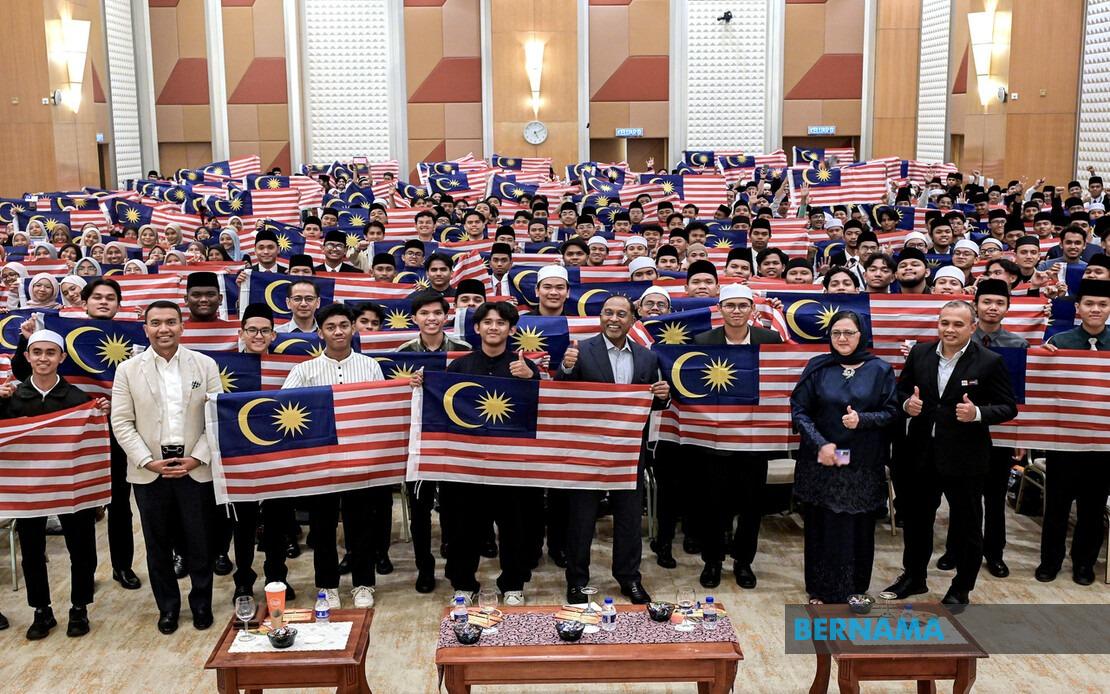
Importantly, 456 Malaysian students prepared to commence their studies in Egypt, Jordan, and Morocco from September 1 participated recently in the International Charisma Programme conducted jointly by MOHE and the Malaysia Nationhood Academy. This orientation initiative provided enrollees with comprehensive briefings, direct engagement with ministry officials, and welfare guidance designed to prepare them psychologically and logistically for their overseas sojourns. The programme reflects Malaysia's conviction that pre-departure preparation enhances students' capacity to navigate challenges and maintain connection to their homeland while abroad.
The ministry has established an institutional framework to monitor student circumstances continuously. Education Malaysia offices maintain an active presence in Egypt and Jordan, serving as the primary interface between the government and Malaysian students in those countries. Although Morocco lacks a dedicated Education Malaysia office, administrative oversight operates through the Egypt office, creating a consolidated approach that ensures no Malaysian student falls outside the ministry's administrative purview regardless of their specific location within the region.
Dr Zambry's statements reveal a calculated assessment that current conditions in Egypt, Jordan, and Morocco have not yet generated specific threats to Malaysian student cohorts. The ministry has received no reports indicating that regional developments have materially affected Malaysian educational institutions or individual students. This relative stability does not translate into complacency, however; MOHE has positioned itself to mobilise resources and activate contingency protocols immediately should circumstances deteriorate in any of the three countries.
The conceptual framing of Malaysian students abroad as "strategic national assets" reflects a sophisticated understanding that these individuals constitute an investment in Malaysia's future intellectual capital and professional capacity. The minister expressed optimism that graduates will return home equipped with advanced qualifications and international experience, ready to contribute meaningfully to national development across multiple sectors. This perspective transforms student welfare into a matter of national interest rather than mere humanitarian concern, elevating the priority assigned to their protection.
Beyond immediate security monitoring, MOHE emphasises the holistic development of students through frameworks encompassing academic excellence alongside character formation. The ministry invokes Islamic pedagogical concepts—*ta'lim* (knowledge transmission), *tarbiah* (personal development), and *ta'dib* (ethical formation)—to articulate an educational philosophy that extends beyond credential acquisition. This messaging suggests that Malaysian students should leverage their overseas experience to mature as balanced individuals capable of contributing not merely technical expertise but also moral leadership upon their return.
Malaysia's position as a destination for approximately 180,000 international students provides contextual significance to the minister's remarks about institutional credibility. The presence of such substantial international enrolment testifies to the competitive standing of Malaysian higher education in global markets, validating the government's investment in quality assurance and institutional excellence. This international recognition operates independently of fluctuations in any single country's student intake, providing resilience to Malaysia's education export sector and reflecting genuine systemic strengths rather than temporary advantages.
The evolving situation in West Asia presents particular complexity because multiple Malaysian student cohorts pursue studies across different institutional environments and national contexts simultaneously. Egypt's ancient universities attract students across multiple disciplines; Jordan's institutions serve as regional hubs; Morocco represents an expanding frontier for Malaysian educational outreach. Managing safety across this geographically and institutionally dispersed population requires precisely the kind of coordinated governmental approach that MOHE has mobilised, combining ministry capacity with diplomatic resources and technological monitoring capabilities.

