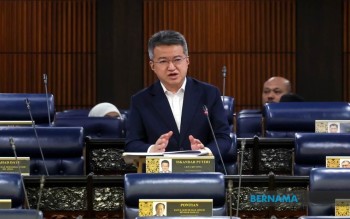
Malaysia's fiscal framework for 2027 remains unchanged despite mounting pressures from elevated global oil prices, according to Deputy Finance Minister Liew Chin Tong. The government believes current economic projections embedded in the preliminary Budget 2027 framework still hold sound footing, though ongoing monitoring will continue until the formal budget tabling in October. This measured stance reflects confidence that petroleum-related revenue gains can partially offset the substantial subsidy burden, even as geopolitical tensions in West Asia keep energy markets volatile.
The fiscal mathematics underlying this position reveal a nuanced balancing act. While higher crude oil prices have driven subsidy expenditure up by an estimated RM40 billion, those same price movements generate offsetting revenue benefits. Specifically, every one-dollar-per-barrel increase in world crude oil prices contributes approximately RM300 million to petroleum-related government revenues. This automatic stabiliser mechanism—where rising energy costs simultaneously boost both costs and income—has traditionally provided Malaysia with a natural hedge against oil market shocks. Nevertheless, the buffer remains finite, and sustained price escalation could eventually exhaust these natural offsets.
The government's confidence in maintaining current fiscal projections hinges partly on anticipated dividends from Petronas, the national oil company. These dividend flows, separate from direct petroleum revenue collection, represent another critical income stream tied to oil market conditions. Combined with direct crude oil revenue gains, the Petronas dividend contribution could meaningfully defray portions of the RM40 billion subsidy increase. This diversified revenue exposure means Malaysia's fiscal position does not depend solely on any single revenue source, reducing vulnerability to sudden oil market reversals.
The geopolitical dimension adds urgency to fiscal stability efforts. Tensions in West Asia—the region encompassing major global energy producers—have sustained upward pressure on international crude oil prices and created unpredictable supply risks. Malaysia, as a net petroleum importer and substantial energy consumer, faces both the direct cost of higher oil prices through subsidy obligations and indirect economic slowdown risks should regional conflict escalate. The government has responded by establishing crisis management mechanisms, including weekly engagement sessions coordinated through the National Economic Action Council, to anticipate supply disruptions and protect essential energy and food supplies for ordinary Malaysians.
Managing subsidies while preserving fiscal sustainability remains the core challenge. Malaysia has historically relied on fuel subsidies to cushion consumers from global price fluctuations, but this approach constrains budgetary flexibility and crowds out spending on infrastructure, education, and healthcare. The government's stated strategy emphasises targeted rather than blanket subsidies—a gradual reorientation intended to reduce fiscal exposure while protecting lower-income households most vulnerable to fuel price shocks. This transition demands careful calibration to avoid triggering inflation that would erode real wages and purchasing power across the economy.
Revenue collection performance in the first half of 2026 will ultimately determine whether fiscal assumptions hold. Government officials have signalled commitment to rigorous monitoring of tax compliance, collection efficiency, and non-petroleum revenue streams. This emphasis reflects recognition that sustainable fiscal consolidation cannot depend indefinitely on volatile commodity revenues; instead, the government must broaden and strengthen its domestic tax base. Enhanced compliance efforts targeting individual and corporate taxpayers would reduce reliance on petroleum windfalls, though political acceptance of higher effective tax rates remains uncertain.
The broader context involves Malaysia's medium-term fiscal consolidation objectives. The government has committed to reducing the fiscal deficit through structural reforms rather than pro-cyclical spending cuts. This approach distinguishes Malaysia from some regional peers that have adopted stricter austerity during commodity downturns. By emphasising expenditure restructuring—reallocating resources toward more productive investments while eliminating inefficiencies—the government aims to improve fiscal outcomes without dampening economic growth. Success requires disciplined budget discipline across all ministries and agencies, a considerable administrative challenge.
For ordinary Malaysians, the October Budget 2027 tabling will reveal whether the government maintains current subsidy generosity, implements targeted reduction mechanisms, or introduces new revenue sources. The decision carries implications for household purchasing power, inflation expectations, and consumer confidence. A freeze on current subsidies amid sustained high oil prices could either stabilise long-term fiscal health or compress real incomes for price-sensitive households. Conversely, revenue-side measures—including potential new taxes or broadened tax bases—could shift burden distribution between income groups, affecting economic inequality.
Regional investors and credit rating agencies will scrutinise Malaysia's fiscal credibility during the October budget announcement. Holding to current projections without adjustment would signal either that conditions have stabilised or that the government possesses genuine confidence in offset mechanisms. Conversely, substantial revisions downward would raise concerns about medium-term sustainability. Malaysia's sovereign credit rating has remained investment-grade despite regional economic volatility, but continued fiscal discipline strengthens that positioning, particularly if global economic growth slows and emerging market capital flows reverse.
The government's emphasis on continuous monitoring through weekly crisis management sessions underscores recognition that fiscal assumptions rest on fluid foundations. Oil prices, geopolitical developments, global economic growth, and capital market conditions remain inherently unpredictable. By institutionalising real-time assessment mechanisms, rather than relying on static projections, the government positions itself to respond nimbly should conditions deteriorate sharply. This adaptive approach reflects lessons learned from previous commodity boom-bust cycles that have periodically strained Malaysian fiscal capacity.

