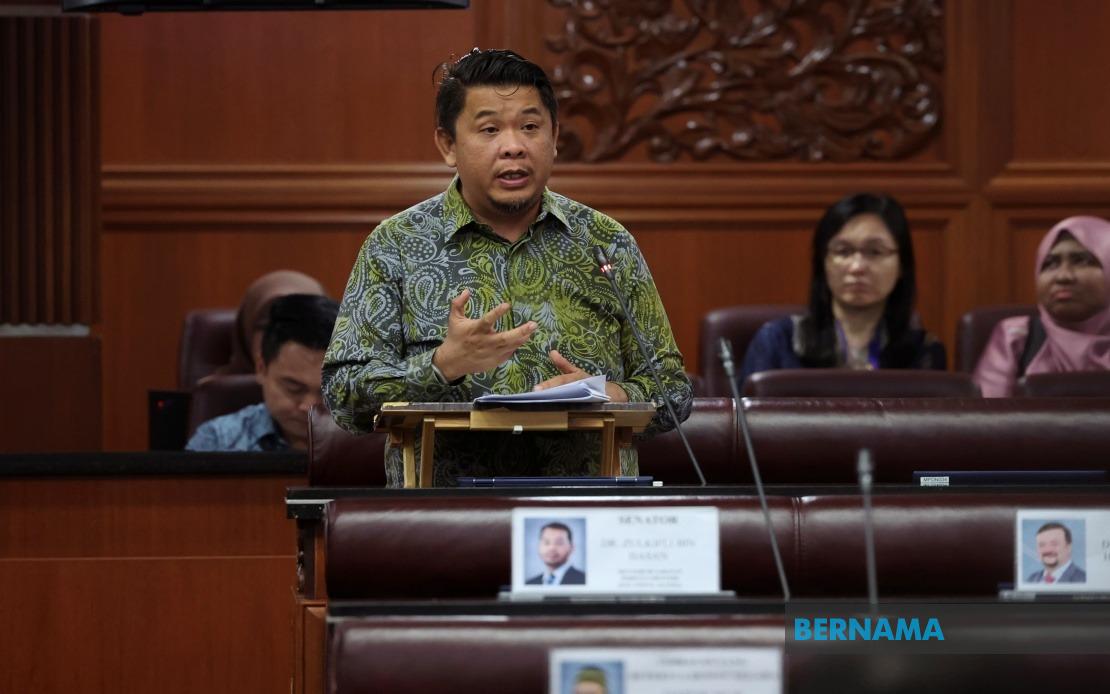
Malaysia's government has taken a significant step in restructuring how refugees are registered in the country by directing the United Nations High Commissioner for Refugees (UNHCR) to pause all new registrations effective immediately. Deputy Foreign Minister Datuk Lukanisman Awang Sauni confirmed that the Cabinet made this decision to facilitate the implementation of a new framework known as the Refugee Registration Document (DPP) programme, which will place refugee management squarely under Malaysian government authority rather than relying on international agency systems.
The shift represents a deliberate policy realignment aimed at enhancing bureaucratic control and data integrity. Under the existing UNHCR system, Malaysia has had limited direct oversight of refugee information and verification processes. By transitioning to the DPP programme, authorities intend to consolidate refugee data management through a centralised government database, enabling more rigorous identity verification and reducing reliance on documentation kept by external organisations. This approach allows Malaysia to coordinate information across its various enforcement and security agencies more effectively.
The temporary suspension of registrations applies broadly but comes at a particularly sensitive moment regarding Rohingya refugees, the largest stateless population in Malaysian detention. Many Rohingya lack any form of official identity documentation from Myanmar, their country of origin, which has refused to recognise them as citizens. Senator Hussin Ismail's parliamentary question specifically addressed this vulnerability, highlighting the precarious legal status of thousands of Rohingya held in Malaysian facilities without recognised travel or identity papers. The DPP programme intends to systematically address such cases through a structured verification process involving multiple government agencies.
Lukanisman emphasised that the new registration mechanism will operate through stringent protocols designed to prevent irregular migrants from entering the system. By implementing multi-agency oversight during the DPP registration process, the government aims to ensure that only individuals meeting eligibility criteria receive formal refugee status recognition. This reflects growing concern about distinguishing between genuine refugees fleeing persecution and economic migrants seeking to enter Malaysia irregularly, a distinction the UNHCR process has faced criticism for not maintaining rigorously enough according to Malaysian officials.
Malaysia's position as a non-signatory to the 1951 Refugee Convention has long created a legal grey area in how the country manages its refugee population. Unlike nations bound by international refugee treaties, Malaysia possesses greater latitude in determining its own refugee policies and is not obligated to adopt UNHCR determinations. This legal positioning underpins the government's assertion that bringing refugee management into its own regulatory framework represents a necessary assertion of national sovereignty and administrative capacity.
The administration has also articulated concerns about the broader socioeconomic implications of its large refugee populations. Housing over a million registered and unregistered migrants, a significant proportion of whom are refugees, places considerable strain on Malaysia's public services, labour markets, and housing availability. The government contends that implementing stricter domestic controls through the DPP system will help manage these pressures more effectively by preventing further uncontrolled migration and ensuring that resources allocated to refugee support are directed appropriately.
Simultaneously, Malaysia continues pursuing a diplomatic strategy addressing the Rohingya crisis at regional and multilateral levels. Lukanisman indicated that the government remains engaged with Myanmar and other ASEAN member states to encourage Myanmar to address the underlying causes of Rohingya displacement and to develop burden-sharing arrangements for managing affected populations. This diplomatic track complements the domestic DPP initiative, recognising that refugee flows are fundamentally rooted in political conditions in Myanmar rather than immigration policy alone.
In a parallel development, the government has accelerated repatriation of Myanmar nationals currently held in immigration detention facilities. Approximately 5,000 Myanmar citizens are currently detained pending removal, and Lukanisman announced that Myanmar's government has indicated readiness to receive them. The repatriation process will utilise naval vessels and proceed through administrative resolution channels, representing a significant movement in clearing detention facilities. This initiative suggests improving diplomatic cooperation with Myanmar on migration management despite ongoing tensions regarding broader human rights concerns.
The DPP programme launch reflects Malaysia's broader pivot toward more centralised immigration governance. Rather than delegating refugee status determination to international agencies, the system places responsibility and authority directly with Malaysian authorities. This shift requires substantial institutional development, training, and resource allocation to ensure the new system operates effectively and maintains international humanitarian standards. The success of this transition will depend on whether the government can establish credible, transparent verification procedures that protect genuine refugees while preventing abuse.
Regional observers note that Malaysia's approach may influence how other Southeast Asian nations manage refugee populations, particularly concerning Rohingya and Myanmar-related displacement. Several ASEAN members face similar challenges managing stateless populations and irregular migrants without being bound by the 1951 Convention. If Malaysia's DPP programme successfully demonstrates enhanced administrative efficiency without compromising humanitarian protections, it could provide a model for regional peers seeking alternatives to UNHCR-dependent systems.
The implications for individuals currently in the pipeline for UNHCR registration remain uncertain during this transition period. Refugees and asylum-seekers waiting for recognition face extended limbo as the DPP programme is rolled out and existing caseloads are presumably transferred to the new system. International humanitarian organisations will be watching closely to ensure that the transition does not deprive vulnerable populations of critical protections or access to services. The success of this restructuring will ultimately be measured not merely by administrative efficiency but by whether it maintains safeguards for genuine refugees whilst addressing legitimate security and resource management concerns.

