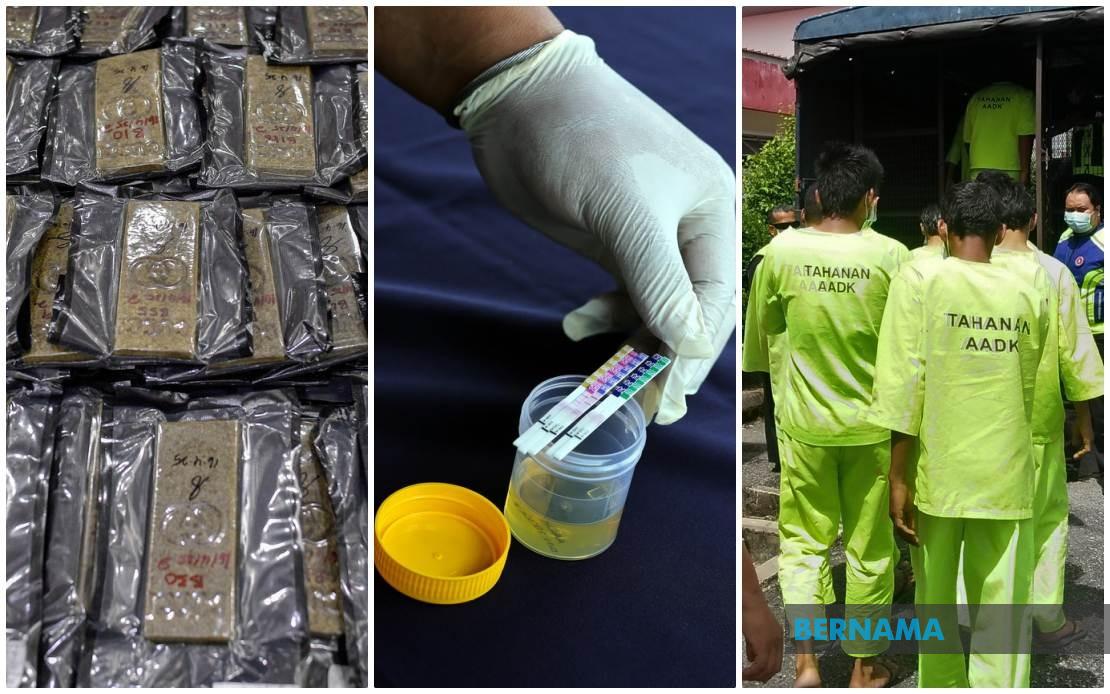
The scale of Malaysia's synthetic drug problem has reached alarming proportions, with Home Minister Datuk Seri Saifuddin Nasution Ismail revealing that 141,817 cases were documented last year—a figure that underscores the persistent challenge facing the nation's law enforcement and public health authorities. Speaking during Ministers' Question Time in the Dewan Rakyat, Saifuddin Nasution provided a sobering overview of a crisis that has been gathering momentum over recent years, pointing to a trajectory that shows no signs of abating despite sustained government intervention efforts.
The statistical picture painted by the Home Minister reveals troubling upward momentum in the abuse landscape. The ministry recorded 145,526 cases in 2023, followed by a sharp jump to 192,852 cases in 2024—a dramatic 32 per cent increase that signals a deepening crisis. These figures, compiled from data sources including the Ministry of Health, the National Anti-Drugs Agency (AADK), Narcotic Addiction Rehabilitation Centres (Puspen), and the Royal Malaysia Police (PDRM), represent a comprehensive accounting of the problem across multiple fronts. The sheer magnitude of these numbers suggests that synthetic drug abuse has become one of the country's most pressing social challenges, affecting families and communities at unprecedented levels.
What distinguishes the current crisis is the overwhelming dominance of synthetic substances in Malaysia's drug abuse landscape. Amphetamine-type stimulants, or ATS, now account for approximately 70 per cent of all drug abuse cases nationally, marking a significant shift in usage patterns from traditional narcotics. This transition reflects broader changes in global drug markets, where synthetic compounds offer traffickers advantages in production, distribution, and profitability. Methamphetamine, colloquially known as syabu among users, has emerged as the substance of choice across much of the country, particularly in regions where it has displaced older drug preferences such as heroin and cannabis. The proliferation of these highly addictive stimulants has complicated the public health response, as they produce different health and social consequences than traditional opioids.
Geographic variation in the drug crisis presents a complex mosaic that demands targeted policy responses. The east coast corridor has been identified as the most severely affected region, with district-level analysis revealing particular hotspots of drug activity. Pendang district recorded the highest rate of drug abuse cases, followed by Kuala Krai, with Bachok, Besut, and Mersing also featuring prominently among the most affected areas. This concentration suggests that supply chain vulnerabilities, socioeconomic conditions, or enforcement gaps may be creating environments where drug markets flourish. Understanding these geographic disparities is crucial for Malaysian policymakers seeking to allocate resources effectively and design interventions tailored to regional circumstances rather than adopting a one-size-fits-all national approach.
A particularly concerning development is the emergence of fentanyl as a new threat within Malaysia's drug landscape. This potent synthetic opioid, which is dozens of times more powerful than morphine, was detected in adulterated vape products during police operations. Though its prevalence remains limited compared to ATS and other established synthetic drugs, fentanyl's mere presence within Malaysia's illicit markets signals potential for rapid escalation. The government has responded by adding fentanyl to the list of scheduled substances through amendments to the Drug Dependants (Treatment and Rehabilitation) Act and the Dangerous Drugs Act 1952, enabling enforcement authorities to pursue cases involving the substance. Given fentanyl's deadly potency and the global opioid crisis unfolding in other nations, vigilance about this emerging threat is essential for preventing what could become a secondary wave of overdose deaths.
The demographic profile of abuse reveals that synthetic drug use is concentrating among younger Malaysians, with nearly 75 per cent of the reported 192,000 cases so far this year involving persons aged between 15 and 39. This youthful concentration carries significant implications for Malaysia's human capital and social stability, as drug dependency during formative years disrupts education, employment prospects, and family formation. The vulnerability of young people to drug markets, whether through peer pressure, limited economic opportunities, or sophisticated digital marketing by traffickers, represents a fundamental challenge to the nation's long-term development. Schools, universities, and vocational institutions must prioritize evidence-based prevention programmes to address demand drivers before addiction takes hold.
The incarceration system reflects the pervasiveness of drug-related offences throughout Malaysian society. Prison data presented by the Home Minister indicates that approximately 70 out of every 100 inmates are linked to drug-related cases, either as convicted offenders or remanded detainees. In certain institutions such as Machang, nearly all inmates carry drug-related charges, illustrating how the criminal justice system has become substantially oriented toward managing drug offences rather than addressing other categories of crime. This concentration raises questions about the cost-effectiveness of incarceration as a primary response to drug abuse and suggests the urgent need for expanded treatment, rehabilitation, and diversion programmes that address addiction as a public health matter rather than purely as a criminal justice issue.
The role of technology in facilitating drug transactions has introduced a new dimension to Malaysia's enforcement challenge. Online platforms enable individuals to purchase controlled substances with minimal regulatory oversight or verification of buyer identity. These digital marketplaces operate beyond traditional enforcement boundaries, complicating the work of customs officials and law enforcement agencies accustomed to interdicting physical shipments and managing street-level distribution. The AADK and PDRM have been compelled to develop digital investigative capabilities and forge partnerships with telecommunications providers and platform operators, but the speed of technological change often outpaces policy and enforcement adaptation. This technological gap represents a vulnerability that drug traffickers continue to exploit effectively.
Government strategy to combat synthetic drug abuse currently encompasses multiple pillars spanning prevention, education, enforcement, and rehabilitation. The AADK has implemented community-based prevention initiatives, educational programmes within schools and tertiary institutions, and intervention efforts targeting families and workplaces. Coordination among the PDRM, Customs Department, and health authorities represents an acknowledgment that the problem requires whole-of-government response rather than isolated agency efforts. However, the persistence and growth of abuse cases despite these interventions suggests that current approaches may be insufficient in scale or effectiveness, or that demand-side drivers remain inadequately addressed. Future policy evolution should incorporate lessons from jurisdictions that have achieved measurable reductions in synthetic drug prevalence, potentially including harm reduction strategies, medication-assisted treatment expansion, and economic development initiatives targeting communities with highest abuse concentrations.
The international dimension of Malaysia's synthetic drug crisis cannot be overlooked, as the country's geographic position astride major trafficking routes and its relatively developed infrastructure make it attractive for transnational drug networks. While the Home Minister did not explicitly characterize Malaysia as a transit hub or distribution centre, the rising incidence of substances like fentanyl—which originates from outside the region—indicates international supply chains are reaching Malaysian markets. Strengthening regional cooperation through mechanisms such as ASEAN's drug control frameworks, improving intelligence sharing with neighbouring countries, and enhancing port and border security represent essential components of a comprehensive response. The interconnected nature of Southeast Asian drug markets means Malaysia's efforts cannot succeed in isolation.
Moving forward, the trajectory of synthetic drug abuse in Malaysia requires sustained political commitment to policy innovation and resource allocation. The current crisis, marked by dominance of ATS, emergence of fentanyl, and concentration among youth in specific geographic areas and age cohorts, demands integrated responses that balance enforcement with treatment and prevention. Expanding access to medication-assisted treatment, developing vocational and educational opportunities for at-risk youth, and implementing evidence-based harm reduction measures could complement traditional law enforcement. Success will require not merely containing the drug trade but addressing the underlying vulnerabilities that drive demand for synthetic substances among Malaysians, particularly those in economically disadvantaged communities.