Malaysia's political landscape intensified this week with overlapping crises ranging from the perpetually vexing 1MDB aftermath to intensifying competition ahead of the Johor state elections. The confluence of legal proceedings, electoral jockeying, and allegations of governmental impropriety reveals a nation grappling with institutional accountability while steering toward an important state poll that opposition leaders say carries implications for national checks and balances.
The 1MDB saga continued dominating headlines as the government flatly denied reports that former fugitive Jho Low had entered Malaysian territory for settlement discussions connected to the scandal. The assertion came amid ongoing legal manoeuvres, with a full trial of 1MDB's suit against former Prime Minister Najib Razak's wife Rosmah Mansor, involving sums of US$346 million, scheduled to commence in June 2027. A separate Mareva hearing—a procedure to prevent asset dissipation—was set for September 28, underlining the persistence of civil recovery efforts. The Finance Ministry simultaneously disclosed that the government's total 1MDB-related obligation reached RM51.4 billion, a figure that encapsulates the financial burden this scandal has imposed on Malaysian taxpayers and the state balance sheet. For Southeast Asian observers, the protracted nature of these proceedings illustrates both the complexity of recovering from large-scale financial malfeasance and the painstaking institutional efforts required to hold high-level figures accountable.
Prime Minister Anwar Ibrahim faced separate allegations concerning personal expenditure when he dismissed claims that he had purchased a new BMW for private use, denying yet another controversy that has become routine in Malaysian political discourse. The incident reflects broader public scepticism about leadership probity, a sentiment that extends to ongoing questions about government contract awards. During court proceedings, revelations emerged that a company linked to former Prime Minister Muhyiddin Yassin had secured a RM141 million government contract, fuelling accusations of cronyism and preferential treatment based on political connections rather than merit.
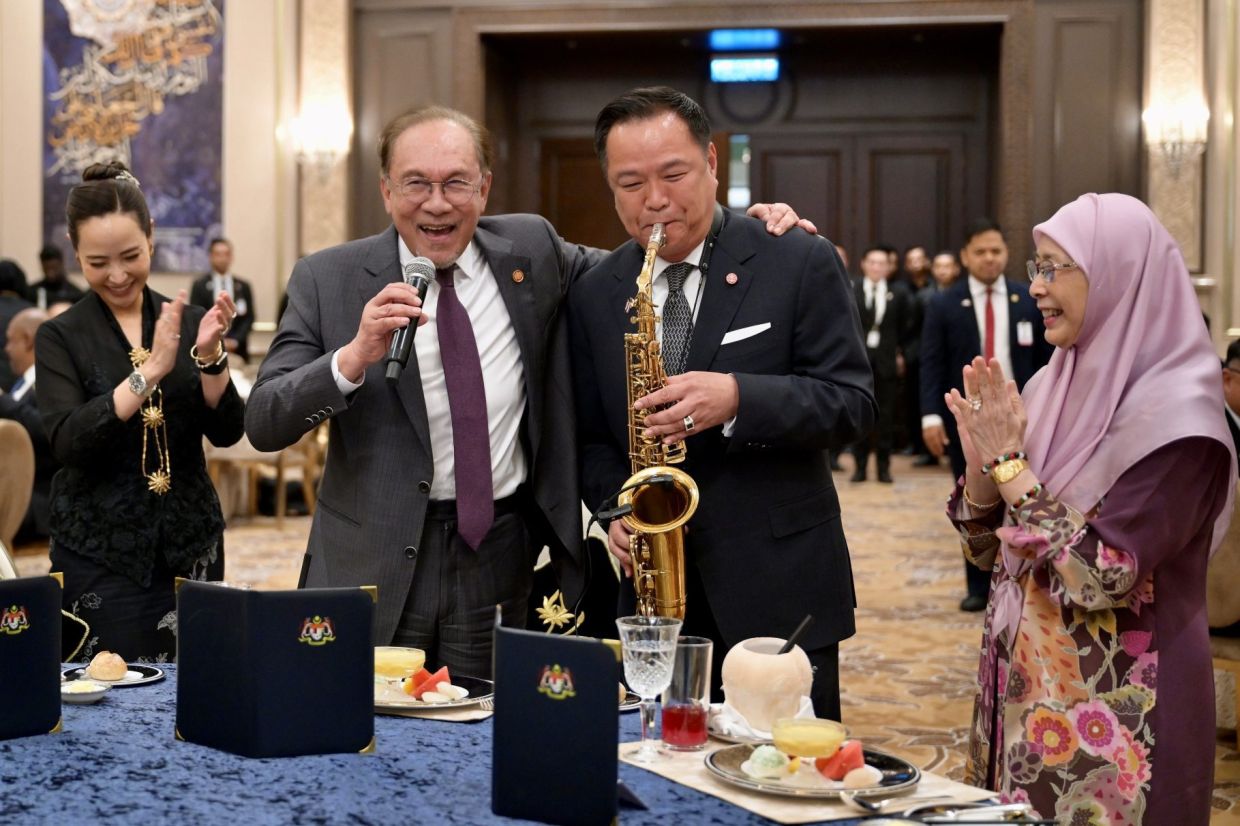
The Johor state elections emerged as the focal point of political tension, with multiple factions articulating competing visions for governance. Khairy Jamaluddin, speaking on behalf of the Barisan Nasional coalition, pushed back against opposition characterisations of the campaign, asserting that BN maintains independence from external political interests. However, opposition voices countered with different emphasis, with Bersatu's leadership contending that preventing BN from obtaining a two-thirds supermajority was essential for preserving governmental checks and balances. Onn Hafiz, an opposition figure, separately indicated that should his faction return to power, no PAS assemblymen would receive nomination—a statement carrying significant implications for coalition dynamics within the opposition and signalling potential reconfiguration of political alliances following the elections. Thailand's Foreign Minister Anutin Amornwiwat extended symbolic support to Prime Minister Anwar, offering encouragement during the electoral period, illustrating how regional neighbours monitor consequential Malaysian political developments.
Government officials mounted defences against accusations of political bias in resource distribution. Prime Minister Anwar categorically stated that no state faced marginalisation based on its ruling coalition's political affiliation, asserting instead that aid had been allocated equitably across all regions regardless of partisan control. The assertion arose amid broader tensions between federal and state governments, particularly regarding developmental parity and resource flows. Meanwhile, administrative movements saw the Perlis Menteri Besar and a state executive council representative resign from Bersatu's supreme council to concentrate on state-level responsibilities, suggesting potential recalibration of political structures.
Social policy announcements provided some positive momentum, with over 96,000 Form Six students scheduled to receive Early School Aid, addressing educational equity concerns. The Indian community reportedly regained ownership or control of the religious institution known as 'Nambikei' under the current Madani government framework, with community leader Gunaraj characterising the development as a restoration of cultural and religious autonomy. These initiatives signal governmental attention to community-specific concerns and cultural pluralism.
Corruption investigations intensified on multiple fronts. The Malaysian Anti-Corruption Commission recommended charges in 69 cases involving fraudulent PERKESO grant claims, demonstrating sustained enforcement against systematic misuse of social security resources. The same agency completed an investigation into an elephant transfer involving a former minister but determined insufficient evidence to link the former officeholder to a RM53 million graft allegation, though the inquiry's completion may not fully resolve public suspicion surrounding the matter. Police simultaneously expanded scrutiny of lifestyle displays on social media, placing business owners who parade flashy possessions online under heightened examination for possible money laundering connections, reflecting evolving investigative approaches to financial crime detection.
Criminal enforcement extended across diverse domains. A World Cup betting ring operating from a Kuala Lumpur office complex was dismantled with eleven arrests, while authorities arrested a man for threatening an online influencer during a live broadcast, illustrating law enforcement's expanding attention to digital-age offences. In a more tragic incident, police investigations into a stabbing in Banting revealed that the suspect had jumped from a school building during an incident the previous year, raising questions about prior intervention opportunities and institutional coordination.
Transport and logistics developments addressed functional governance concerns. Responding to transportation demand during the Johor elections, an unspecified non-governmental organisation offered complimentary bus services, while KTMB railway authorities doubled train capacity to accommodate anticipated electoral traffic. A public accounts committee urged the government to renegotiate terms with Spanco following delays in vehicle deliveries, addressing procurement accountability. Fuel supply concerns were dismissed, with officials reassuring the public of adequate petroleum supply through December.
Economic performance showed mixed signals. Bursa Malaysia declined at midday ahead of an official bank rate announcement, suggesting investor caution regarding impending monetary policy decisions. Perak's durian growers maintained stable operations despite persistent market oversupply, demonstrating resilience within a sector vital to rural Malaysian livelihoods. Outstanding fisheries disputes with Thailand were resolved through discussions between Anwar and Thai counterparts, removing a long-standing bilateral irritant.
Labour and social interventions completed unfinished business. A ten-year tax exemption previously granted was honoured following intervention by former Finance Minister Tengku Zafrul, indicating that commitments made during prior administrations continue receiving acknowledgment. During trial proceedings, Tengku Zafrul testified that notes from the previous Prime Minister required immediate action, contributing to ongoing documentation of governance during contested periods. These developments collectively illustrate Malaysia navigating complex institutional, electoral, and policy terrain as fundamental questions about accountability, governance quality, and political legitimacy remain contested.

