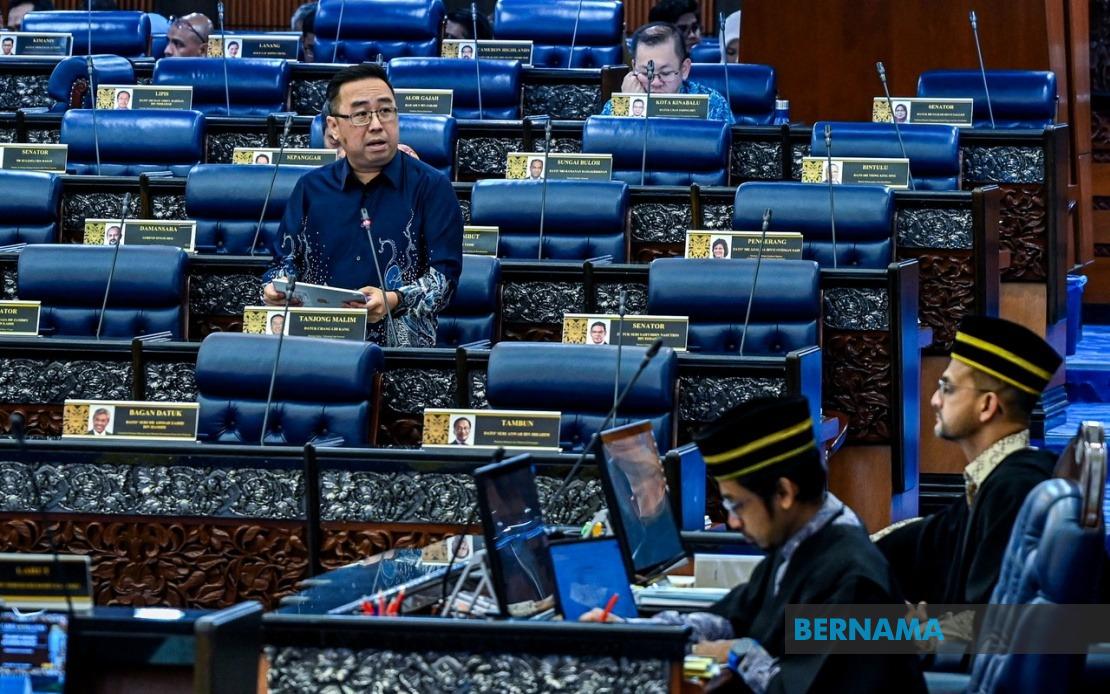
The Malaysian government has set an ambitious timeframe to bring advanced packaging technology developed through publicly-funded research initiatives to full commercial deployment, marking a significant shift in the nation's strategy to build indigenous semiconductor capabilities. Science, Technology and Innovation Minister Datuk Chang Lih Kang disclosed to Parliament that the technology, currently under development via the Malaysia Science Endowment (MSE) ecosystem, is expected to reach market readiness within a two-year capacity-building window, after which industry partners will assume full commercial responsibility.
The RM185 million pilot initiative represents a collaborative structure joining five domestic companies with government research institutions, specifically engineered to fortify Malaysia's position within the global semiconductor value chain. Rather than attempting to develop advanced packaging in isolation, the consortium model allows participating firms to compete and innovate collectively while building institutional knowledge that can be deployed across the sector. This approach reflects a calculated government decision to leverage scale and shared learning rather than backing individual corporate champions, potentially reducing redundancy and accelerating knowledge transfer across the industry.
Central to the programme's architecture is the concept of Technology Readiness Level progression. The government has allocated grants specifically designed to elevate the packaging technology from TRL 5, where laboratory validation is underway, to TRL 9, the stage where systems are ready for operational deployment. This structured advancement framework provides clarity for industry partners regarding investment requirements and development milestones, transforming what might otherwise be vague government support into a measurable, time-bound commitment with explicit endpoints.
The two-year capacity-building phase represents more than simple technology refinement. It encompasses systematic training of Malaysian companies in advanced packaging methodologies, establishing supply chain networks, and developing the technical workforce required to sustain these operations independently. By front-loading government assistance during this critical transition period, policymakers are attempting to create a foundation robust enough to support ongoing commercial operations without perpetual state intervention, a distinction that underscores the government's intent to nurture self-sufficient industries rather than permanent public sector dependencies.
Once the technology achieves TRL 9 status, the government intends to withdraw active management, leaving participating companies to secure their own customers, financing, and market positioning. This deliberate transition reflects a recognition that government funding, while essential for de-risking early-stage technology development, cannot sustainably support mature commercial operations. The strategy forces the private sector to prove commercial viability while allowing the government to redeploy resources toward other strategic initiatives, creating accountability throughout the ecosystem.
The significance of this semiconductor packaging initiative extends well beyond the RM185 million investment itself. Advanced packaging represents a critical chokepoint in semiconductor manufacturing, where raw silicon components are transformed into functional units ready for integration into larger systems. By developing local capabilities in this domain, Malaysia positions itself to capture considerably higher value within the semiconductor supply chain than it currently achieves through assembly and testing services alone, activities that remain labour-intensive and offer limited technological advancement potential.
The programme's relevance intensifies given the acceleration of global artificial intelligence infrastructure buildout, where sophisticated packaging technologies are essential for managing heat dissipation, signal integrity, and interconnect density in high-performance computing environments. Nations and regions capable of supplying advanced packaging solutions stand to benefit substantially from the anticipated surge in demand for data centre expansion, machine learning accelerators, and AI-optimised processors throughout this decade. Malaysia's MSE initiative positions the country to participate in this growth trajectory, rather than remaining confined to lower-margin manufacturing stages.
Minister Chang's parliamentary statement revealed that the advanced packaging programme constitutes a foundational component of Malaysia's broader industrial strategy toward semiconductor technology sovereignty. The initiative explicitly targets next-generation applications including artificial intelligence systems, data centre infrastructure, high-performance computing architecture, intelligent automotive platforms, fifth-generation mobile networks, and quantum computing technologies. This expansive application landscape demonstrates that the government views semiconductor packaging not as an isolated capability but as an enabling technology for multiple strategic domains simultaneously.
The consortium structure provides additional advantages beyond simple technical collaboration. By binding five companies together around shared government investment, the arrangement creates mutual accountability and encourages knowledge-sharing that competitive dynamics might otherwise suppress. Participating firms gain access to government-funded research infrastructure and expertise while bearing responsibility for ultimately commercialising the technology, aligning public and private sector incentives around viable market outcomes rather than merely achieving technical milestones.
For Southeast Asian manufacturers and technology enthusiasts observing Malaysia's approach, the initiative represents a deliberate effort to climb the semiconductor value chain ladder through targeted public investment in strategic capabilities. Rather than attempting wholesale transformation of the entire industry, the government identified advanced packaging as a high-impact concentration point where investment could generate disproportionate returns. This prioritisation reflects mature thinking about resource allocation within constrained budgets.
The two-year timeline also reflects confidence that the underlying technology has advanced sufficiently to justify aggressive commercialisation schedules. If the technology required fundamentally different approaches or faced physics-level obstacles, such a compact schedule would prove unrealistic. The government's willingness to commit to specific dates suggests that technical validation work has proceeded adequately and that the primary challenge now involves manufacturing scale-up and market development rather than fundamental research.
Successful execution of this programme could establish Malaysia as a regional semiconductor packaging hub, attracting additional investment and talent to complement the initial RM185 million commitment. International semiconductor companies seeking geographic diversification of critical supply chain functions might find a government-supported ecosystem offering advanced capabilities an attractive alternative to remaining concentrated in existing centres. The MSE initiative therefore plants seeds for considerably larger subsequent commercial activity.
Looking forward, the programme's success will likely influence Malaysian government policy toward technology development across other sectors, validating the consortium model and time-bound capacity-building approach as replicable templates for building indigenous technological capabilities. Whether the advanced packaging technology achieves commercial success within the projected timeframe will demonstrate whether this structured approach to technology commercialisation can effectively bridge the gap between government-funded research and sustained private sector operation.

