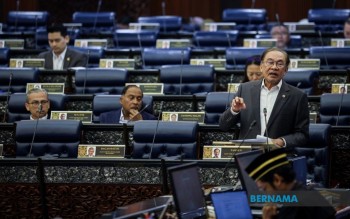
Malaysia's government has launched a new e-invoice voluntary declaration scheme extending through the end of 2027, part of a broader effort to lighten the regulatory load on small and medium-sized enterprises navigating the country's tax compliance framework. Prime Minister Datuk Seri Anwar Ibrahim, who concurrently serves as Finance Minister, announced the measure during parliamentary question time as a response to mounting pressures on business operators amid complex global economic conditions.
The cornerstone of this initiative lies in its leniency mechanism. Any business that discovers errors, omissions, or inaccuracies in their e-invoice records and voluntarily corrects them before the December 31, 2027 deadline will face no financial penalties from the Inland Revenue Board of Malaysia. This represents an unusually forgiving stance for income tax matters in Malaysia's regulatory environment, signalling the government's recognition that widespread compliance difficulties have emerged as businesses transition to digital invoicing systems.
An opposition member from Ipoh Timor, Lee Chuan How, prompted the government's response by raising concerns about how the MADANI administration intends to support the business community, particularly micro and small enterprises, as they grapple with both domestic regulatory changes and external economic headwinds. The voluntary declaration programme addresses these preoccupations by creating a safe harbour for enterprises that may have struggled with the technical or procedural aspects of e-invoice implementation.
Accelerating tax incentives forms the second pillar of the government's support package. Eligible businesses investing in e-invoice infrastructure and systems can now claim the full capital allowance on their expenses within a single tax year, rather than spreading the deduction across multiple years as previously permitted. This compressed timeline accelerates the tax benefit, improving cash flow for enterprises undertaking digital transformation and reducing the total compliance investment burden.
The rationale behind these measures speaks to a deeper tension within Malaysia's tax administration philosophy. While the government remains committed to modernising the nation's invoicing system and broadening the tax base, it simultaneously recognises that aggressive enforcement during implementation phases risks driving non-compliance or pushing marginal enterprises into informal economies. By combining forgiveness mechanisms with financial incentives, the administration attempts to thread this needle—promoting systematic adoption whilst acknowledging the genuine difficulties smaller operators face.
Context matters considerably here. Malaysia's e-invoice system represents a significant technological leap for many traditional businesses, particularly those operating on razor-thin margins or managing with minimal administrative staff. The transition from manual or basic digital records to formal e-invoice protocols involves not only software investments but also staff retraining and process redesign. For micro-enterprises running on owner-operator models, these adjustments consume resources that larger corporations absorb more readily.
The government's previous December 2025 decision to raise the e-invoice exemption threshold from RM500,000 to RM1 million already expanded the relief population by over one million taxpayers. This latest extension of the voluntary declaration period essentially doubles down on that philosophy, indicating sustained commitment to phasing in compliance rather than imposing sudden, punitive consequences. The cumulative effect of these overlapping initiatives suggests policymakers view the 2027 deadline as a realistic target for achieving substantial voluntary compliance rather than as a hard cutoff date.
For Malaysian enterprises, particularly those in labour-intensive sectors like retail, hospitality, and light manufacturing where many MSMEs concentrate, the extended timeline provides genuine breathing room. These businesses often operate in fiercely competitive environments where cost discipline directly determines survival. Reducing compliance burdens—whether through penalty waivers, accelerated depreciation, or extended implementation timelines—translates into preserved working capital that can sustain operations or fund modest expansion rather than being absorbed by tax adjustments and penalties.
The implications extend beyond individual business balance sheets. Malaysia's MSME sector represents a substantial employment engine and a testing ground for entrepreneurial capacity within the broader economy. Policies that acknowledge genuine implementation challenges rather than simply imposing penalties contribute to ecosystem health by allowing sustainable enterprises to consolidate their positions rather than collapsing under regulatory pressure. This approach aligns with international best practices in tax administration, where jurisdictions introducing significant system changes typically phase in enforcement gradually.
Regional context adds another dimension to this policy. Southeast Asian nations increasingly compete for business-friendly regulatory reputations, particularly as multinational enterprises and regional investors evaluate expansion opportunities. A tax administration perceived as reasonable and implementation-focused carries subtle competitive advantages over jurisdictions viewed as purely punitive. Malaysia's voluntary declaration programme positions the country as administratively pragmatic—a distinction that resonates in investor conversations and policy comparison exercises.
Looking forward, the December 2027 endpoint merits attention. At that juncture, the government presumably intends to transition from accommodation to standard enforcement, though political considerations and ongoing compliance data will likely influence final decisions. Enterprises should interpret this timeline seriously—voluntary corrections made before that date remain penalty-free, but corrections discovered afterward may face different treatment. The message to business operators seems clear: cooperate willingly during the window, and the system rewards compliance; delay indefinitely, and consequences become unavoidable.
The voluntary declaration programme ultimately reflects a policy maturation within Malaysia's tax administration. Rather than viewing digital transformation purely as an enforcement opportunity, the government increasingly recognises it as a change management challenge requiring partnership between authorities and taxpayers. By combining flexibility with clear incentives and ultimate deadlines, the administration attempts to shift Malaysian enterprises toward systematic compliance without sacrificing either revenue objectives or business viability.

