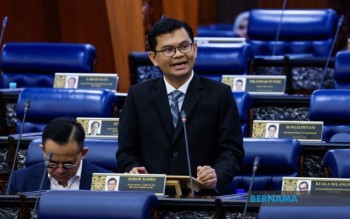
Malaysia's government is pursuing an ambitious remedial agenda to insulate the nation's economy from the ongoing global supply chain crisis, with Economy Minister Akmal Nasrullah Mohd Nasir revealing that the National Economic Action Council (MTEN) has advanced or completed 120 separate interventions designed to protect households and businesses from disruption. During a parliamentary briefing on June 29, the minister reported that of these measures, 27 have reached full implementation while 93 remain in active execution, underscoring the administration's commitment to sustained engagement with the problem rather than expecting swift international resolution.
The scale of Malaysia's response reflects the government's assessment that supply chain disturbances will persist far longer than initial projections suggested. Rather than adopting a passive stance that waits for global conditions to normalise on their own, the administration has opted for what Nasrullah characterised as a realistic posture grounded in the expectation that the crisis will not dissipate in the near term. This proactive stance signals recognition that while international factors drive much of the disruption, domestic policy levers can meaningfully cushion vulnerable populations and economic segments from the worst effects. The minister's emphasis on continuous monitoring and intervention throughout the recovery period suggests the government views this crisis as a multi-year challenge requiring sustained institutional focus.
The interventions span both immediate relief measures and longer-term stabilisation strategies. According to Nasrullah, the decision package prioritises direct support for ordinary citizens alongside targeted assistance for micro, small and medium enterprises—the backbone of Malaysia's employment base and informal economy. Alongside these social protections, the government has embedded measures aimed at maintaining essential goods availability and underpinning broader economic stability. This three-pronged approach indicates recognition that supply chain problems threaten not only consumer welfare but also business viability and national economic coherence. For Malaysian firms dependent on imported inputs or serving export markets, supply continuity is existential; for households, it translates to food security and access to affordable basic goods.
The minister's timeline projections offer a sobering but specific outlook for when relief might materialise. Energy markets, which sit at the foundation of most supply chains, are expected to stabilise only gradually from the third quarter of 2026 onwards, contingent on sustained geopolitical stability and the reopening of major maritime trade corridors. This forward guidance, while acknowledging eventual stabilisation, simultaneously underscores that price and supply uncertainty will likely persist for an additional one to two years beyond mid-2026. For Malaysian policymakers and businesses, this calculus means that contingency planning must extend well into 2027 or 2028. The government's transparent acknowledgement of this extended horizon avoids false optimism while preparing stakeholders mentally and institutionally for prolonged adjustment.
Nasrullah explicitly rejected minimising or dismissing the risks posed by a prolonged supply crisis, but he framed these dangers as manageable through structured, evidence-based governance. This rhetorical move is significant: rather than claiming the crisis poses no threat, he pivoted toward demonstrating that Malaysia possesses institutional capacity to mitigate harm. The invocation of data-driven decision-making and structured monitoring suggests the government wants to position itself as competent and rational rather than either panicked or complacent. For Malaysian citizens and investors accustomed to volatility in both commodities and geopolitical risk, this messaging may carry credibility insofar as it acknowledges real dangers whilst projecting administrative control.
The MTEN itself emerges as the institutional centrepiece of this response architecture. Established as a high-level coordination body, the council functions as a clearing house for decisions and a venue for inter-agency synchronisation. By vesting implementation responsibility in MTEN and explicitly stating that development of the crisis will be monitored through this body and relevant agencies, the government signals that supply chain response is not ad hoc but embedded in formal governance structures. This institutional embedding has particular importance in a federation like Malaysia, where economic policy spans federal and state jurisdictions and involves both public agencies and private sector stakeholders. The emphasis on MTEN suggests an attempt to overcome potential fragmentation in response.
The minister's commitment to transparent information-sharing with the public represents a subsidiary but not insignificant element of the government's crisis management strategy. By pledging to furnish clear, accurate and timely updates as circumstances evolve, the administration tacitly acknowledges that public confidence and cooperation depend on information access. Supply chain resilience, particularly in emerging markets, hinges not only on logistics and policy but also on consumer and business behaviour. Panic hoarding, for instance, can artificially worsen shortages; conversely, accurate information about supply status can moderate precautionary purchasing. Public messaging therefore becomes a policy tool in its own right, not merely a communication exercise.
The call for multi-stakeholder cooperation underscores a reality often obscured in policy discussion: government interventions alone cannot resolve supply chain crises. Private firms control most logistics infrastructure and commercial decision-making; civil society organisations often reach vulnerable populations more effectively than state apparatus. By explicitly requesting cooperation from businesses, trade unions, civil society and community leaders, Nasrullah positioned the crisis response as requiring collective rather than merely governmental action. This framing may also serve to distribute accountability across society, preventing the government from bearing sole responsibility if outcomes disappoint.
For Malaysia and the broader Southeast Asian region, the supply chain crisis has particular salience given the subregion's integration into global manufacturing and shipping networks. The region hosts critical petrochemical facilities, semiconductor assembly plants, and major port operations; disruptions reverberate through multiple economies simultaneously. Malaysia's response architecture, therefore, carries implications beyond its borders. Should MTEN's interventions prove effective at maintaining supply continuity or cushioning price shocks, they may offer templates for regional counterparts facing similar pressures. Conversely, if implementation falters, neighbouring governments may draw cautionary lessons about the limits of domestic policy in addressing globally-driven disruptions.
The minister's invocation of a balanced posture—vigilant without panic, realistic without defensiveness, proactive without overreach—captures the tightrope that policymakers walk in the current environment. Too much alarm risks undermining investor and consumer confidence; too much complacency risks being caught unprepared. The emphasis on maintaining public confidence whilst acknowledging real risks suggests the government understands that economic stability ultimately rests on perceptions and expectations as much as on material conditions. By demonstrating administrative competence and transparency, the government hopes to anchor confidence even as supply chain challenges persist.
Looking ahead, the success of Malaysia's 120-measure plan will ultimately be judged against outcomes in three domains: whether essential goods remain continuously available to ordinary households, whether MSMEs survive the extended downturn without mass failures, and whether the broader economy maintains growth and employment despite external headwinds. The government's commitment to sustained monitoring and adaptive intervention suggests readiness to adjust course if initial measures prove insufficient. This flexibility may prove as important as the measures themselves, since supply chain crises by definition involve uncertainties that resist perfect prediction. The coming two to three years will test whether Malaysia's institutional capacity and policy arsenal prove adequate to the challenge.

