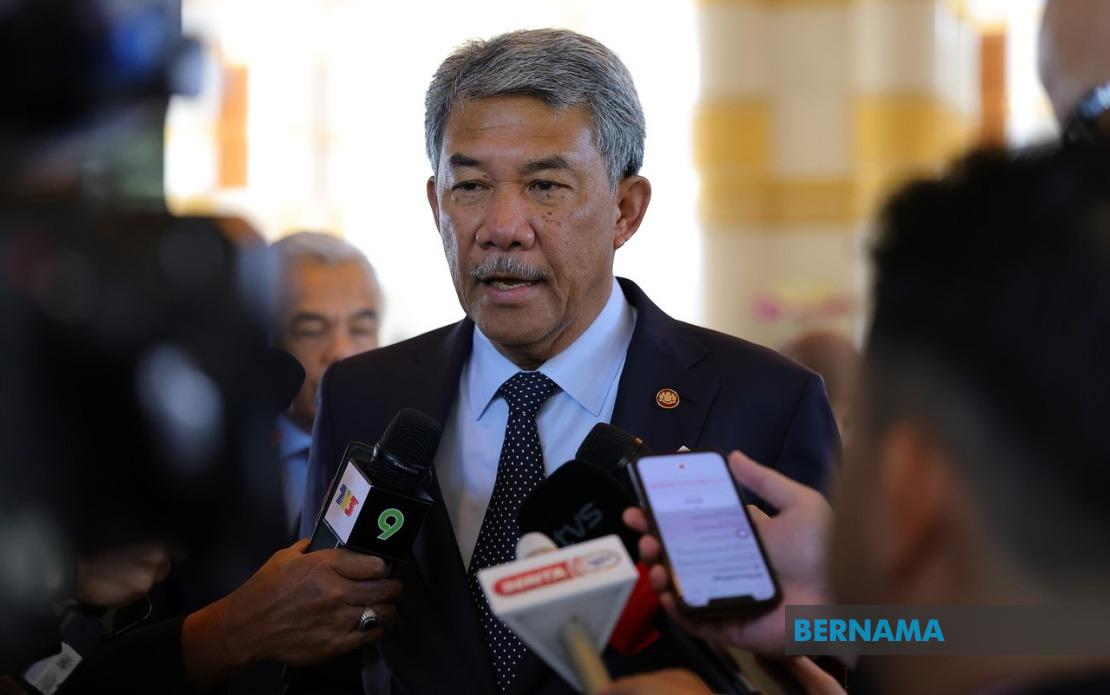
Malaysia has activated its diplomatic machinery within ASEAN to confront the escalating transboundary haze problem affecting multiple areas across the region. Foreign Minister Datuk Seri Mohamad Hasan articulated this strategy during his three-day working visit to Brunei, underscoring the country's commitment to addressing environmental challenges through established regional institutional frameworks. The decision reflects Malaysia's belief that collective action through ASEAN mechanisms offers the most viable pathway to resolving air quality crises that transcend national borders.
The Ministry of Natural Resources and Environmental Sustainability will formally communicate with the ASEAN Secretariat to initiate coordinated responses, while NRES Minister Datuk Seri Arthur Joseph Kurup will engage directly with his Indonesian counterpart. This dual-track approach—combining institutional channels with bilateral ministerial correspondence—demonstrates Malaysia's intention to pursue both formal and direct diplomatic solutions simultaneously. Such multilayered engagement is characteristic of ASEAN's consensus-based diplomacy, where nations balance procedural adherence with targeted bilateral negotiations.
Mohamad Hasan reaffirmed that ASEAN constitutes the most suitable platform for addressing concerns affecting member states, arguing that the regional secretariat is optimally positioned to coordinate management of transboundary environmental issues. This perspective reflects Malaysia's longstanding commitment to ASEAN centrality in regional affairs, even as the organisation faces persistent criticism regarding its effectiveness in resolving cross-border crises. The emphasis on ASEAN mechanisms also signals Malaysia's preference for addressing the haze through region-specific diplomatic channels rather than escalating concerns to broader international forums.
The timing of Malaysia's diplomatic offensive coincides with the 27th Malaysia-Brunei Exchange of Letters meeting and the 27th Annual Leaders' Consultation between Prime Minister Datuk Seri Anwar Ibrahim and Sultan Hassanal Bolkiah. Malaysian High Commissioner to Brunei Datuk Mohd Aini Atan previously indicated that haze conditions would feature prominently in discussions between the two nations' leaders, reflecting the mutual impact of air quality deterioration on both countries. This elevation of environmental concerns to the highest political level underscores the seriousness with which both governments regard the crisis.
The situation in Sarawak presents an alarming illustration of the haze crisis's severity. Data from the Malaysian Air Pollutant Index Management System portal showed that Serian District Police Headquarters maintained a reading of 217 as of 4 pm on August 21, placing it firmly within the "very unhealthy" category—levels that restrict outdoor activities and pose significant health risks to vulnerable populations including children, elderly citizens, and individuals with respiratory conditions. This singular reading masks a broader pattern of air quality degradation across the state.
Nine additional Sarawak locations recorded "unhealthy" API readings, with Sri Aman reaching 186, Sarikei 173, Kuching 171, Samarahan 170, Sibu and Samalaju 156, Bintulu 153, Mukah 125, and Kapit 108. The distribution of affected areas across Sarawak's geography indicates that the haze originates from sources beyond Malaysia's immediate control, pointing to transboundary origins—a reality that necessitates regional cooperation for effective mitigation. The variation in API readings across districts also suggests differential vulnerability, with some population centres facing more acute exposure than others.
The health implications of sustained haze exposure merit particular attention for Malaysian policymakers and the public. Medical authorities consistently warn that prolonged exposure to API readings exceeding 200 increases incidence of respiratory infections, asthma exacerbation, and cardiovascular complications. Schools and businesses may implement operational restrictions when readings reach hazardous levels, disrupting economic activity and educational continuity. The cumulative burden on Malaysia's healthcare system intensifies when air quality crises coincide with seasonal disease patterns or other public health challenges.
Malaysia's reliance on ASEAN diplomatic channels reflects both the organisation's institutional strengths and inherent constraints. ASEAN's principle of non-interference in member states' internal affairs has historically complicated efforts to impose environmental standards or enforcement mechanisms, leaving transboundary haze largely unresolved despite decades of regional cooperation frameworks. Indonesia, the primary source of transboundary haze during fire-prone seasons, has occasionally resisted external pressure regarding land and forest management practices, citing national sovereignty concerns. Malaysia must navigate these diplomatic sensitivities while advocating forcefully for immediate action.
The strategic choice to pursue coordinated action through ASEAN rather than unilateral measures or extra-regional intervention demonstrates Malaysia's commitment to preserving regional cohesion and maintaining productive relationships with Indonesia. Economic interdependencies, shared security interests, and the broader architecture of ASEAN integration incentivise Malaysia to channel environmental concerns through established forums rather than adopting confrontational approaches. This diplomatic calculus reflects mature regional statecraft, though it potentially sacrifices urgent action for the sake of institutional harmony.
Beyond immediate diplomatic engagement, Malaysia's approach signals to other ASEAN members that environmental crises demand prioritisation within the regional agenda. Recent years have witnessed growing recognition that transboundary pollution affects multiple countries' development goals and public health outcomes, yet institutional responses frequently lag behind the severity of impacts. By elevating haze concerns to conversations between prime ministers and sultanates, Malaysia seeks to establish environmental protection as a matter of strategic importance rather than a technical issue confined to environmental ministries.
The long-term effectiveness of Malaysia's ASEAN-centric strategy depends substantially on whether coordinated regional action produces measurable improvements in air quality. Previous regional haze episodes have occasionally prompted commitments to stronger monitoring mechanisms and preventive measures, though implementation has often proceeded unevenly. Indonesia's capacity and political will to enforce forest protection laws and prevent agricultural burning during dry seasons remain critical variables determining whether diplomatic initiatives yield tangible results for Malaysian communities experiencing hazardous air conditions.
For Southeast Asian observers, Malaysia's diplomatic mobilisation represents a test case of whether ASEAN mechanisms can evolve to address contemporary transnational challenges with sufficient speed and authority. The haze crisis, recurring annually during susceptible seasons, demands sustained institutional responses capable of translating political commitments into enforceable environmental standards and cross-border monitoring systems. Malaysia's engagement of both the ASEAN Secretariat and bilateral channels reflects recognition that addressing environmental crises requires simultaneously strengthening institutional capacity while maintaining direct state-to-state relationships essential for implementation.
Looking forward, Malaysia's success in mobilising ASEAN diplomatic resources around the haze issue may establish precedents for regional handling of similar transboundary environmental challenges, from marine pollution to water resource management. The convergence of environmental imperatives and diplomatic necessity creates opportunities for ASEAN to demonstrate relevance to member states' populations by delivering tangible improvements in quality of life. Whether the current diplomatic initiative translates into sustained policy changes affecting air quality in Malaysian territory will ultimately determine whether ASEAN's institutional framework proves adequate to contemporary regional challenges.

