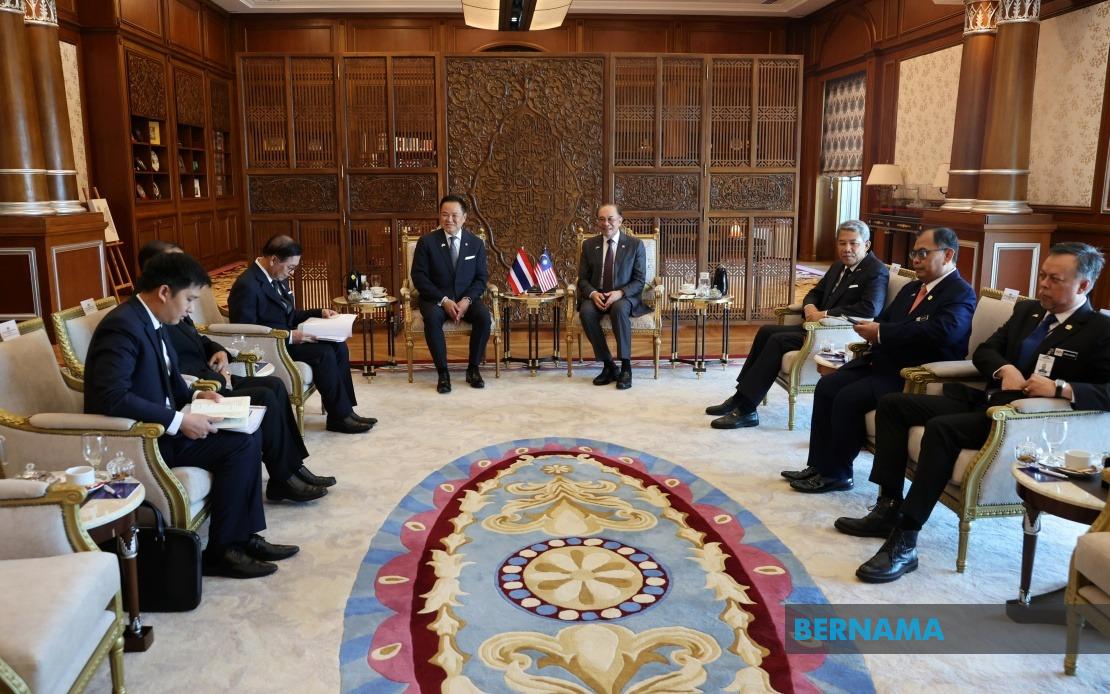
Malaysia has restated its conviction that dialogue and constructive engagement offer the most viable path to addressing Myanmar's intractable political upheaval, with Prime Minister Datuk Seri Anwar Ibrahim singling out Thailand as uniquely positioned to advance mediation efforts during high-level bilateral talks in Putrajaya. Speaking alongside visiting Thai Prime Minister Anutin Charnvirakul at a joint media appearance on Thursday, Anwar articulated a vision centred on empowering Myanmar's population to chart their own democratic trajectory, rather than imposing external solutions on a nation deeply fractured since the military intervention of 2021. The remarks reflect Malaysia's broader diplomatic strategy within ASEAN, where the Myanmar situation remains a central preoccupation and a test of the regional organisation's credibility in managing interstate crises.
Anwar's emphasis on effective engagement signals Malaysia's discomfort with hardline approaches or punitive measures that might entrench Myanmar's military leadership and worsen humanitarian conditions. By characterising Thailand as an "important friend and neighbour," the Malaysian premier acknowledged Bangkok's unique geographic and strategic proximity to Naypyidaw, as well as Thailand's established channels of communication with the Myanmar regime. This framing reflects a pragmatic understanding that Southeast Asian nations, rather than distant powers, possess both the leverage and legitimacy to encourage Myanmar's junta towards dialogue with opposition forces and ethnic armed organisations. Thailand's role as a conduit is particularly significant given its decades-long border management with Myanmar and the historical networks that facilitate cross-border relations, from trade corridors to civil society exchanges.
The Five-Point Consensus, which ASEAN adopted in April 2021 as a framework for de-escalation, remains the regional bloc's touchstone for Myanmar engagement. This roadmap emphasises cessation of violence, constructive dialogue, humanitarian assistance, and the appointment of a special envoy. Yet implementation has stalled considerably, hampered by the junta's intransigence, the fragmentation of opposition forces, and disagreements within ASEAN itself over leverage and incentives. Malaysia's renewed backing for this consensus, voiced through Anwar, underscores the country's investment in ASEAN's institutional mechanisms even as their efficacy faces mounting scrutiny. For Malaysian policymakers, the stakes extend beyond regional stability; Myanmar's political breakdown has generated refugee flows, humanitarian crises, and economic disruptions that ripple across Southeast Asia, including into Malaysian border regions.
Anwar's comments also reflect an implicit recognition that coercive pressure—whether through sanctions or military intervention—has proven counterproductive in other regional and global contexts. By advocating for dialogue, Malaysia positions itself as a voice of moderation within ASEAN, contrasting with some member states that have grown frustrated with the junta's lack of progress on the Five-Point roadmap. This positioning carries diplomatic value, allowing Malaysia to maintain relationships across Myanmar's fractured political landscape while avoiding the appearance of abandoning democratic principles. The tension between engagement and accountability remains unresolved, yet Malaysia's framing prioritises the former over the latter.
The bilateral visit by Anutin to Kuala Lumpur, his inaugural trip since returning to office in March 2026, underscores the strategic importance of Thailand-Malaysia relations in the broader regional calculus. Both nations share concerns about Myanmar's trajectory, transnational challenges including human trafficking and illicit drug flows, and mutual economic interests in maintaining regional prosperity. The talks, conducted with Anwar and Anutin present, allowed the pair to synchronise positions on Myanmar whilst addressing other bilateral and regional matters, signalling unity among Southeast Asia's established democracies in their approach to the crisis. Thailand's own strategic environment—bordered by Myanmar and Laos whilst maintaining ties across the region—makes it a natural conduit for multilayered dialogue.
The joint visit to Bukit Kayu Hitam on Friday to inaugurate border infrastructure connecting Malaysia's Immigration, Customs, Quarantine and Security facility with Thailand's Customs, Immigration and Quarantine complex demonstrates the practical dimension of regional cooperation. Such cross-border infrastructure, whilst routine in appearance, embodies a commitment to deepening integration and facilitating legitimate trade and travel. In the context of Myanmar's dysfunction, these symbols take on added significance; they represent the rule-based order that ASEAN aspires to maintain despite turbulence beyond its borders. For Malaysian stakeholders in border regions and supply chains, improved clearance procedures and smoother transit protocols yield tangible economic benefits.
Anwar's remarks on the Thailand-Cambodia border matter reflect Malaysia's broader diplomatic posture: championing peaceful resolution of disputes through dialogue and international law. By commending Anutin's collaborative approach, Anwar signalled Malaysia's investment in ASEAN unity and its confidence in member states' capacity to resolve disagreements without external mediation. This tack is essential for ASEAN's credibility, particularly as the bloc faces scrutiny over its effectiveness in managing internal conflicts and addressing the Myanmar crisis. Malaysia's role as a steady voice advocating both principles and pragmatism positions it as a potential broker in future regional disputes.
The Myanmar crisis also intersects with Malaysia's security interests in ways that warrant closer analysis. The proliferation of armed groups, refugee camps, and illicit trade networks along Myanmar's borders creates transnational risks—including terrorism, drug trafficking, and forced migration—that destabilise the entire region. Malaysia, with its diverse population and significant Rohingya refugee presence, faces acute security and social cohesion challenges stemming from Myanmar's breakdown. By advocating for dialogue-based solutions, Anwar implicitly recognises that only a political settlement addressing Myanmar's fundamental governance issues can mitigate these spillover effects. Short-term security measures, whilst necessary, cannot substitute for a durable political settlement.
The timing of Anutin's visit also merits consideration against broader geopolitical developments. Regional competition among major powers—including China's strategic interests in Myanmar and the United States' democratic concerns—complicates ASEAN's space for independent action. Malaysia's emphasis on dialogue and regional agency, articulated through Anwar, is a subtle assertion of ASEAN's autonomy in managing its own crises without prescriptions from outside powers. This posture aligns with ASEAN's foundational principle of non-interference whilst simultaneously asserting collective responsibility for regional stability. For Malaysian observers, it reflects a balancing act between principle and pragmatism that characterises contemporary Malaysian foreign policy.
Moving forward, Malaysia's commitment to engagement must be matched by concrete actions. This includes supporting humanitarian initiatives, facilitating dialogue platforms, and leveraging ASEAN mechanisms to encourage incremental progress towards the Five-Point Consensus. The designation of an ASEAN special envoy, a key element of the roadmap, remains critical; Malaysia could champion this appointment and provide resources to enable meaningful mediation. Additionally, Malaysia might expand people-to-people and civil society exchanges with Myanmar to build constituencies for peace and dialogue beyond government circles. Such grassroots engagement often precedes and facilitates high-level political breakthroughs.
The bilateral relationship between Malaysia and Thailand, reinforced through Anutin's visit, offers a stable platform for coordinating ASEAN responses to Myanmar. Both nations share democratic aspirations, though imperfectly realised, and thus have mutual interest in supporting democratic movements and civil society in Myanmar without appearing to impose external political agendas. This calibration—supporting Myanmar's people's democratic aspirations whilst respecting their right to determine their own path—represents the delicate balance Anwar articulated. Thailand's specific role, as neighbour and dialogue facilitator, complements Malaysia's broader diplomatic engagement and financial contributions to humanitarian relief.
Ultimately, Anwar's statements reflect a conviction that Myanmar's crisis, whilst grave and urgent, admits of political solutions rather than military ones. This position requires patience, sustained engagement, and a willingness to accept incremental progress over dramatic breakthroughs. For Malaysia and the broader Southeast Asian region, the success or failure of this engagement strategy will shape not only Myanmar's trajectory but also ASEAN's credibility as a regional institution capable of addressing complex political crises. The next months will test whether dialogue, supported by regional partners like Thailand and Malaysia, can move Myanmar's junta towards meaningful concessions that might pave the way for eventual political transition.

