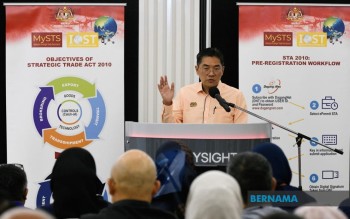
Malaysia's commitment to bolstering its electrical and electronics industry remains unwavering as the government moves to secure the country's standing as an indispensable node in the world's technology supply network. Deputy Investment, Trade and Industry Minister Sim Tze Tzin has reaffirmed that the Ministry of Investment, Trade and Industry will sustain its push to empower the E&E sector, emphasising its strategic importance to the broader economy. The assurance came during official proceedings in Penang, Malaysia's historical technology hub, underscoring the government's recognition that maintaining competitive advantage in this sector is essential for long-term prosperity.
The electrical and electronics industry represents far more than a single economic pillar for Malaysia—it forms the backbone of the nation's participation in sophisticated global manufacturing networks. Semiconductors, advanced sensors, and telecommunications equipment manufactured or processed in Malaysia feed into supply chains serving multinational corporations worldwide. Sim highlighted that the sector encompasses high-technology activities spanning semiconductor assembly, testing, and packaging, all of which command premium value in global markets. Malaysia's dominance in these specific segments, particularly in Penang and the wider Northern Region, reflects decades of accumulated expertise, infrastructure investment, and workforce development that competitors would struggle to replicate quickly.
Penang's transformation into a world-class technology manufacturing hub stands as a testament to strategic industrial policy. The state hosts hundreds of multinational enterprises and advanced technology manufacturers, creating an ecosystem where innovation, supply chain integration, and human capital converge. This concentration of manufacturing prowess gives Malaysia leverage in negotiating its role within global value chains. However, this advantage comes with responsibility. As geopolitical tensions reshape trade flows and supply chain diversification becomes a priority for global corporations, Malaysia must continuously prove its reliability, efficiency, and strategic alignment with major trading partners.
The government's focus on export control compliance reveals a more nuanced approach than simple industrial promotion. Sim's emphasis on ensuring the technology sector operates within proper regulatory frameworks signals awareness that maintaining international trust is prerequisite to sustaining investment flows. Compliance with international trade regulations, particularly those governing sensitive technologies, protects Malaysia's reputation and prevents the country from becoming collateral damage in broader geopolitical disputes. Companies operating within clear legal parameters are more attractive to multinational buyers and original equipment manufacturers concerned about supply chain vulnerability to sanctions or restrictions.
Recent trade performance figures have positioned Malaysian companies favourably heading into the latter half of the year. The strong showing in the first six months, according to Sim, creates momentum for both expansion and improved worker conditions. This observation carries particular significance in a region where labour costs remain competitive but skilled workforce availability can become constraining. The minister's call for companies to share prosperity through salary increases and bonuses reflects practical understanding that retaining talented employees in technology manufacturing requires more than base compensation. As automation reshapes manufacturing globally, the workers who remain in advanced E&E facilities increasingly perform specialised, high-value tasks requiring technical training and experience.
The Northern Region Strategic Trade Act Clinic programme exemplifies a more granular approach to industrial support than traditional subsidies or incentives. By bringing together 86 industry participants for direct advisory services, MITI created a venue for companies to navigate complex regulations governing product classification, permit applications, and licensing requirements. These operational challenges, though seemingly bureaucratic, directly impact how quickly companies can bring products to market and scale operations. When government agencies demystify regulatory processes and provide clear guidance, smaller enterprises gain capability to compete more effectively alongside larger multinational players with dedicated compliance teams.
Internal audits and compliance self-assessment, topics addressed during the clinic sessions, have become increasingly important as global supply chain partners implement rigorous vendor qualification programmes. Companies that can demonstrate robust internal systems for monitoring product origins, ensuring proper documentation, and maintaining audit trails position themselves as preferred suppliers. This capability becomes particularly valuable for firms seeking to supply defence-related industries or serving customers in jurisdictions with strict supply chain transparency requirements. MITI's facilitation of compliance knowledge thus creates competitive advantage extending beyond simple regulatory adherence.
The collaboration framework Sim emphasised reflects recognition that government and industry success depends on mutual understanding and responsiveness. Technology sector dynamics move rapidly—new products emerge, manufacturing processes evolve, and regulatory landscapes shift in response to security concerns or trade tensions. Regular engagement platforms allow government agencies to understand emerging bottlenecks and industry players to understand policy direction before formal rules take effect. In semiconductor and electronics manufacturing particularly, where supply chains involve components crossing multiple borders, this kind of government-industry alignment can mean the difference between operational continuity and disruption.
Malaysia's strategic position faces pressure from multiple directions. Vietnam and Thailand have aggressively recruited electronics manufacturers with tax incentives and infrastructure development. India is building semiconductor manufacturing capacity with government backing. Taiwan and South Korea continuously upgrade their technology capabilities. Within this competitive landscape, Malaysia's advantages—established manufacturing ecosystems, skilled workforce pools, reliable infrastructure, and political stability—must be actively maintained rather than taken for granted. The government's sustained focus on the E&E sector acknowledges this reality and commits to preserving the conditions that attracted investment decades ago.
Looking forward, the continued strengthening of the E&E sector serves Malaysian interests at multiple levels. At the macroeconomic level, it generates export earnings and attracts foreign direct investment. At the regional level, it positions Malaysia as a trusted partner in supply chains valued by developed economies seeking alternatives to concentration in single jurisdictions. At the company level, it enables Malaysian and foreign enterprises operating here to compete globally. The government's willingness to engage regularly with industry, support compliance infrastructure, and acknowledge the sector's importance signals that this commitment is not rhetorical but reflects concrete policy direction and resource allocation.

