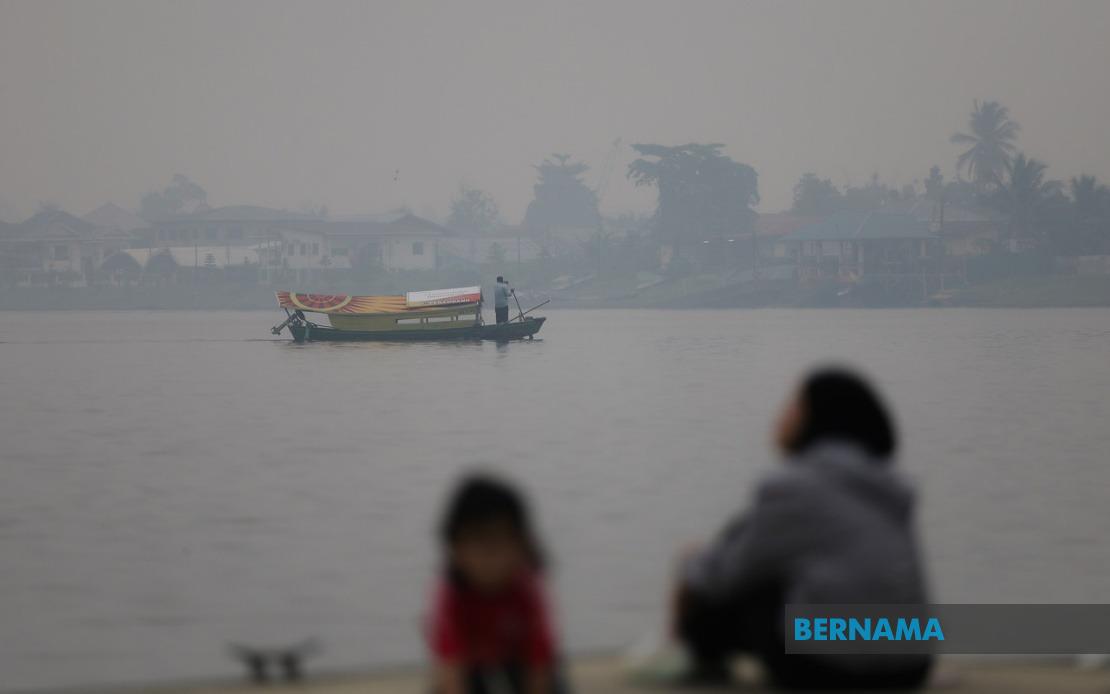
Authorities in Malaysia have initiated cloud seeding operations across regions grappling with hazardous air pollution and dwindling water resources, marking an escalation in efforts to manage the confluence of environmental crises facing the nation. Deputy Prime Minister Datuk Seri Dr Ahmad Zahid Hamidi confirmed that the initiative targets areas recording Air Pollutant Index readings exceeding 150, whilst simultaneously addressing concerns about reservoir depletion across multiple states. The coordinated approach reflects growing recognition that Malaysia faces interconnected environmental challenges requiring simultaneous intervention across water management and air quality domains.
The cloud seeding programme is being executed in partnership with two key institutions: the Malaysian Meteorological Department and the Royal Malaysian Air Force, pooling meteorological expertise with aerial capability. This multi-agency collaboration enables systematic deployment of seeding operations across geographically dispersed areas, with initial efforts concentrated in the federal territory before expanding to eastern Malaysia and the northern peninsula. The involvement of METMalaysia ensures that operations respond to real-time atmospheric conditions rather than following rigid schedules, allowing meteorologists to maximise effectiveness by targeting clouds with the highest probability of precipitation.
Dam water levels have emerged as a critical constraint on Malaysia's operational environment. The Deputy Prime Minister explicitly linked the cloud seeding initiative to the necessity of preventing water supply disruptions during the current hot weather period, indicating that reservoir levels at numerous installations have fallen to concerning thresholds. This connection underscores how climate variability and demand pressures are converging to create vulnerabilities in Malaysia's water infrastructure. A prolonged dry season coupled with sustained consumption could precipitate supply rationing affecting millions of Malaysians, rendering preventative measures economically rational despite their costs.
The scheduled deployment reveals the geographical concentration of the crisis. Operations were conducted in Putrajaya immediately, with subsequent missions planned for Sarawak, Kedah and Perlis between September 3 and 5. This phased approach suggests either constraints on aircraft availability or a strategic prioritisation of regions facing the most acute dual pressures. The inclusion of all three major regions—peninsular Malaysia, the far north, and Sarawak—indicates that water stress is not confined to any single area but represents a nationwide phenomenon demanding distributed response capacity.
Sarawak has been particularly severely affected by hazardous air pollution levels. Three monitoring stations in the state registered dangerously elevated readings as of noon on August 30, with Serian Police headquarters recording an API of 412—firmly in the hazardous category that warrants health warnings and activity restrictions. Samarahan followed at 332, whilst Kuching, the state capital, registered 304. These readings suggest an uneven geographical distribution of pollution within Sarawak, with concentrations heaviest in areas proximate to Serian, possibly indicating localised emission sources or atmospheric stagnation patterns. Sri Aman recorded a very unhealthy reading of 228, still substantially above the safe threshold of 100 but lower than the worst-affected zones.
Cloud seeding represents a technology-intensive approach to weather modification with mixed track records globally, though Malaysia has employed it previously during acute water shortage episodes. The technique involves dispersing particles—typically silver iodide—into clouds to alter precipitation formation processes. Success depends substantially on atmospheric conditions: clouds must already possess sufficient moisture and appropriate temperature gradients. Dr Ahmad Zahid's clarification that operations are contingent upon weather conditions, not merely upon demand, reflects this technical reality. Clouds must be present and moving toward targeted areas, requiring continuous monitoring to synchronise seeding with atmospheric dynamics.
The timing of these operations reflects Malaysia's seasonal vulnerability cycle. The dry season period typically correlates with lower rainfall, rising temperatures, and atmospheric stagnation that traps pollutants. Water demand rises simultaneously as higher temperatures increase consumption and reduce natural replenishment. Cloud seeding aims to artificially induce precipitation that serves dual purposes: improving air quality through wet deposition whilst replenishing depleted reservoirs. This multifunctional benefit makes cloud seeding particularly valuable during periods when both challenges intensify concurrently.
The haze phenomenon affecting the region likely stems from a combination of domestic sources and potential transboundary pollution, though the Deputy Prime Minister's statement did not specify origins. Sarawak's industrial activities, including agriculture and palm oil processing, contribute to regional air pollution, whilst open burning during land clearing operations remains a recurring source of hazardous air quality episodes. The sharp concentration of the worst pollution in Serian suggests either a local incident or positioning of the state relative to prevailing wind patterns carrying pollution from external sources.
Water supply disruptions would carry substantial economic consequences across Malaysia's commercial and residential sectors. Manufacturing industries requiring consistent water supply would face production interruptions, whilst domestic rationing would impact public health and quality of life. The hospitality, food service, and tourism sectors all depend on reliable water availability. By proactively deploying cloud seeding to maintain dam levels, the government aims to forestall these disruptions before they materialise. This preventative approach, though technically challenging and weather-dependent, proves more economical than managing supply crises retroactively.
The integration of cloud seeding into Malaysia's environmental management toolkit reflects evolving approaches to climate adaptation. Rather than accepting environmental constraints as fixed, authorities are deploying technological interventions to adjust atmospheric processes. However, these operations cannot substitute for structural measures including water conservation, demand management, and pollution source reduction. Cloud seeding provides time and temporary relief but does not address underlying drivers of water stress and air pollution, making it a complementary rather than comprehensive solution to the nation's environmental challenges.

