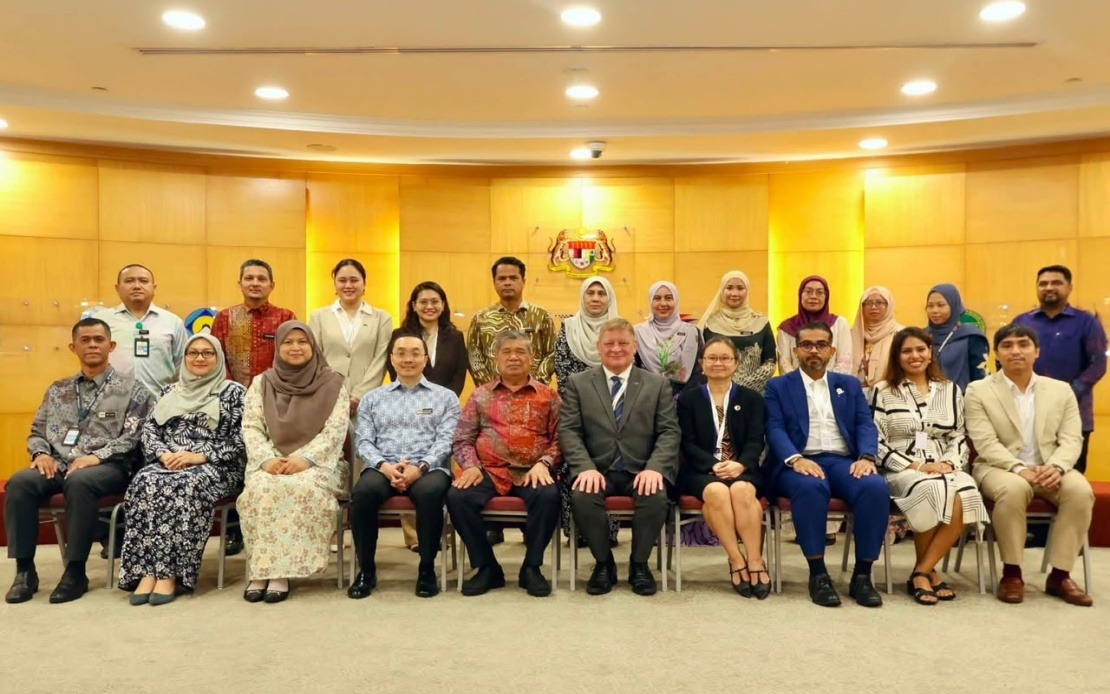
Malaysia is accelerating efforts to modernise its agricultural sector through expanded cooperation with the European Union, as Agriculture and Food Security Minister Datuk Seri Mohamad Sabu convened with EU-ASEAN Business Council (EU-ABC) executives led by Chris Humphrey in Putrajaya. The meeting underscores growing recognition within Malaysia's agricultural establishment that technological advancement and international partnerships are essential to addressing mounting pressures on domestic food systems amid climate volatility and supply chain instability.
The dialogue centred on implementing the National Agro-Food Policy 2.0 (DAN 2.0), a strategic blueprint designed to fortify Malaysia's capacity to produce sufficient food for its population whilst reducing vulnerability to external shocks. This policy framework represents a significant recalibration of priorities, moving beyond traditional production metrics towards holistic sustainability and technological sophistication. For Malaysian policymakers, the EU partnership offers access to advanced practices and expertise that could accelerate the transition towards higher-value agricultural production in a region increasingly competitive on the global stage.
Artificial Intelligence and precision agriculture emerged as pivotal areas of cooperation, reflecting broader trends in global food systems. Southeast Asian nations, including Malaysia, have historically lagged developed economies in adopting farm-level automation and data analytics. EU companies possess considerable technological capacity that could enable Malaysian farmers to optimise yields, reduce resource waste, and improve predictability in production cycles. Such innovations become particularly valuable as Malaysian agriculture faces intensifying heat stress and erratic precipitation patterns linked to climate change.
Strengthening the domestic dairy supply chain ranked among the minister's core concerns raised during the engagement. Malaysia's dairy sector remains heavily dependent on imported feed inputs and has struggled to achieve self-sufficiency despite substantial government investment. European expertise in herd genetics, nutritional science, and supply chain management could address structural weaknesses that have limited local production growth. Enhanced biosecurity standards represent another critical dimension, as Malaysia seeks to prevent exotic diseases whilst meeting stringent export quality requirements demanded by international buyers.
Animal health protocols and Sanitary and Phytosanitary (SPS) compliance featured prominently in discussions, highlighting Malaysia's ambitions to expand agricultural exports and access premium markets. EU regulatory frameworks are among the world's most rigorous, and alignment with these standards positions Malaysian producers competitively across multiple export corridors. For domestic consumers, improved biosecurity measures translate into safer food products and reduced risks from zoonotic disease outbreaks, a concern magnified by pandemic experiences.
The European Union maintains its standing as Malaysia's paramount technology and commercial partner in agricultural transformation, Mohamad stressed. This characterisation acknowledges that while Malaysia engages multiple development partners across Asia and beyond, EU institutions and enterprises bring distinctive advantages in regulatory frameworks, research capabilities, and market access. The partnership also carries symbolic weight in Malaysia's broader positioning as a nation committed to aligning with developed-economy standards and practices.
Capacity building for local farmers and breeders emerged as a fundamental request from Malaysian officials. The sector employs hundreds of thousands of smallholders whose productivity often lags commercial operations due to limited access to training, capital, and information. EU support for farmer extension services, breeding programmes, and quality certification could amplify sector-wide improvements and distribute benefits beyond large corporate entities. Market access facilitation and trade route development were identified as complementary needs, reflecting recognition that production improvements mean little without viable outlets for surplus output.
Both delegations reaffirmed commitment to the Malaysia-European Union Free Trade Agreement (MEUFTA) negotiations, currently progressing through multiple rounds. This trade pact carries substantial implications for Malaysian agriculture, potentially easing tariff barriers and regulatory obstacles for local agricultural and processed food exports destined for EU markets. Reciprocally, EU agricultural imports would likely face reduced levies, heightening domestic competition. The agreement represents a calculated strategic choice to link Malaysian producers with high-income consumers willing to pay premiums for quality and sustainability credentials.
Minister Mohamad seized the diplomatic engagement to promote Malaysia's flagship agricultural event, inviting EU-ABC representatives to the Malaysia Agricultural, Horticulture and Agro-Tourism Exhibition (MAHA) scheduled for August 28 through September 6, 2026, at Malaysia Agricultural Expo Park (MAEPS) in Serdang, Selangor. This invitation signals intent to transform MAHA into a platform for forging commercial partnerships and technology transfer, elevating the exhibition beyond its traditional role as a showcase for domestic produce. Hosting international agribusiness leaders amplifies the event's significance and creates networking opportunities for Malaysian enterprises.
The strategic focus on technology, sustainability, and institutional development reflects Malaysia's recognition that traditional agricultural expansion through land clearance has reached ecological and political limits. Climate pressures, biodiversity concerns, and international environmental commitments constrain the old model. Instead, Malaysian policymakers envision productivity improvements driven by innovation, efficiency gains, and value-chain upgrading. EU partnerships facilitate this transition by providing technical knowledge, market linkages, and credibility with international buyers increasingly demanding proof of sustainable production methods.
For Southeast Asia broadly, Malaysia's deepening agricultural ties with the EU carry ripple effects. Successful technology transfer and institutional strengthening in one country often diffuse across regional supply networks and policy dialogues. Malaysian breakthroughs in dairy genetics, AI-driven crop management, or biosecurity protocols could benefit neighbouring producers facing similar constraints. Simultaneously, EU engagement in regional agriculture signals European strategic interest in food security across Southeast Asia, a region whose agricultural capacity matters for global food price stability and geopolitical resilience.
The meeting illustrates how food security has become integral to Malaysia's broader foreign policy and economic diversification agenda. By positioning agriculture as a high-technology, internationally-integrated sector deserving strategic partnership investment, Malaysian officials move beyond sectoral concerns towards national-level considerations of food autonomy, export competitiveness, and climate adaptation. This reframing elevates agricultural policy discussions from commodity production towards sophisticated conversations about innovation ecosystems, institutional capability, and global value chain positioning that resonate with contemporary development discourse.

