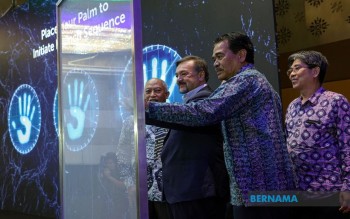
Pengurusan Aset Air Bhd (PAAB), the water assets management company wholly owned by the Minister of Finance (Incorporated), has unveiled a groundbreaking Sustainable Islamic Finance Framework that establishes three significant national firsts. The framework represents Malaysia's inaugural sustainable Islamic finance structure, the country's first to incorporate blue finance principles, and the sole recipient of Platinum Rated Framework certification. This milestone positioning PAAB as a pioneering institution in integrating environmental sustainability with Islamic financial principles, responding to growing global demand for financial instruments aligned with both ethical investment standards and faith-based principles.
The conceptualisation of this framework reflects close collaboration between multiple stakeholders who recognised Malaysia's urgent need for enhanced water infrastructure investment. Maybank Investment Bank Bhd served as the sole sustainability structuring adviser, while RAM Sustainability Sdn Bhd provided independent second-party opinion validation. This arrangement ensures the framework adheres to internationally recognised sustainability benchmarks whilst maintaining fidelity to Islamic financing values. The dual oversight mechanism addresses investor concerns about authenticity and compliance, crucial elements for mobilising substantial capital flows into what remains a capital-intensive sector.
Water infrastructure development has consumed considerable resources since PAAB's establishment, with the organisation directing massive capital toward modernising Malaysia's aging water systems. As of December 31, 2026, PAAB's total migrated and committed investments in Malaysia's water services industry reached RM46.88 billion, representing substantial government commitment to sectoral transformation. These investments have materialised into tangible infrastructure gains including twenty-one operational water treatment plants delivering combined daily capacity of 2.085 billion litres. The construction programme extended to forty-two reservoirs providing 783 million litres total storage capacity, essential for managing Malaysia's variable rainfall patterns and supporting growing urban and industrial demand.
The physical manifestation of PAAB's investment strategy extends beyond treatment and storage infrastructure. Installation of 3,263 kilometres of replacement pipelines addresses a critical challenge facing Malaysian water utilities—non-revenue water losses stemming from corroded, leaking distribution networks. These legacy systems, in many cases decades old, lose significant volumes during transit from treatment plants to consumer connections, diminishing operational efficiency and driving unnecessary costs. Systematic pipeline replacement improves supply reliability for consumers whilst reducing the environmental burden of over-abstraction from natural sources to compensate for distribution losses.
PAAB chairman Datuk Seri Jaseni Maidinsa emphasised that these infrastructure achievements underscore federal commitment to water security for future generations. The chairman's positioning of water infrastructure as a long-term national priority reflects recognition that Malaysia's demographic growth and economic expansion will generate escalating demand. Without proactive investment in treatment, storage, and distribution capacity, the nation risks supply constraints that could impede economic development and compromise public health. This perspective aligns with international development thinking identifying water security as foundational to sustainable economic progress.
The framework's innovation lies substantially in its introduction of blue finance mechanisms specifically calibrated for water-related investments. Blue finance represents an emerging asset class focused on mobilising capital for projects supporting water conservation, treatment, and sustainable management. By embedding blue finance principles within Islamic financial structures, PAAB creates hybrid instruments appealing to institutional investors prioritising environmental outcomes alongside financial returns. This positioning capitalises on growing ESG (environmental, social, governance) mandates influencing global institutional investment allocation decisions.
Finance Minister II Datuk Seri Amir Hamzah Azizan announced that PAAB intends to issue its inaugural blue sukuk during the third quarter of the current year, positioning Malaysia at the forefront of Islamic green finance innovation. This inaugural instrument will adopt a distinctive taxonomy jointly developed by PAAB, Maybank, and RAM Sustainability with guidance from the Securities Commission Malaysia. The collaborative taxonomy development reflects recognition that standardisation and transparency enhance investor confidence in emerging asset classes. By establishing clear definitional and measurement standards at inception, the initiative reduces transaction costs and information asymmetries that typically impede early-stage financial innovation.
The blue sukuk represents a fundamentally novel approach to asset securitisation, employing water-related assets as underlying collateral. This structure contrasts with conventional sovereign or corporate sukuk arrangements, channelling repayments directly from water asset cash flows rather than general issuer revenues. The innovative repayment mechanism creates a transparent linkage between investor returns and underlying project performance, aligning stakeholder interests. From PAAB's perspective, this structure unlocks investment capital previously unavailable through traditional financing channels, whilst enabling the organisation to de-leverage its balance sheet and redeploy capital toward additional infrastructure investments.
The minister articulated Malaysia's strategic imperative for expanded water infrastructure investment, noting that insufficient capital deployment risks cascading societal problems. Population growth concentrated in urban agglomerations, coupled with industrialisation and agricultural intensification, generates competing demands on finite water resources. Inadequate treatment and distribution infrastructure constrains supply reliability, undermining investor confidence in Malaysia's development trajectory. Consequently, innovations facilitating water sector investment assume importance extending beyond sectoral technical concerns to encompass broader macroeconomic competitiveness considerations.
Blue sukuk innovation carries implications for Southeast Asian regional financial development. As PAAB establishes Malaysia's first operational blue sukuk market, neighbouring nations including Indonesia and the Philippines confront similar water infrastructure challenges. Success of Malaysia's framework may catalyse regional emulation, creating broader demand for blue finance expertise and standardisation. This potential positions Malaysia as a thought leader in Islamic green finance, enhancing the nation's standing within global sustainable finance architecture whilst generating export opportunities for financial advisory services.
The framework's development reflects Malaysia's strategic positioning within global sustainable finance trends. Islamic finance institutions globally have increasingly embraced ESG principles, recognising compatibility between Islamic financing values and contemporary sustainability objectives. By launching the first integrated blue sukuk framework, PAAB and supporting financial institutions strengthen Malaysia's credentials as an Islamic financial centre, potentially attracting international capital seeking Shariah-compliant environmental investments. This positioning generates soft power benefits extending beyond immediate project financing to encompass reputational capital in the competitive global Islamic finance marketplace.
Investor reception to the inaugural blue sukuk will significantly influence subsequent issuance success. Platinum-rated certification provides credibility assurance, reducing perceived risk premiums investors typically demand for novel financial instruments. However, successful capital raising ultimately depends on demonstrated project performance and transparent reporting mechanisms. PAAB's commitment to using water asset cash flows for sukuk repayments creates accountability mechanisms motivating operational excellence. This performance incentive structure differentiates blue sukuk from conventional financing arrangements, potentially delivering superior infrastructure outcomes through aligned stakeholder incentives.
Moving forward, PAAB's Sustainable Islamic Finance Framework establishes the institutional infrastructure for sustained water sector investment mobilisation. The framework's success hinges on effective capital deployment translating into measurable infrastructure outcomes and reliable repayment performance. International investor interest in blue finance remains nascent but rapidly expanding, creating a potentially receptive market for Malaysian blue sukuk instruments. If PAAB's inaugural issuance achieves successful market reception, subsequent tranches could fund the substantial additional infrastructure investment Malaysia requires to sustain water security alongside economic growth.

