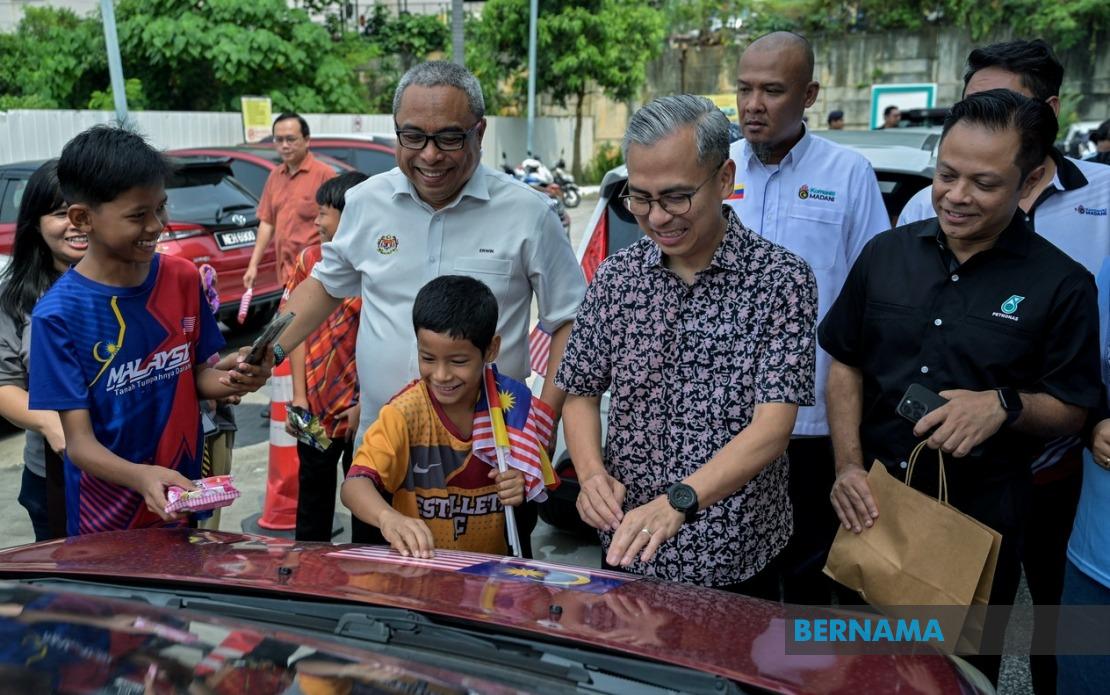
Malaysia's Malaysia Day celebration in 2026 will be hosted at the Borneo Convention Centre Kuching (BCCK) in Sarawak, Communications Minister Datuk Seri Fahmi Fadzil revealed on Friday. The announcement came after the inaugural preparatory meeting for the event, underscoring the government's commitment to rotating major national celebrations across different regions of Malaysia to foster greater national unity and regional inclusion.
The decision to select BCCK as the host venue emerged from discussions held the previous Monday, where Fahmi met with Sarawak Minister for Tourism, Creative Industry and Performing Arts Datuk Seri Abdul Karim Rahman Hamzah, who serves as co-chairman of this year's Malaysia Day celebrations. This partnership between federal and state leadership reflects the collaborative approach authorities are adopting to ensure the event meets national standards while leveraging Sarawak's unique cultural identity.
Fahmi highlighted that the venue selection process involved careful evaluation of the facility's capacity and infrastructure capabilities. The Borneo Convention Centre's spatial dimensions and technical specifications were assessed to ensure they could accommodate the anticipated scale of celebrations befitting a national observance. Drawing comparisons with previous venues, the minister noted that BCCK's specifications closely resemble those of the PICCA Convention Centre in Butterworth, where Malaysia's 2025 Malaysia Day celebration was held, suggesting consistency in the government's approach to venue standardization across years.
The choice to stage the celebration in Sarawak carries symbolic weight for Malaysia's East Malaysian states. Sarawak, as one of the founding territories in the formation of Malaysia in 1963, holds particular significance in the nation's constitutional history. By hosting the Malaysia Day celebration, Sarawak receives formal recognition of its central role in the federation's establishment, a gesture that acknowledges the importance of maintaining regional balance in national celebrations and governance priorities.
Fahmi indicated that the planning process is progressing according to schedule, with organizational momentum building steadily. The next crucial meeting has been scheduled for August 24, during which officials will delve into more granular operational details. These discussions are expected to address logistical considerations ranging from ceremonial arrangements and cultural performances to crowd management and security protocols, ensuring that every aspect of the event reflects the nation's values and expectations.
Beyond the Malaysia Day celebrations themselves, the government is simultaneously directing attention to the National Day festivities scheduled for August 31 in Putrajaya. Communications Minister Fahmi announced that Prasarana Malaysia Bhd has committed to providing around-the-clock public transport services throughout the celebration period, marking a significant upgrade from service levels in previous years. This enhancement demonstrates the government's recognition that accessibility infrastructure is crucial for enabling widespread public participation in national events.
The extended public transport availability represents more than logistical convenience; it reflects a deliberate policy choice to lower barriers to celebration participation. By ensuring that people can reach Putrajaya at flexible times and return home safely after festivities conclude, authorities are attempting to transform National Day from an event accessible primarily to those with private vehicles into a more inclusive national occasion. This consideration is particularly important given Putrajaya's location roughly 25 kilometres south of Kuala Lumpur, making reliable transport options essential for families from outlying areas.
Fahmi disclosed that multiple infrastructure improvements are being implemented in conjunction with the National Day celebrations, extending beyond public transport alone. These enhancements are intended to create a more welcoming environment for visitors while improving the overall experience of those participating in the nation's most significant secular celebration. Investment in such facilities signals governmental commitment to using these occasions as opportunities for infrastructural advancement that benefits permanent Putrajaya residents long after the celebrations conclude.
The focus on accessible public transport and improved infrastructure reflects broader trends in Malaysian governance, where national celebrations are increasingly viewed as catalysts for regional development and social cohesion rather than merely ceremonial occasions. By investing in transport connectivity and venue quality, authorities are positioning Malaysia Day and National Day as events that can meaningfully engage Malaysians from all corners of the federation, including those in Peninsular Malaysia, Sabah, and Sarawak.
For Malaysian businesses in hospitality, transport, and event management sectors, these announcements signal significant opportunities. The hosting of Malaysia Day in Kuching is expected to drive tourism and generate economic activity in Sarawak, while enhanced transport services for National Day celebrations in Putrajaya will benefit service providers across the Klang Valley region. The staggered timeline also suggests sustained investment in celebration infrastructure over coming months.
The rotation of major national celebrations across different Malaysian cities and states represents a deliberate policy approach to decentralizing national observances and ensuring that East Malaysian communities experience the tangible benefits of being part of a federated nation. This strategy addresses longstanding concerns about development disparities and reinforces the constitutional principle of federal unity amid diversity that underpins Malaysia's political system.
As preparations accelerate for both Malaysia Day 2026 and National Day 2025, the government appears intent on delivering celebrations that are both logistically impressive and genuinely accessible to ordinary Malaysians. The emphasis on public transport improvements and the selection of venues evaluated for their capacity reflects a recognition that national celebrations can serve as platforms for demonstrating governmental competence and commitment to citizen welfare.

