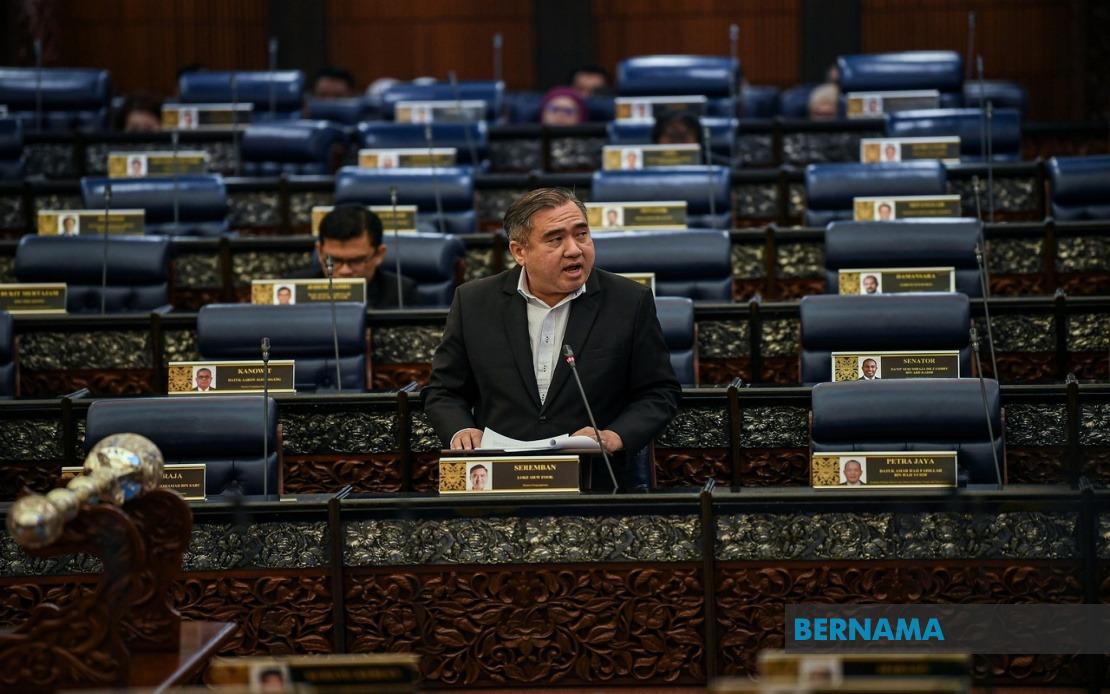
Malaysia is introducing a dedicated criminal offence for illegal street racing and speed testing, marking a significant tightening of enforcement against dangerous road behaviour that has plagued urban areas and highways. Transport Minister Anthony Loke tabled the Road Transport (Amendment) Bill 2025 in Parliament on June 23, establishing Section 42A as a standalone provision that treats racing and speed trials as distinct offences under the Road Transport Act 1987. The legislative move represents a departure from treating street racing cases solely under existing dangerous driving statutes, which have proven inadequate in addressing the escalating menace of organised and spontaneous racing activities on public roads.
Under the new framework, first-time offenders convicted of illegal racing will face financial penalties ranging from RM2,000 to RM10,000, custodial sentences of up to two years, or a combination of both. For those who persist in such dangerous conduct, the penalties escalate substantially—second and subsequent convictions carry fines between RM5,000 and RM20,000 alongside imprisonment terms of up to five years. This graduated penalty structure is designed to deter repeat offenders who have previously demonstrated indifference to law enforcement and public safety concerns. The increased severity for repeat offences reflects policymakers' recognition that a single conviction has failed to dissuade many racers from continuing their illegal activities on Malaysian roads.
Minister Loke highlighted a critical gap in existing legislation that has hampered enforcement efforts. Currently, illegal racing cases must be prosecuted under dangerous driving provisions, which typically require evidence of an accident, injury, or fatality. This procedural requirement has created a enforcement vacuum where racing activity can persist without legal intervention until tragedy strikes. The new provision eliminates this barrier, allowing authorities to intervene immediately when racing activity is detected, regardless of whether an accident has occurred. This preventative approach is particularly significant for motorcycle racing, where groups of riders frequently engage in organised speed trials on public roads—conduct that now becomes directly prosecutable even in the absence of documented collisions or injuries.
The amendment addresses a longstanding complaint from traffic enforcement agencies that they have been constrained in combating organised racing culture. The legislation recognises that waiting for accidents to occur is fundamentally incompatible with effective road safety management. By creating a proactive enforcement mechanism, authorities can target racing activity at street races, organised meets, and spontaneous illegal trials without the need to document collisions. This shift from reactive to preventative enforcement has significant implications for Malaysian urban areas, particularly in Klang Valley and other metropolitan regions where underground racing communities have become increasingly visible and brazen in recent years.
Beyond targeting racing itself, the Bill introduces Section 110B to strengthen protections for enforcement officers and prevent obstruction of enforcement operations. Individuals who interfere with, assault, threaten, or follow enforcement officers' vehicles face penalties of RM10,000 to RM50,000 in fines and one to five years' imprisonment, or both. This provision extends to those who share information about enforcement operations to help offenders evade detection—a practice common in racing communities where members relay real-time updates about police movements through encrypted messaging platforms. By criminalising such conduct, the legislation addresses the sophisticated evasion tactics that have made enforcement increasingly difficult. The provision also makes obstruction an arrestable offence, enabling officers to detain suspects without warrant.
The scope of this enforcement strengthening extends beyond illegal racing to encompass broader commercial vehicle violations. The Bill aims to enhance authorities' capacity to pursue cases involving vehicle overloading, non-compliant commercial vehicles, and other regulatory breaches that frequently go unpunished due to procedural constraints. By expanding protections for enforcement officers, the legislation creates a safer environment for road transport inspectors conducting roadblocks and compliance checks. This is particularly important given previous incidents of confrontations between officers and vehicle operators, particularly in the commercial transport sector where large profits incentivise regulatory evasion.
The amendment also introduces a comprehensive revision of penalty structures across multiple road transport offences. Minimum fines are being increased from RM300 to RM500, reflecting inflationary adjustments and the need to ensure that penalties remain meaningful deterrents. Importantly, Minister Loke clarified that these revised figures represent ceilings and thresholds rather than automatic assessment amounts. The actual fines imposed will continue to depend on factors including offence severity, the nature of the violation, whether settlement occurs before or after court proceedings, and prescribed administrative procedures. This flexibility ensures that enforcement remains proportionate while establishing higher baseline penalties that better reflect the social costs of traffic violations.
These revised compound rates are scheduled for implementation on January 1, 2029, providing a transition period for the public and enforcement agencies to adjust to the new framework. This phased approach acknowledges practical realities—enforcement agencies require time to update their systems, training programmes, and operational procedures, while the public benefits from an advance notice period. The extended timeline also allows for parliamentary review and any necessary adjustments based on stakeholder feedback during the Bill's passage through Parliament. For enforcement officers, the transition period permits comprehensive retraining on how the new provisions apply in real-world scenarios and interaction with different violator categories.
The legislative package carries particular relevance for Southeast Asian context, where illegal street racing has become a transnational phenomenon affecting Singapore, Thailand, and Indonesia alongside Malaysia. Young drivers increasingly view racing communities as cultural movements rather than simply illegal activities, creating resistance to enforcement that extends beyond individual lawbreakers to organised groups with sophisticated communication networks and protective codes. Malaysia's approach of creating specific standalone offences has been advocated by regional road safety experts as more effective than generic dangerous driving statutes. Singapore and Thailand have implemented similar provisions with reported reductions in organised racing incidents, though long-term social and cultural changes remain necessary to fundamentally alter attitudes toward street racing.
For Malaysian motorists and road users generally, these amendments represent authorities' determination to tackle a public safety threat that has claimed lives and created genuine fears among ordinary commuters. The proliferation of racing videos on social media has normalised illegal street racing among younger demographics, creating a cultural acceptance that legal penalties alone struggle to overcome. Nonetheless, the dual approach of enhanced enforcement mechanisms combined with progressively harsher penalties sends a clear message that such behaviour will face increasingly serious consequences. Road safety advocates have welcomed the Bill, though many emphasise that legal deterrence must be accompanied by alternative recreational outlets for motorsport enthusiasts and broader public education campaigns.