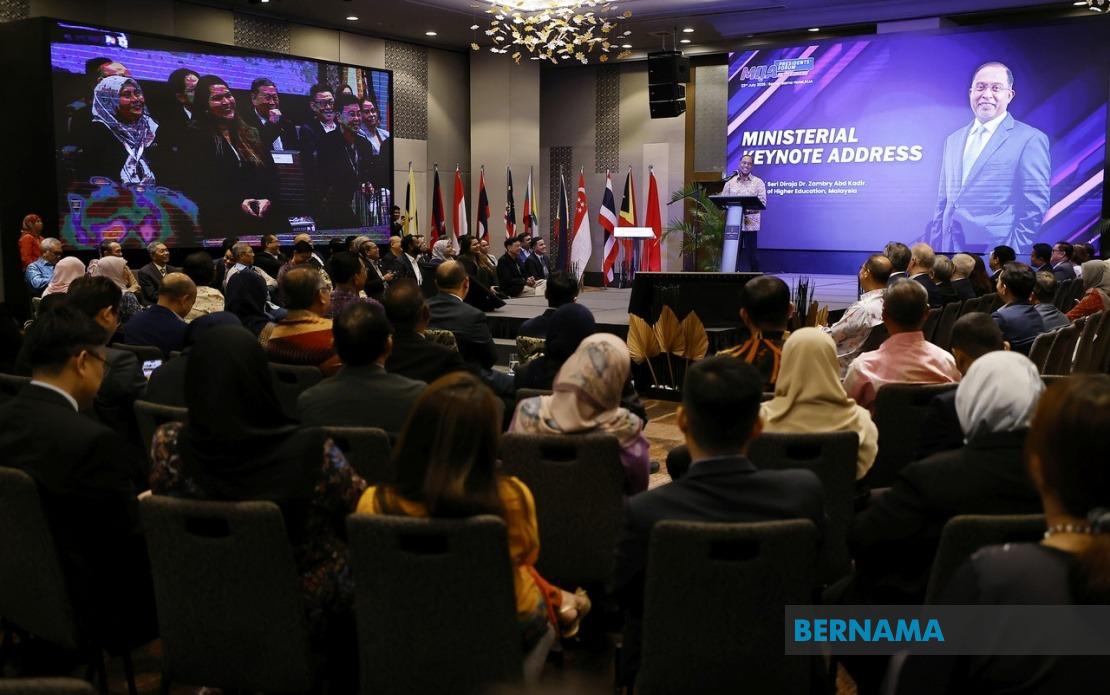
Higher Education Minister Datuk Seri Dr Zambry Abd Kadir has reassured the academic community that the government remains steadfast in its commitment to preserving academic freedom and nurturing scholarly debate within Malaysian institutions of higher learning. Speaking at a public lecture in Putrajaya on July 23, Zambry underscored the government's vision of universities as dynamic forums where contrasting viewpoints can be examined, discussed and challenged through reasoned argument conducted with courtesy and intellectual honesty. His remarks signal a continued institutional emphasis on creating an environment conducive to the free exchange of ideas, a cornerstone of academic endeavour across the globe.
The minister articulated a nuanced understanding of academic freedom, one that recognizes the necessity of coupling intellectual liberty with corresponding responsibility. Rather than viewing freedom and accountability as opposing forces, Zambry framed them as complementary principles that together strengthen the quality of scholarship and public discourse. This balancing act—permitting uninhibited inquiry while maintaining standards of rigour and civility—represents a delicate challenge for any institution navigating the contemporary landscape of polarized debate and rapid information dissemination.
Zambry's comments came during a visiting lecture by Columbia University Professor Dr Joseph A. Massad, whose talk examined Muslim identity within the context of globalization. The choice of speaker and subject matter reflects deliberate institutional positioning toward engaging with international scholarly perspectives on themes of significant social relevance. By hosting established academics from leading foreign universities, Malaysian higher education institutions signal openness to diverse intellectual frameworks and contemporary debates that resonate across cultural and geographical boundaries.
The minister highlighted Malaysia's plural composition and multicultural character as particularly compelling reasons to advance informed scholarly engagement and reciprocal comprehension among different communities. In a nation where religious, ethnic, and cultural diversity forms a fundamental characteristic of society, the capacity to debate contested subjects with mutual respect becomes not merely an academic virtue but a social necessity. Zambry's remarks suggest that universities possess a distinctive responsibility in modeling the kind of measured, evidence-based discourse that increasingly eludes public conversation in many societies.
Acknowledging the contemporary reality of disagreement, particularly intensified by digital technologies and artificial intelligence platforms, Zambry articulated a distinctly Malaysian philosophical position: the traditional practice of accepting and tolerating difference of opinion. This concept, encapsulated in his statement "we agree to disagree"—a principle he suggested has deep historical roots in Malaysian civic culture—provides a foundation for maintaining social cohesion whilst permitting genuine intellectual contestation. Such an approach stands in contrast to zero-sum framings of public discourse where opposing positions are treated as incompatible rather than as contributions to evolving understanding.
The Higher Education Ministry's strategic positioning as an active welcomer of international scholarly voices demonstrates recognition that knowledge advancement increasingly transcends national borders and disciplinary silos. By deliberately cultivating exchange programs, visiting lectureships, and collaborative research initiatives with distinguished academics globally, Malaysian universities strengthen their intellectual vitality and international standing. This openness also serves pragmatic institutional interests, as universities competing for international recognition and talent must demonstrate commitment to scholarly freedom and rigorous inquiry.
Zambry's emphasis on civil, evidence-grounded debate conducted with acknowledgment of legitimate differences reflects awareness of contemporary challenges to productive discourse. Social media algorithms, polarization dynamics, and political fragmentation globally have undermined the capacity of many societies to engage constructively across ideological divides. By explicitly championing civility and evidentiary standards, the minister signals institutional commitment to maintaining academic spaces insulated from the most corrosive elements of contemporary public communication.
The government's continued engagement with visiting scholars and commitment to open intellectual exchange carries implications for Malaysia's regional positioning and soft power. As Southeast Asian nations navigate complex geopolitical and ideological currents, their capacity to engage thoughtfully with diverse perspectives and produce nuanced scholarship becomes increasingly consequential. Universities that maintain robust academic freedom and attract international intellectual talent strengthen their nations' capacity for sophisticated analysis of regional and global challenges.
Looking forward, the Higher Education Ministry's explicit reaffirmation of academic freedom principles serves multiple constituencies. For Malaysian academics and students, it provides reassurance regarding institutional support for scholarly inquiry. For international institutions and scholars considering collaboration with Malaysian universities, it signals a hospitable environment for serious intellectual work. For civil society, it underscores official recognition that informed public understanding depends upon universities functioning as spaces where difficult questions can be examined rigorously and respectfully.

