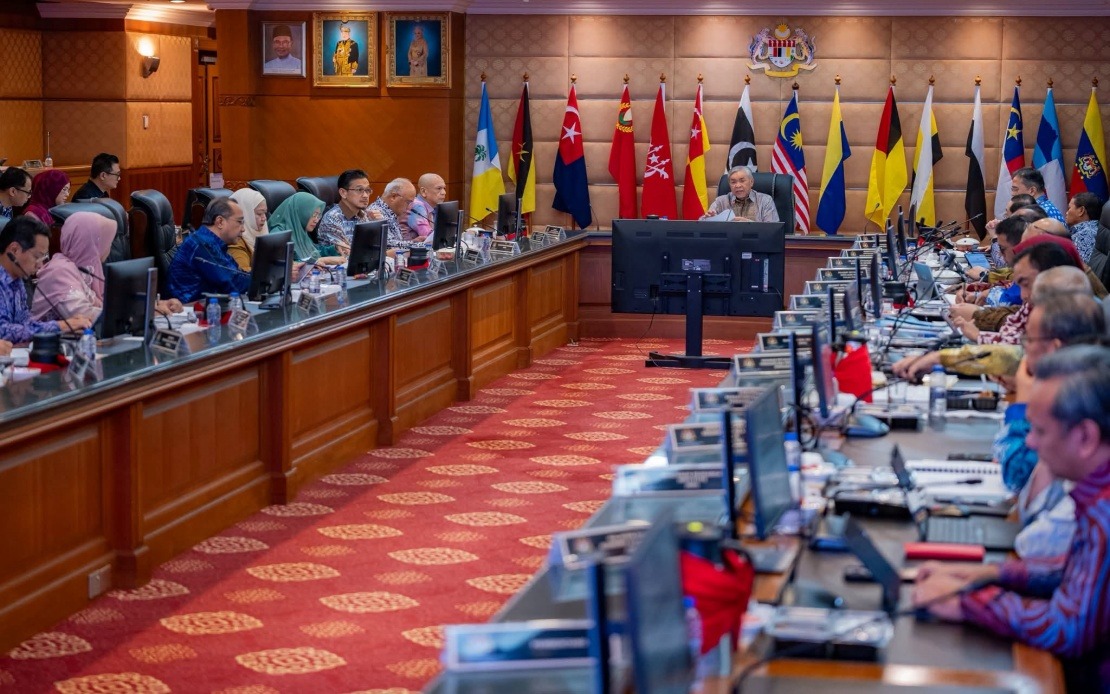
The Malaysian government is moving forward with a carefully calibrated approach to stabilise the rice market while safeguarding both consumers and agricultural producers. At the 18th Executive Committee meeting of the National Cost of Living Action Council (NACCOL) in Putrajaya on August 13, Deputy Prime Minister Datuk Seri Dr Ahmad Zahid Hamidi outlined a comprehensive roadmap for local white rice that acknowledges the competing pressures facing the sector. The strategy represents an attempt to reconcile the needs of households struggling with rising food costs against the financial sustainability of farmers and producers who form the backbone of domestic food security.
Ahmad Zahid framed the government's broader response to cost-of-living pressures as extending well beyond what appears on supermarket shelves. The executive committee's deliberations encompassed the full spectrum of expenses affecting households—from the farm-gate costs that farmers grapple with and the logistical networks that move goods to market, through to the pricing of essential services like healthcare and education. This holistic perspective acknowledges that addressing affordability requires simultaneous action across multiple supply chain points and policy levers, rather than focusing narrowly on retail pricing alone.
Central to the committee's deliberations was a transitional framework designed to ease the impact on lower-income and vulnerable population segments. The proposed soft-landing mechanism would introduce subsidised rice as a cushioning measure, allowing the government to implement broader policy adjustments without causing immediate economic shocks to households with limited disposable income. This approach reflects lessons learned from subsidy rationalisation efforts across the region, where abrupt policy shifts have occasionally triggered social backlash. By creating a gradual transition pathway, the government seeks to buy time for structural adjustments in the agricultural sector while maintaining social stability.
Beyond rice, the committee agreed to explore expanding the Sumbangan Asas Rahmah (SARA) assistance programme to encompass fresh produce including fruits, vegetables, and fresh protein sources. This expansion would represent a meaningful shift in government support mechanisms, moving from a purely subsidy-based approach toward actively improving dietary access and nutritional outcomes. The proposal requires approval from the main NACCOL meeting chaired by Prime Minister Datuk Seri Anwar Ibrahim, but it signals official recognition that food security encompasses both affordability and nutritional adequacy. For Malaysian households, many of whom have seen fresh produce prices climb significantly, such a measure could meaningfully expand what lower-income families can afford to purchase.
The committee's discussions also grappled with external pressures bearing down on Malaysia's food system. Geopolitical tensions, particularly ongoing uncertainties in West Asia, create volatility in global commodity prices and shipping costs that ultimately filter through to domestic consumers. Additionally, the government acknowledged that compliance costs for food imports and the rationalisation of targeted agricultural subsidies both add to production expenses. Monitoring these factors continuously has become essential to prevent them from triggering inflationary waves that would undermine the government's broader cost-of-living agenda. This vigilance extends to supply chain vulnerabilities and logistics bottlenecks that can amplify price pressures.
Support for agricultural stakeholders emerged as a key priority, with relevant agencies tasked to refine assistance mechanisms specifically targeting farmers and fishermen. The government recognises that without ensuring viable income levels for agricultural producers, the domestic supply base risks contraction, potentially forcing greater reliance on imports and ultimately raising consumer prices. This represents a departure from policies that have sometimes prioritised consumer prices at the expense of producer incomes, acknowledging that sustainable food security requires both ends of the supply chain to remain economically viable.
On the healthcare front, NACCOL reviewed the implementation of 11 initiatives under the RESET strategy, intended to moderate private healthcare cost escalation while simultaneously improving access and expanding treatment options available through public facilities. For Malaysians, particularly those in urban areas and middle-income households who increasingly turn to private medical care, controlling these costs carries significant household budget implications. The strategy reflects the government's integrated Cost of Living Action Plan 2030, which abandons piecemeal interventions in favour of coordinated, sector-wide measures.
Education affordability constituted another substantial element of the committee's review. Government data indicates that 13 tertiary education aid schemes distributed RM589.6 million to 62,937 Form Six and university students in the preceding year. Ahmad Zahid emphasised that such support requires strengthening to ensure that economic circumstances do not determine educational opportunity or talent development. For Malaysian families, particularly those in lower-income categories, such backing makes the difference between accessing higher education and facing financial barriers that curtail social mobility.
The council's framing of cost-of-living pressures as multidimensional—spanning food, healthcare, education, and household essentials—reflects an understanding that Malaysian households do not experience these expenses in isolation. A family struggling with rice prices may simultaneously face electricity bills, school fees, and medical costs. By operating through an integrated framework rather than addressing sectors individually, the government signals intent to develop synergies across policy domains. This coordinated approach, if executed effectively, could yield more substantial household relief than isolated measures in any single sector.
Looking ahead, the rice transition strategy will likely serve as a template for managing other agricultural commodities where domestic production faces competition from cheaper imports or where price volatility affects vulnerable groups. The soft-landing approach, combined with targeted support for producers and expanded consumer assistance, offers a middle path between market liberalisation and heavy-handed price controls. For Malaysia's agricultural sector, already pressured by labour shortages and climate uncertainties, such support mechanisms may prove crucial to maintaining productive capacity and food self-sufficiency. The outcome of NACCOL's recommendations at the prime ministerial level will signal the government's seriousness in balancing these competing imperatives.

