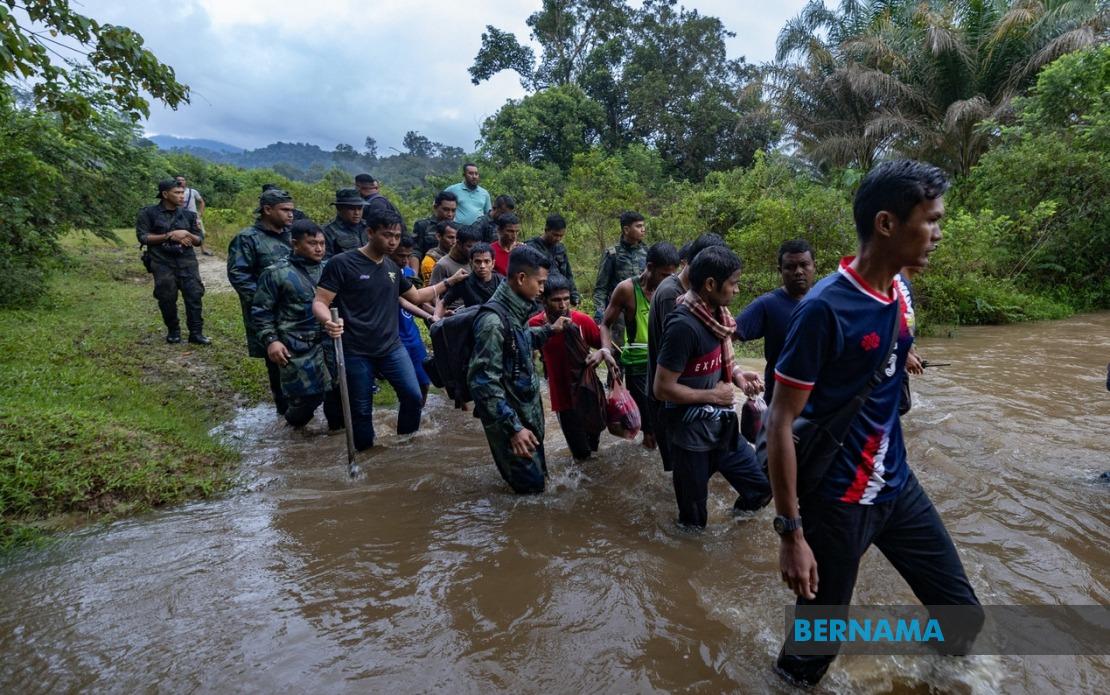
Malaysia is committing to a deeper and more strategic partnership with ASEAN member states and the United Nations refugee agency to tackle the protracted Rohingya displacement crisis, marking a shift towards more coordinated regional action on a humanitarian challenge that has tested the bloc's cohesion and capacity for nearly a decade.
Deputy Foreign Minister Datuk Lukanisman Awang Sauni outlined the comprehensive framework during a parliamentary session on July 7, emphasizing that Malaysia recognises the need for both immediate protection measures and long-term structural solutions. The country's evolving position reflects growing recognition that the Rohingya question extends far beyond humanitarian aid, encompassing border security, irregular migration patterns, and organised human trafficking networks that destabilise the entire Southeast Asian region.
Malaysia's dual-track engagement strategy hinges on leveraging ASEAN's diplomatic machinery to press for a Myanmar political settlement whilst simultaneously strengthening operational partnerships with UNHCR to ensure refugees receive essential services. This balancing act acknowledges a fundamental tension: ASEAN's institutional constraints limit how forcefully member states can address the root causes of displacement in Myanmar, yet the organisation remains the most appropriate forum for building regional consensus and coordinating burden-sharing.
The deputy minister candidly addressed the structural limitations that have hampered collective progress. ASEAN's foundational principles of non-interference in internal affairs and its requirement for consensus-based decision-making create significant obstacles when confronting humanitarian emergencies. These norms, designed to protect smaller member states from external pressure, paradoxically can prevent the bloc from responding decisively to cross-border crises that threaten regional stability and the welfare of vulnerable populations.
Simultaneously, UNHCR's institutional mandate, while essential for delivering humanitarian protection and assistance, does not extend to resolving the political disputes underlying displacement. The organisation excels at emergency response, camp management, and advocacy for refugee rights, yet lacks authority to negotiate political settlements or pressure governments on governance issues. This creates a complementary but incomplete institutional architecture that explains why the Rohingya crisis remains unresolved despite substantial international attention and resources.
Under the current approach, Malaysia and partner organisations have concentrated efforts on rights protection and humanitarian delivery rather than addressing the fundamental political breakdown in Myanmar's treatment of the Rohingya minority. While such work is vital and has prevented humanitarian catastrophe, it necessarily falls short of achieving durable solutions that would enable refugees to return safely to Myanmar or resettle permanently in third countries.
Looking ahead, the deputy minister signalled Malaysia's openness to exploring innovative regional mechanisms that could enhance responsibility-sharing among ASEAN nations. This concept, increasingly discussed in diplomatic circles, would involve formalising commitments from member states to share the burden of hosting refugees and asylum seekers equitably, moving away from the current situation where a handful of countries, particularly Malaysia and Bangladesh, bear disproportionate costs and pressures.
The strategic vision also emphasises promoting pathways toward a political settlement in Myanmar that would facilitate the voluntary, safe, and dignified return of Rohingya populations. Such an outcome would require credible guarantees regarding refugee safety, full citizenship rights restoration, and accountability for documented atrocities. It would also necessitate Myanmar's genuine commitment to governance reforms addressing the systematic discrimination that generated the displacement in the first place.
Malaysia's repositioning on the Rohingya issue reflects pragmatic recognition that the country, despite its significant humanitarian contributions, cannot resolve this crisis unilaterally or even regionally without Myanmar's cooperation and fundamental political change. By strengthening ties with UNHCR and coordinating more effectively within ASEAN, Malaysia seeks to maximise whatever leverage the region can collectively exercise whilst demonstrating commitment to international humanitarian norms and principles.
The implications for Malaysia specifically are considerable. As a lower-middle-income country already hosting substantial refugee and migrant populations, managing additional displacement pressures whilst addressing irregular migration, human trafficking, and the associated security challenges requires sustained international partnership and burden-sharing. Enhanced ASEAN coordination offers potential mechanisms to distribute these responsibilities more evenly across the region.
The deputy minister's framing of Malaysia's position as rooted in commitments to peace, security, and humanitarian principles signals that the country views this engagement not as charity but as strategic necessity. The Rohingya crisis has demonstrated that regional displacement crises inevitably affect all neighbouring states through security complications, irregular migration, and the destabilising effects of unresolved humanitarian emergencies on regional stability and prosperity.
Moving forward, Malaysia's success in strengthening ASEAN and UNHCR cooperation will depend on whether these enhanced partnerships can generate meaningful momentum toward a Myanmar political solution whilst simultaneously improving operational protections for displaced Rohingya. The country's diplomatic efforts, combined with concrete burden-sharing mechanisms and sustained international pressure, represent the most promising available pathway toward addressing this profoundly complex humanitarian emergency.

