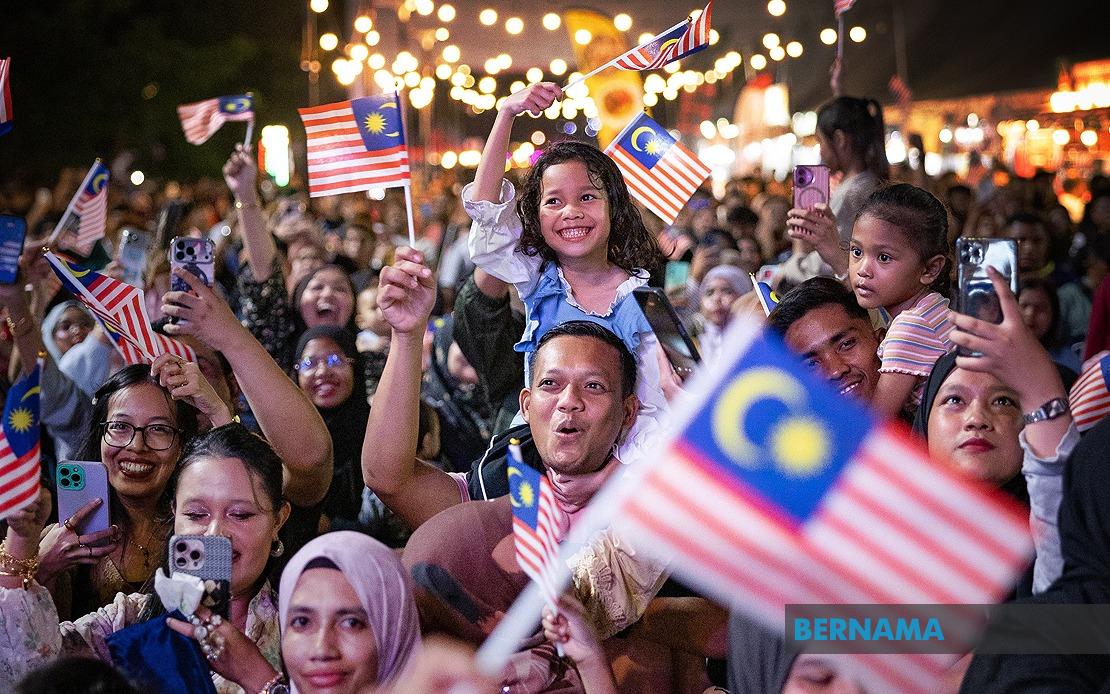
Patriotic fervour surged across Malaysia on National Day Eve, with celebratory gatherings spanning from the federal capital to state capitals, as the nation prepared to mark its 69th year of independence. The scale and enthusiasm of the festivities underscored the enduring importance of Merdeka celebrations in the national consciousness, with families, youth and community groups participating in events that emphasised unity, sacrifice and shared heritage. The sprawling commemorations reflected how the independence narrative remains central to Malaysian identity despite the modernisation and political evolution the country has experienced over nearly seven decades.
Kuala Lumpur's celebrations at Dataran Merdeka emerged as the centrepiece of National Day Eve observances, drawing more than 100,000 visitors who descended upon the historic square to participate in the 'Kita Bagi Jadi @ Ambang Merdeka 2026' concert and the midnight countdown. The venue filled with spectators of all ages from as early as 8 pm, with the iconic Sultan Abdul Samad Building illuminated against the night sky as throngs waved the Jalur Gemilang in a sea of red and white. The choice of Dataran Merdeka as the primary venue carried symbolic weight, given its status as the site where the Merdeka flag was first raised on independence day, cementing its role as a national monument to freedom and self-determination.
The entertainment programme showcased homegrown talent and cultural expression, with a 90-minute concert featuring eight local artistes supported by approximately 350 performers in a multimedia presentation blending music, dance and historical narrative. The lineup included Aina Abdul, Aman RA, Nadia Aqilah, Asmidar, Haziq Rosebi, Mimifly, Izen Kong and Pasya, each contributing to a celebration of Malaysia's diverse musical landscape. The inclusion of storytelling elements alongside performances illustrated an effort to educate younger audiences about the nation's journey, weaving historical consciousness into entertainment that could resonate across age groups and backgrounds.
Official presence lent gravitas to the proceedings, with Minister in the Prime Minister's Department (Federal Territories) Hannah Yeoh and Kuala Lumpur Mayor Datuk Seri Fadlun Mak Ujud attending the event. The subsequent arrival of Menteri Besar Datuk Seri Amirudin Shari at 9:20 pm signalled the approach to the midnight climax. A dramatic skydiving display by the elite VAT 69 Commando unit punctuated the evening's progression, demonstrating the integration of military pageantry into civilian celebration—a recurring theme across Malaysian National Day observances that connects defence capability with national pride.
The crescendo towards midnight incorporated ceremonial elements that have become fixtures of Merdeka celebrations. The singing of Negaraku, Malaysia's national anthem, unified the assembled crowd in a collective affirmation of patriotic sentiment. A parade of contingents and decorated vehicles traversed the square, followed by special performances by the Fire and Rescue Department, police and the Malaysian Armed Forces, each service demonstrating its role in maintaining national stability and security. These displays transformed the celebration from a purely cultural event into an expression of the state's authority and protective capacity.
The midnight moment itself became the focal point of the evening's emotional arc. Menteri Besar Datuk Seri Amirudin Shari led the crowd in shouting 'Merdeka'—the rallying cry of independence—accompanied by fireworks and light show displays that illuminated the Kuala Lumpur skyline. The celebration continued into the early morning hours with additional concerts featuring Datuk Ramli Sarip, Datuk Awie, Gerhana Skacinta, Merrah and Wani Kyrie, sustaining the festive atmosphere and extending participation opportunities for those arriving later in the evening. Screenings of the films 'Mukhsin' and 'Sepet' from 2 am onwards provided cultural content linked to Malaysian cinema and storytelling.
Beyond the capital, Selangor's celebrations drew comparable participation, with over 46,000 visitors attending the sports complex venue. Chief Minister Datuk Seri Ab Rauf Yusoh and his wife Datin Seri Zuriyah Abd Aziz, along with state executive council members, presided over festivities that opened with Negaraku and featured martial arts displays reflecting the nation's diverse cultural practices. The parallel celebration structure across different states demonstrated how National Day observance extends through institutional channels, with political leaders at various levels using the occasion to reinforce national messaging and project an image of unified leadership.
Perlis state celebrations similarly reflected the nationwide patriotic momentum, with the event featuring an address from Muhammad Sanusi emphasising public appreciation for independence and the imperative to safeguard national sovereignty. Royal messaging came through Tuanku Syed Sirajuddin's address, which articulated a sophisticated understanding of independence as neither inevitable nor permanent, but rather as a legacy born from sacrifice and unity among Malaysia's diverse racial communities. The royal perspective introduced a reflective dimension to the festivities, reminding attendees that freedom required ongoing commitment to knowledge, integrity, unity and national responsibility.
The venues across multiple locations integrated diverse activities extending beyond the ceremonial core. Alongside concerts and official rituals, Dataran Merdeka hosted the Bulatan Sultan Azlan Shah Run, Jualan Rahmah subsidised commerce, thrift markets supporting circular economy principles, food stalls showcasing Malaysian culinary diversity, complimentary health screenings, karaoke competitions, entertainment attractions and live performances. This multi-faceted programming acknowledged that National Day celebrations serve multiple social functions—they commemorate historical achievement while providing accessible public entertainment, community engagement and commercial opportunity. The breadth of activities ensured participation remained inclusive across socioeconomic backgrounds and age demographics.
The nationwide character of these celebrations, spanning Kuala Lumpur, Selangor and Perlis with comparable energy and attendance, reflected how National Day transcends regional or partisan boundaries to function as a unifying occasion. The participation of government officials, military units, local entertainers and ordinary citizens created a cross-cutting coalition of stakeholders invested in affirming national identity. For Malaysian readers and Southeast Asian observers, these celebrations demonstrated how a middle-income nation maintains robust civic engagement with national commemoration decades after independence, utilising these occasions to transmit values, strengthen collective identity and provide public space for patriotic expression that complements electoral politics and institutional governance.

