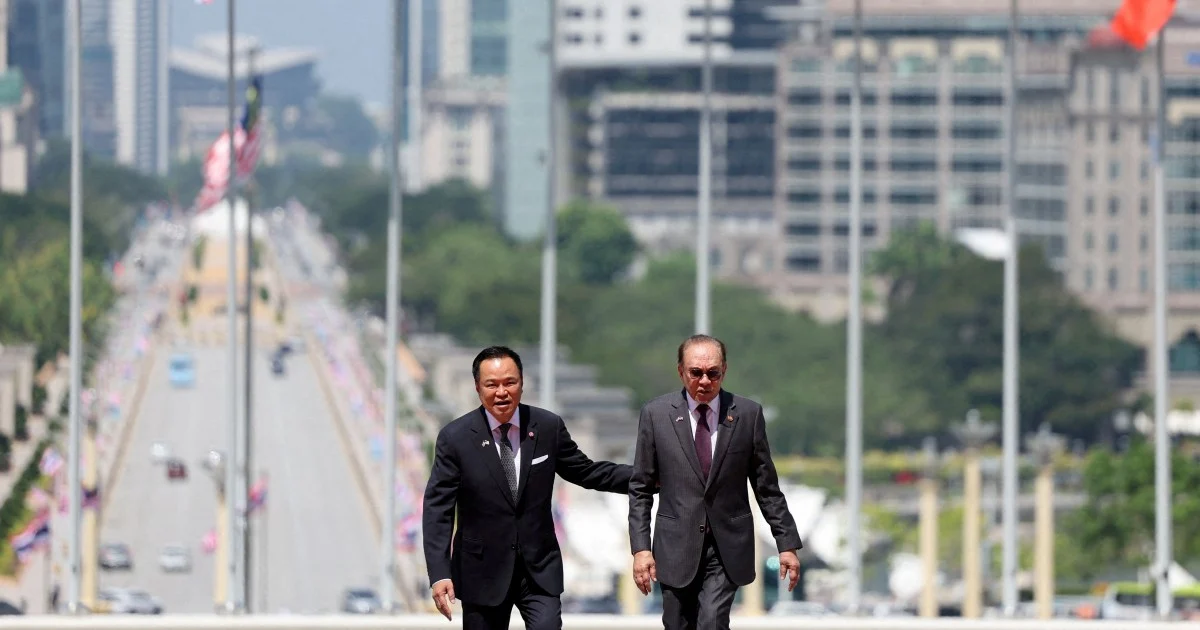
Malaysia believes the deepening political turmoil in Myanmar demands a comprehensive approach that brings together all relevant parties and factions, according to Prime Minister Datuk Seri Anwar Ibrahim. Speaking in Putrajaya, the premier underscored that lasting solutions cannot emerge from narrow or exclusionary processes, but only through genuine engagement encompassing the full spectrum of Myanmar's political actors, civil society, and ethnic minorities.
The Malaysian position reflects growing concern across Southeast Asia about the humanitarian and security implications of Myanmar's extended instability. Since the military coup in February 2021, the country has descended into widespread violence and disorder, creating a regional refugee crisis and destabilizing neighbouring countries including Thailand and Bangladesh. The economic fallout has also reverberated through ASEAN supply chains and investment patterns, making Myanmar's recovery a matter of regional rather than merely bilateral interest.
Anwar's emphasis on self-determination signals Malaysia's respect for Myanmar's sovereignty while rejecting external impositions of political solutions. This carefully calibrated position acknowledges the international community's legitimate concerns about governance and human rights without appearing to dictate outcomes. It also reflects ASEAN's founding principle of non-interference, a cornerstone of regional relations that Malaysia has consistently upheld despite mounting pressure from Western nations to adopt more interventionist stances.
The inclusive engagement framework Malaysia advocates requires bringing military leadership to the negotiating table alongside opposition forces, ethnic armed organizations that control significant territory, and representative civil society voices. This multi-party format presents formidable logistical and trust-building challenges, particularly given the deep antagonism between the military junta and armed resistance movements. Previous dialogue attempts have repeatedly collapsed, suggesting that substantive progress demands either significant shifts in underlying positions or creative frameworks that address fundamental security and power-sharing concerns.
Myanmar's ethnic dimension complicates the picture substantially. The country's diverse population includes numerous ethnic minorities with distinct political aspirations and military capabilities. Any sustainable settlement must address historical grievances and provide genuine power-sharing arrangements rather than nominal inclusion. Malaysia's own experience managing communal diversity gives it credibility in advocating this approach, though Myanmar's conflict is considerably more violent and intractable.
ASEAN's role as Myanmar's diplomatic anchor remains contested. While the organization has articulated a Five-Point Consensus framework and engaged the junta through various channels, critics argue these efforts lack teeth and have produced minimal concrete progress. Malaysia's framing aligns with this ASEAN consensus, positioning the regional bloc as an honest broker capable of facilitating dialogue without imposing predetermined outcomes. This approach appeals to the junta, which might otherwise reject international engagement as hostile intervention.
The humanitarian crisis accompanying Myanmar's political breakdown demands urgent resolution regardless of political negotiations' timeline. Millions face food insecurity, displacement, and inadequate healthcare as the economy contracts and conflict spreads. Bangladesh hosts nearly a million Rohingya refugees in sprawling camps, a burden affecting Malaysia's broader regional security calculations. Thailand has absorbed significant refugee flows, straining border provinces already dealing with cross-border trafficking and narcotics smuggling connected to Myanmar's instability.
Malaysia's diplomatic messaging reflects calculations about optimal regional positioning. By emphasizing inclusive engagement and self-determination, Anwar's government avoids antagonizing the military regime while maintaining credibility with Western partners and Myanmar's opposition movements. This balancing act grows increasingly difficult as polarization deepens, yet Malaysia's centrality to ASEAN and its economic interests across the region require this measured approach.
International precedent suggests that genuine resolution typically requires significant time, multiple negotiating phases, and third-party mediation structures with real leverage. The inclusive framework Malaysia proposes resembles successful transitions in other post-conflict societies, though implementing such models in Myanmar's context demands unprecedented cooperation from deeply hostile parties. Trust-building mechanisms, confidence-building measures, and international guarantees all feature in effective inclusive dialogue processes.
Further complicating matters, China and Russia have different strategic interests in Myanmar than Western democracies do, creating competing diplomatic pressures. Malaysia's ASEAN position theoretically offers neutral ground above these great-power competitions, though the bloc's actual effectiveness depends on member consensus and willingness to maintain collective positions despite bilateral pressures.
Anwar's articulation of Malaysia's stance serves multiple audiences simultaneously. For Myanmar's military leadership, it offers a pathway to international legitimacy through dialogue. For opposition and ethnic armed organizations, it promises international backing for inclusive processes respecting their concerns. For ASEAN partners, it reinforces collective diplomatic strategy. For Malaysia itself, it maintains the country's positioning as a constructive regional power capable of nuanced engagement on sensitive issues.

