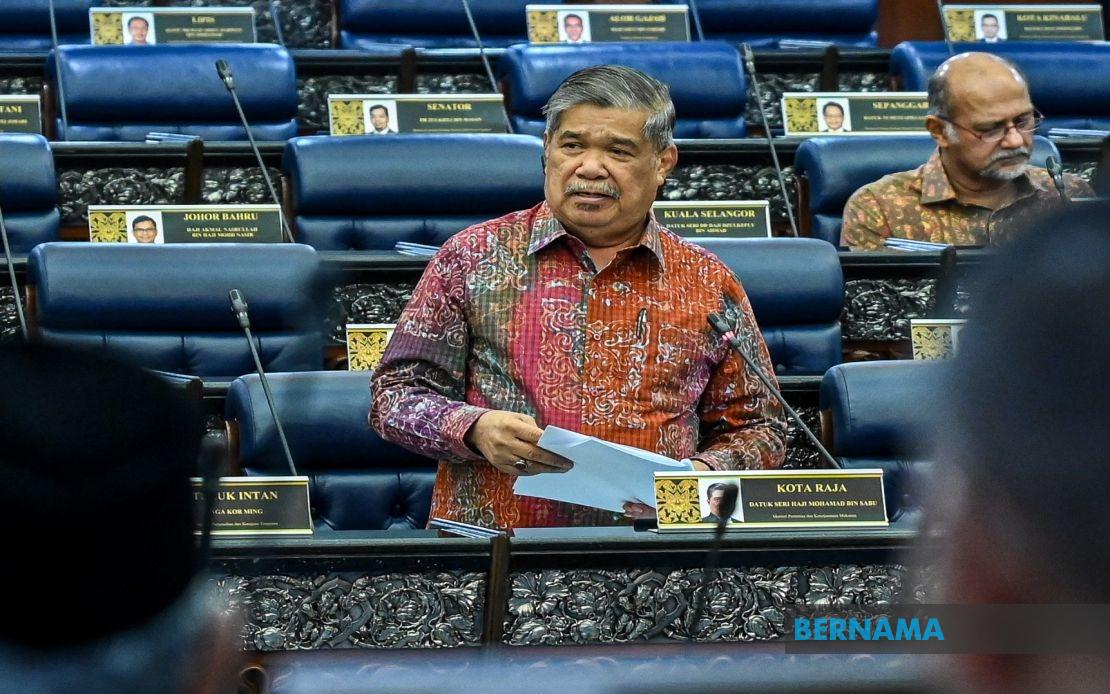
The Malaysian government is mounting a coordinated response to the looming threat posed by El Nino weather patterns, moving beyond reactive crisis management toward systematic agricultural resilience. Agriculture and Food Security Minister Datuk Seri Mohamad Sabu outlined an integrated strategy combining technological innovation, strategic stockpiling, and direct farmer support to shield the nation's food supply from climate disruption.
The El Nino phenomenon, characterised by prolonged drought conditions across Southeast Asia, poses a significant challenge to Malaysia's agricultural sector, particularly rice cultivation which remains critical to domestic food security and farmer livelihoods. The government recognises that a sustainable response requires multi-layered intervention rather than reliance on a single mitigation approach. This assessment reflects growing awareness within policymaking circles that climate volatility represents an ongoing structural challenge rather than a temporary anomaly.
At the technological frontier, Malaysia's approach centres on optimising water resource utilisation through advanced monitoring and distribution systems. Continuous surveillance of dam levels and catchment areas enables more precise water allocation decisions, while smart irrigation monitoring systems and targeted drip irrigation infrastructure reduce wastage substantially. These investments represent a departure from conventional irrigation methods and signal government commitment to modernising agricultural infrastructure despite competing fiscal demands elsewhere in the budget.
The Malaysian Agricultural Research and Development Institute (MARDI) plays a central role in the climate adaptation strategy, spearheading development of drought-resistant rice varieties capable of maintaining yields under water-stress conditions. This research represents a medium-term investment in agricultural competitiveness, as new crop varieties typically require years of field testing before widespread adoption. The Prime Minister's Food Security Meeting directed MARDI to accelerate these programmes, indicating senior leadership prioritisation of this agenda.
Supplementary to technological measures, the government maintains strategic rice reserves equivalent to approximately six months of domestic consumption, with supplementary imports continuing as required. This buffer approach provides temporal flexibility to respond to supply shocks while domestic production adjusts to climate conditions. However, dependency on imports carries cost implications and potential vulnerabilities to global market disruptions, constraining the strategy's long-term sustainability.
Direct financial support mechanisms have already distributed substantial resources to affected farmers. During the initial assistance phase in 2024, RM45.24 million reached 8,224 rice farmers, while extended support extending to June 2026 allocated RM38.53 million across 55,058 farmers managing 16,933 hectares affected by drought in Peninsular Malaysia's northern and eastern regions. These figures underscore the scale of climate impact on agrarian communities and the government's willingness to commit budgetary resources to social mitigation, though questions remain regarding adequacy of support relative to actual losses incurred.
Geographic diversification of rice production offers another strategic dimension to the resilience approach. Government initiatives encouraging large-scale commercial paddy development in Sarawak, Pahang, and other states aim to distribute production risk across regions with varying climate patterns and water availability. This decentralisation strategy could reduce vulnerability to region-specific drought events while potentially generating economies of scale in modern agricultural operations.
Controlled environment agriculture—encompassing greenhouse systems, hydroponics, and precision farming technology—represents an emerging frontier in climate-resilient food production. By substantially reducing weather dependency, these cultivation methods could transform Malaysia's agricultural risk profile, though adoption faces barriers including capital requirements, technical expertise, and land availability in densely populated areas. Integration of this approach with traditional farming through technology transfer programmes could accelerate sector-wide adaptation.
Beyond domestic agricultural production, government strategy encompasses value chain development to enhance farmer income resilience. Durian export market expansion into China, particularly penetrating smaller Chinese municipalities, represents an important diversification avenue. Current exports concentrate in major urban centres, leaving vast market potential untapped. Successfully unlocking these markets through logistics coordination and customs facilitation could generate sustained income streams offsetting production volatility.
The comprehensive nature of this strategy reflects sophisticated understanding of interconnected challenges. Climate adaptation, farmer welfare, food security, and rural economic development cannot be addressed in isolation; effective policy coordinates across these domains. However, successful implementation depends on sustained political commitment beyond the current cycle, adequate funding allocation amid competing priorities, and effective coordination between multiple government agencies each with distinct mandates and operational cultures.
For Malaysian policymakers, the El Nino challenge offers both urgent imperative and opportunity. Short-term climate variability demands immediate interventions protecting current farming communities, while longer-term climate patterns suggest permanent shifts in viable agricultural zones and production methods. The government's multifaceted approach acknowledges both timeframes, though achieving equilibrium between crisis response and transformational investment remains perpetually challenging in resource-constrained environments.

