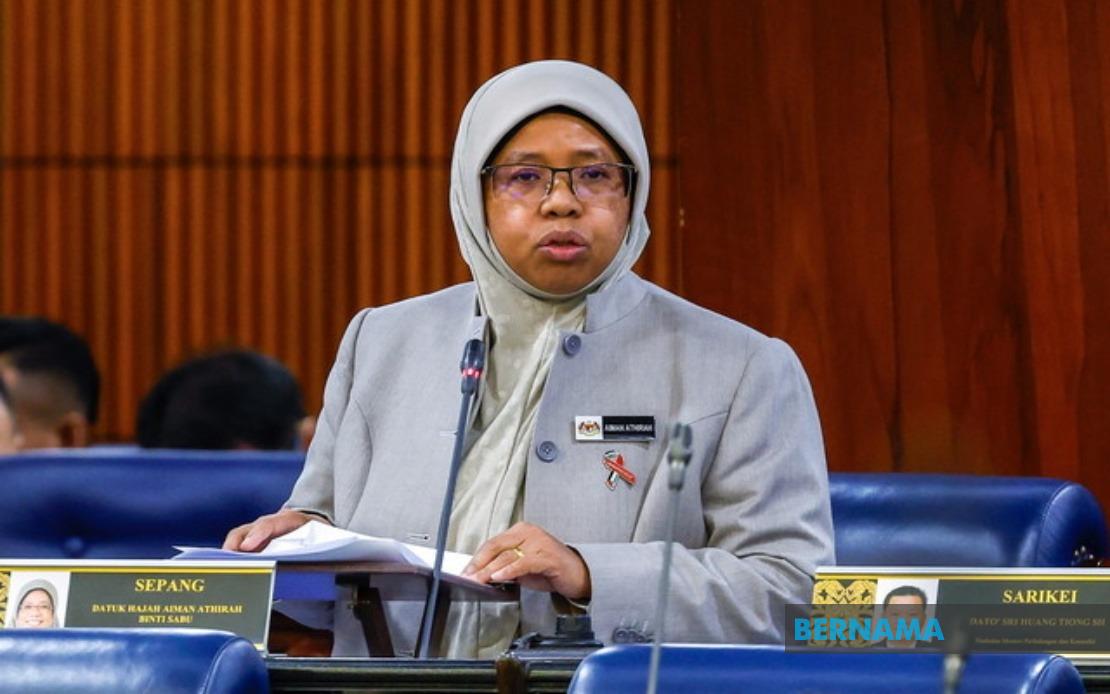
The Ministry of Housing and Local Government has formally approved a substantial package of development initiatives targeting Chinese new villages and Indian communities across the country, reflecting the government's commitment to addressing infrastructure deficits in these traditionally marginalised settlements. Speaking in parliament, Deputy Minister Datuk Aiman Athirah Sabu outlined the approval of 573 projects concentrated in Chinese new villages alongside 21 separate initiatives in Indian villages, with combined expenditure reaching RM73 million for the current fiscal year. The announcement comes in response to parliamentary scrutiny about the state of basic amenities and development infrastructure across these communities, underscoring ongoing political attention to minority village welfare.
The infrastructure development component forms the backbone of the initiative, with 366 separate projects approved specifically for Chinese new villages aimed at modernising roads, water supply, electricity connections, and other essential utilities. Of these infrastructure schemes, roughly 40 percent have already been completed, demonstrating tangible progress in bridging the development gap. However, the remaining 218 projects remain under active construction, indicating that substantial work still lies ahead and that many communities will continue experiencing the challenges associated with ongoing development activity for the foreseeable future. This staged completion pattern is typical for large-scale infrastructure programmes, though it also highlights the extended timeline residents must endure before receiving full benefits.
A significant component of the programme targets housing conditions directly through two distinct assistance mechanisms. The Housing Repair Assistance Programme has secured approval for 197 individual projects, with roughly a quarter already completed and the remainder progressing through implementation stages. These initiatives address deteriorating residential stock in established villages where aging structures require substantial renovation to meet modern safety and habitability standards. Meanwhile, the New Village Housing Construction Assistance Programme represents a longer-term commitment, with ten projects approved to facilitate entirely new construction, though none have yet commenced operations. This pipeline suggests that future budget allocations will need to sustain momentum to ensure these projects advance from planning into active construction phases.
The Indian village component, while smaller in project numbers, addresses communities that have historically received even less infrastructural attention than their Chinese counterparts. Deputy Minister Aiman Athirah identified 18 Indian villages distributed across six states—Johor, Melaka, Selangor, Kuala Lumpur, Perak, and Negeri Sembilan—as focal points for the current initiative. These projects encompass infrastructure development, public amenities provision, and safety enhancements, with a total outlay of RM2 million representing a more modest but still meaningful investment. Current progress shows five projects have reached completion, while thirteen are actively under construction, demonstrating reasonable momentum in implementation. An additional two remain in procurement phases while one continues through planning stages, revealing varying levels of advancement across the programme.
The broader historical context reveals sustained government commitment to Chinese village development, with cumulative allocations reaching RM328.9 million since 2023, benefiting residents across 613 villages nationwide. This trajectory indicates that the current RM73 million represents part of an accelerating investment pattern, though observers might question whether funding levels adequately match the scale of accumulated deficits in these settlements. The situation differs markedly for Indian villages, where coordinated ministry involvement only commenced in 2025, suggesting that targeted development initiatives for these communities represent a relatively recent policy priority. This temporal distinction raises questions about whether Indian village infrastructure gaps have widened due to historical neglect or whether these communities are now receiving overdue political attention.
The Indian village allocation structure reveals a multi-agency approach to community development, with RM15 million distributed through dual channels designed to maximize reach and effectiveness. The allocation encompasses RM10 million administered directly through KPKT's 2025 budget allocation, supporting 54 distinct projects, while an additional RM5 million flows through the Malaysian Indian Transformation Unit (MITRA), operating under the Indian Community Socioeconomic Development Programme framework. These initiatives collectively target 22,144 individual recipients dispersed across 50 identified Indian villages, suggesting that the RM15 million represents a per-capita investment that merit careful evaluation against actual community needs and project costs. The dual-funding mechanism indicates recognition that housing and local government frameworks alone prove insufficient for addressing the multifaceted challenges facing Indian communities.
For Malaysian readers and policymakers, these approvals carry implications extending beyond simple statistics. The projects represent recognition that minority communities continue experiencing development disparities relative to urban and urban-adjacent settlements. The geographic spread across multiple states—particularly the concentration in Peninsular Malaysia's western and central regions—reflects historical settlement patterns established during colonial and post-independence periods. However, the relatively modest allocation to Indian villages compared to Chinese new villages invites scrutiny about whether resource distribution matches demographic needs and historical levels of neglect. The timeline for completion across hundreds of projects spanning multiple states and funding channels creates implementation challenges that merit ongoing parliamentary oversight.
The political significance extends beyond developmental outcomes to encompass broader questions of interethnic equity and resource allocation within Malaysia's diverse society. Parliamentary questions about village conditions reflect constituent concerns about basic service delivery and housing conditions, indicating that these issues remain salient within electoral politics. The announcement's emphasis on completed projects—with specific numbers cited for infrastructure completion rates and housing assistance progression—suggests deliberate efforts to demonstrate government responsiveness and delivery capability. For opposition members raising these concerns, the figures provide benchmarks against which to measure future progress and hold the administration accountable for promised timelines.
Looking forward, the sustainability of these initiatives depends on several interconnected factors. Sustained budget allocations beyond the current financial year will prove essential for completing the substantial pipeline of projects currently under construction or in early stages. The participation of multiple ministries and implementing agencies creates coordination requirements that can either facilitate efficient delivery or generate bottlenecks if communication channels prove inadequate. Community engagement in project planning and execution remains critical for ensuring that approved initiatives actually address priority needs as identified by residents themselves. The distinction between projects formally approved and those actually commenced or completed underscores the importance of distinguishing between announced intentions and tangible ground-level improvements.
The broader development trajectory for these communities reflects Malaysia's ongoing negotiation with its multicultural character and commitment to inclusive growth. Chinese new villages, established as planned settlements during the emergency period and subsequently incorporated into the development mainstream, have benefited from decades of gradually accumulating infrastructure investments. Indian villages, by contrast, often emerged through informal settlement patterns and have received relatively less systematic policy attention until recently. The current initiatives, while welcome, must be understood within this historical context of uneven development outcomes. For Southeast Asian observers watching Malaysia navigate questions of minority welfare and equitable resource distribution, these specific policy choices offer insights into how middle-income countries with diverse populations address longstanding spatial inequalities and infrastructure deficits within internally heterogeneous territory.

