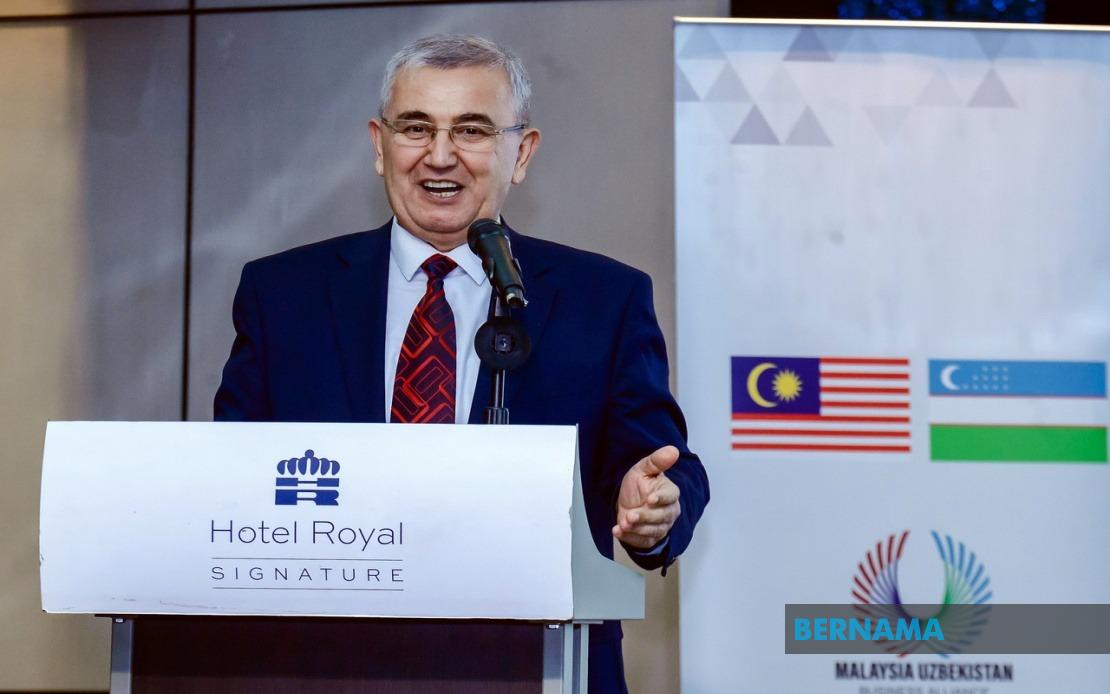
Malaysia and Uzbekistan are positioned to substantially expand their agricultural cooperation by leveraging complementary strengths in technology, innovation, and production capacity, according to Uzbekistan's ambassador to Malaysia. The bilateral relationship in the agricultural sector has gained momentum following high-level visits by both nations' leaders and most recently through Agriculture and Food Security Minister Datuk Seri Mohamad Sabu's official trip to Uzbekistan, signalling a genuine commitment to formalising this partnership at the ministerial level.
Ambassador Dr Karomidin Gadoyev emphasised that agriculture has remained a consistent priority in discussions between Malaysian and Uzbekistani leadership, with the issue featuring during Prime Minister Datuk Seri Anwar Ibrahim's May 2024 visit to Uzbekistan and President Shavkat Mirziyoyev's February 2024 visit to Malaysia. This sustained high-level engagement reflects the strategic importance both nations place on food security and agricultural modernisation in an era of global supply chain uncertainties.
The partnership represents a natural fit of complementary expertise. Malaysia brings established capabilities in paddy cultivation, aquaculture, fisheries management, precision farming systems, and agricultural research infrastructure through institutions like the Malaysian Agricultural Research and Development Institute (MARDI). Uzbekistan, by contrast, possesses advanced energy-efficient irrigation technologies, established horticultural practices, and substantial agri-food processing capabilities developed to serve its diverse climate zones and regional markets.
Food security concerns have become increasingly central to both governments' planning as global challenges mount. The integration of digital technologies and artificial intelligence into agricultural production represents a critical frontier, and both nations recognise the competitive advantage of early adoption. Uzbekistan is particularly interested in absorbing Malaysia's proven methodologies for deploying smart technologies, viewing this knowledge transfer as essential for boosting productivity amid demographic and environmental pressures.
A concrete manifestation of growing cooperation involves Malaysian agricultural technology companies establishing operations in Uzbekistan. Miracule, a Malaysian firm, has already opened its first agricultural drone showroom in the Central Asian nation and is planning to escalate usage in Uzbek agricultural fields, with eventual assembly of advanced drone systems locally. This represents meaningful technology transfer rather than mere equipment sales, creating local jobs and building indigenous expertise.
Aquaculture has emerged as a particularly promising sector for deepening collaboration. Uzbekistan's landlocked geography and expanding population of nearly 40 million have created substantial unmet demand for seafood products. Malaysian companies possess genuine technological advantages, particularly in biofloc technology, which optimises production efficiency by reducing feed costs by up to 30 per cent whilst simultaneously increasing yields and lowering overall production expenses. Several Malaysian enterprises have already begun preliminary investigations into establishing shrimp farming and fisheries ventures within Uzbekistan.
Current bilateral trade figures demonstrate the existing foundation for expansion. Agri-food commerce reached RM338 million in 2025, with Malaysian palm oil and palm-derived products dominating export volumes to Uzbekistan. Ambassador Gadoyev expressed confidence that this figure could realistically double or triple within five to ten years through systematic development of identified opportunities. Malaysia could position itself as a regional processing hub for crude palm oil destined for Central Asian markets, while Uzbekistani producers expand premium fruit exports and processed food products into Southeast Asian distribution networks.
The strategic value of this partnership extends beyond bilateral commerce to regional food security architecture. Establishing Malaysia-Uzbekistan agricultural cooperation creates a template for broader Southeast Asia-Central Asia integration, particularly significant given geographic diversity and complementary production profiles across this extended region. This cooperation also diversifies Malaysia's agricultural partnerships beyond traditional Southeast Asian frameworks, reducing concentration risk and opening market access.
The upcoming Malaysia Agriculture, Horticulture and Agrotourism Exhibition (MAHA) 2026 represents another platform for institutionalising and expanding these connections. Uzbekistan's participation will expose Malaysian agricultural stakeholders, retailers, and consumers to Central Asian production capabilities and premium product offerings, potentially catalysing private sector partnerships that government initiatives alone cannot generate. The ambassador characterised MAHA as crucial infrastructure for translating planned cooperation into functioning commercial relationships.
Looking forward, both nations envision becoming mutually complementary agricultural partners, with Malaysia's technological prowess and Uzbekistan's production scale and horticultural heritage combining to create competitive advantages across the region. The emphasis on research collaboration through MARDI and similar institutions ensures that partnership depth extends beyond simple trade in commodity products to genuine innovation and knowledge creation.
The agricultural focus also carries broader significance for both nations' development strategies. For Malaysia, agricultural modernisation and technology export represent opportunities to diversify economic engagement and position itself as a regional innovation hub beyond traditional manufacturing sectors. For Uzbekistan, agricultural productivity improvement is central to employment generation, rural development, and food self-sufficiency amid demographic transitions and climate variability.

