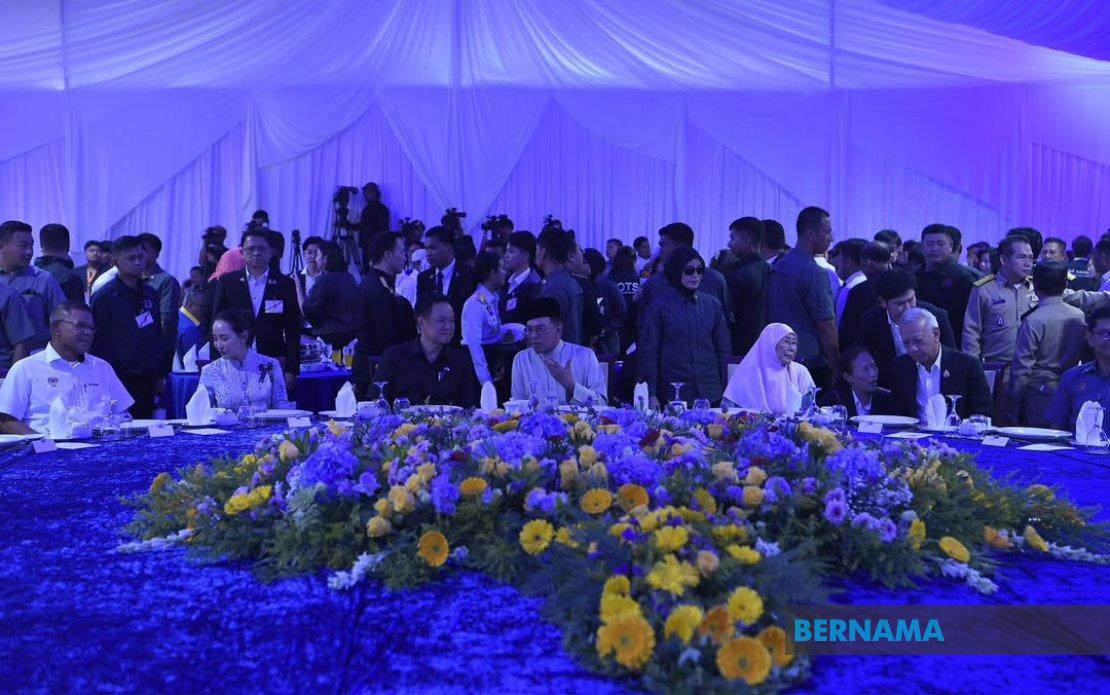
Prime Minister Datuk Seri Anwar Ibrahim and Thai Prime Minister Anutin Charnvirakul today formally inaugurated a new road infrastructure connecting Malaysia's Bukit Kayu Hitam Immigration, Customs, Quarantine and Security (ICQS) Complex directly to Thailand's Sadao Customs, Immigration and Quarantine (CIQ) Complex. The ceremonial launch marks a significant infrastructure milestone for both nations and represents deepening cooperation on border management in Southeast Asia's busiest northern corridor.
The new thoroughfare becomes operational at 6 am Malaysia time tomorrow, simultaneously triggering the permanent closure of the long-standing Bukit Kayu Hitam-Danok border crossing that has served both countries for decades. This transition consolidates cross-border traffic flow through a single, modernised entry point designed to handle contemporary security and logistical demands. Malaysia's Home Ministry characterised the development as tangible evidence of both governments' unwavering commitment to strengthening diplomatic relations while advancing mutually beneficial strategic objectives.
Beyond ceremonial significance, this infrastructure project carries substantial implications for the Malaysia-Thailand relationship and the wider ASEAN integration agenda. The modern integrated border facility embodies both nations' commitment to facilitating legitimate movement of people, goods, and capital while simultaneously enhancing security protocols through unified systems and transparent procedures. The unified complex replaces the fragmented approach of previous arrangements, where separate facilities on either side created inefficiencies and potential security gaps.
Traditional trade corridors along the Malaysia-Thailand border have historically been vital economic arteries for both nations. Small businesses, agricultural exporters, and logistics operators who depend on cross-border movement now benefit from reduced processing times and more predictable clearance procedures. The new road infrastructure directly supports the ASEAN North-South Economic Corridor initiative, which aims to streamline intra-regional commerce and position Southeast Asia as a more cohesive trading bloc capable of competing globally.
The project carries particular relevance for border communities in Kedah and southern Thailand, where residents have long experienced the practical challenges of outdated border infrastructure. Local economies dependent on cross-border commerce, tourism, and employment will likely experience accelerated growth once the new system reaches full operational capacity. Business confidence typically rises when border crossing times shrink measurably, encouraging investment in border-adjacent enterprises and service industries.
From a security perspective, the modern ICQS-CIQ complex incorporates integrated control systems and contemporary technological infrastructure that Malaysian and Thai authorities can coordinate in real time. This unified approach to border management strengthens national security for both countries by eliminating procedural blind spots and enabling seamless intelligence sharing. The facility's design reflects lessons learned across the region regarding human trafficking, transnational crime, and irregular migration patterns.
The closure of the Danok crossing represents a deliberate policy choice to concentrate border management resources in a single modern facility rather than maintaining multiple older installations. While this strategy optimises operational efficiency, it requires careful planning to avoid congestion during peak travel periods. Both governments have expressed confidence that the new infrastructure's expanded capacity will accommodate anticipated traffic growth without creating bottlenecks that plagued the previous arrangement during holidays and peak trading seasons.
Malaysia's Home Ministry explicitly linked this project to the Malaysia MADANI development framework, emphasising how modern border infrastructure supports the nation's broader aspirations for prosperity, security, and regional integration. This positioning reflects official recognition that border management increasingly transcends security concerns to become a critical element of economic competitiveness and quality of life for communities nationwide. Efficient borders attract investment, facilitate trade, and enhance tourism flows—fundamental drivers of economic opportunity.
The collaborative achievement required coordination across multiple Malaysian ministries and Thai counterparts, along with support from enforcement agencies and strategic partners on both sides. Such complex cross-border infrastructure projects typically encounter bureaucratic hurdles, technical challenges, and diplomatic sensitivities that require sustained high-level commitment to overcome. The successful completion within reasonable timelines suggests both governments prioritised this initiative and allocated necessary resources despite competing budgetary demands.
Regional observers view this development as emblematic of growing Southeast Asian integration, where traditional border barriers evolve toward facilitating rapid, secure passage. The Malaysia-Thailand border has historically embodied both connection and separation—shared language and cultural elements coexist with distinct national interests and security concerns. Modern infrastructure that accommodates legitimate cross-border movement while protecting national interests reflects mature bilateral relationship management.
Looking forward, the new Bukit Kayu Hitam-Sadao crossing establishes a template for other ASEAN border facilities seeking modernisation. The project demonstrates feasibility of large-scale infrastructure cooperation between neighbouring countries with different administrative systems. Successful implementation could encourage similar initiatives across the region, gradually creating a network of efficient, standardised border crossings that support the ASEAN vision of seamless regional connectivity.
The timing of this launch reflects both nations' commitment to post-pandemic economic recovery and normalisation of cross-border movement. Tourism, educational exchanges, and family visits between Malaysia and Thailand can now proceed through more efficient channels. The psychological effect of modernised, welcoming border infrastructure should not be underestimated—it signals to regional and international travellers that Southeast Asia offers contemporary travel experiences comparable to developed nations.
For Malaysian businesses engaged in supply chain operations with Thailand or broader Indochinese markets, this infrastructure upgrade translates directly into reduced logistics costs and more predictable delivery timelines. Manufacturers requiring just-in-time inventory systems particularly benefit from borderless efficiency gains. Similarly, Thai companies targeting Malaysian and Singapore markets gain faster access to downstream markets, potentially encouraging increased investment and employment growth along Thailand's western border region.

