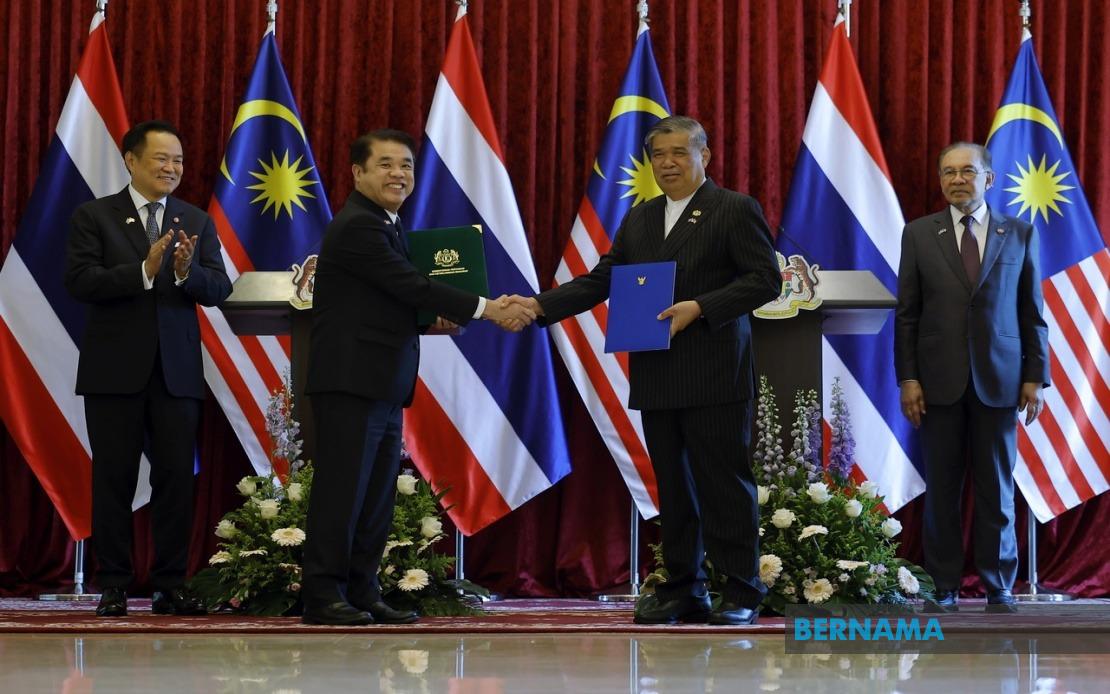
Thailand's Prime Minister Anutin Charnvirakul concluded his first bilateral visit to Malaysia since returning to office in March 2026 with a landmark agricultural cooperation agreement, signalling intensified efforts by both nations to harness their complementary agricultural strengths and ensure regional food security amidst rising global supply chain vulnerabilities. The memorandum of understanding, signed during official talks with Malaysian Prime Minister Datuk Seri Anwar Ibrahim in Putrajaya on Thursday, represents a watershed moment in Southeast Asian agricultural governance, addressing not merely crop production but the full ecosystem of modern farming from research infrastructure to workforce capabilities.
The agreement encompasses a remarkably broad scope of agricultural and fisheries domains, reflecting both countries' recognition that sustainable food systems demand coordination across multiple sectors simultaneously. The framework specifically targets cooperation in crops, livestock, fisheries, research initiatives, technology transfer mechanisms, human resource development programmes, and food security strategies. This comprehensive approach acknowledges that isolated interventions in single commodity chains frequently fail to generate lasting improvements, and that regional food security requires integrated planning across production, distribution, and knowledge-sharing networks. For Malaysia, which imports substantial quantities of agricultural products despite its own productive capacity, the partnership offers avenues to enhance self-sufficiency whilst supporting Thai rural communities dependent on export markets.
A significant practical achievement emerging from the bilateral talks involves the resolution of contentious market access issues that have periodically strained bilateral trade relations. The two countries successfully cleared outstanding disputes surrounding shrimp and barramundi trade, obstacles that had created friction particularly for Thai exporters seeking reliable market entry into Malaysia. These sectoral frictions, whilst apparently narrow in scope, carry outsized importance within agricultural communities where tariff barriers and import regulations can determine farm profitability and livelihoods. By expediting implementation of agreed measures to address farmer concerns directly, both governments have demonstrated commitment to translating high-level political agreements into tangible benefits for their agricultural constituencies.
The bilateral engagement extends substantially beyond agriculture, encompassing broader economic cooperation frameworks designed to unlock mutual prosperity across multiple sectors. Both nations committed to pursuing expanded collaboration in trade, investment, tourism, infrastructure development, and security matters, initiatives framed explicitly as generating greater economic opportunities and improving living standards for ordinary citizens in both countries. This holistic approach reflects contemporary understanding that agricultural prosperity cannot be isolated from broader macroeconomic conditions, currency stability, transportation infrastructure quality, and security environments that either enable or constrain farmer access to markets and production inputs.
Ambitions regarding bilateral trade volumes have been recalibrated upward, with both governments reaffirming their commitment to achieving US$30 billion in bilateral commerce in the near term, an ambitious target reflecting confidence in expanded commercial engagement following resolution of several trade irritants. Beyond headline trade figures, the partnership specifically prioritises strengthening supply chain cooperation in three strategically critical domains: food security, energy, and high-technology industries. The emphasis on supply chain resilience rather than merely aggregate trade volumes signals sophisticated understanding that trade wars and geopolitical fragmentation have exposed dangerous vulnerabilities in regional production networks, necessitating deliberate integration and diversification of sourcing relationships.
Technology transfer mechanisms embedded within the agricultural MoU carry particular significance for Malaysian agricultural development, offering pathways to upgrade farming practices, enhance crop yields, and reduce environmental degradation through adoption of advanced cultivation techniques. Thai agricultural expertise, accumulated through decades of innovation in tropical crop production and pest management, represents valuable intellectual capital that Malaysian farmers and agricultural researchers can systematically access. This knowledge exchange addresses a persistent challenge within Malaysian agriculture where productivity improvements have lagged regional competitors, constraining farmers' incomes despite rising input costs and climate variability affecting harvests.
Human resource development provisions recognise that agricultural modernisation ultimately depends upon workforce capabilities, necessitating investments in training, education, and knowledge dissemination among farming communities and agricultural professionals. Enhanced cooperation in this domain may facilitate exchange programmes, technical training initiatives, and capacity-building workshops that improve farming practices across both nations. The specific attention to human capital reflects understanding that technological solutions without corresponding improvements in farmer knowledge and skills prove ineffective, leaving communities unable to maximise potential benefits from advanced agricultural systems.
The timing of Anutin's visit carries symbolic weight beyond immediate bilateral accomplishments. His delegation arrived in Malaysia as his first bilateral visit since his reappointment to the Thai premiership in March 2026, signal of Malaysia's elevated priority within Thai strategic calculations. The scheduling of a joint border visit to Bukit Kayu Hitam in Kedah on Friday, including formal opening of integrated border infrastructure linking Malaysian and Thai customs facilities, emphasises physical integration of cross-border supply chains and people movement. These border management facilities, designated as the ICQS Complex in Bukit Kayu Hitam and corresponding CIQ infrastructure in Sadao, Thailand, streamline agricultural trade flows and represent concrete manifestations of deepening bilateral integration.
Looking ahead, both governments have tasked their respective agriculture ministers with accelerating implementation of agreed measures, establishing clear accountability mechanisms for translating memoranda into operational outcomes. Thai authorities have explicitly directed relevant agencies to expedite implementation whilst simultaneously advancing completion of pending bilateral memoranda of understanding. This institutional urgency reflects recognition that numerous bilateral frameworks languish in incomplete implementation, failing to generate anticipated benefits despite political endorsement. The establishment of concrete timelines and ministerial responsibility aims to overcome historical patterns of diplomatic agreements remaining largely symbolic rather than operationally transformative.
The partnership assumes heightened significance against the backdrop of approaching commemorations, with both nations preparing for the 70th anniversary of diplomatic relations in 2027. This milestone provides psychological momentum and temporal framing encouraging both governments to consolidate achievements and demonstrate tangible progress to their respective publics. For Malaysia, deeper agricultural cooperation with Thailand represents practical advancement of regional integration objectives whilst addressing food security imperatives assuming increasing importance as climate change intensifies agricultural volatility throughout Southeast Asia. The agricultural partnership thus positions Malaysia not merely as a trading partner but as a strategic collaborator in regional food system resilience, contributing to broader Southeast Asian stability through enhanced predictability in agricultural supply chains and reduced vulnerability to external supply disruptions.

