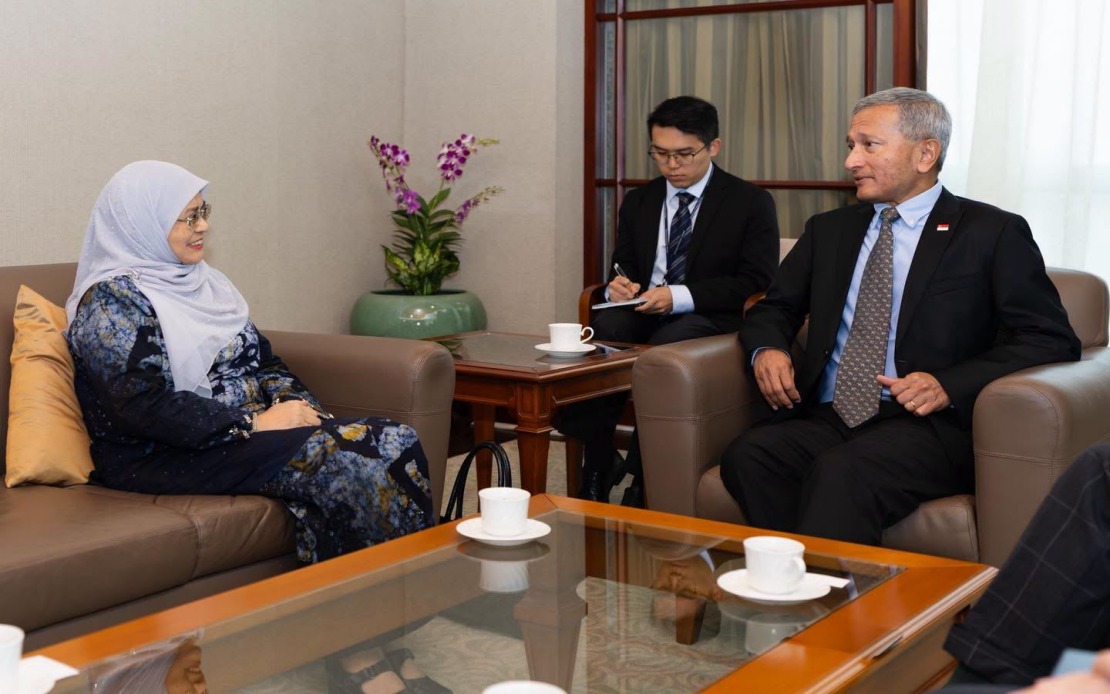
The governments of Malaysia and Singapore have renewed their dedication to preserving and advancing the strength of their bilateral relationship, according to statements released following high-level diplomatic exchanges this week. The reaffirmation came during an official courtesy call by Datin Paduka Anizan Siti Hajjar Adnin, who recently took up her posting as Malaysian High Commissioner to Singapore, with Foreign Minister Dr Vivian Balakrishnan on Wednesday.
Anizan, who officially commenced her diplomatic mission on July 2, brings substantial experience from her long and accomplished career in the Malaysian diplomatic service. Her appointment signals Kuala Lumpur's intention to sustain the considerable progress achieved in recent years and to chart new pathways for deeper engagement with its closest neighbour. The timing of her posting reflects both nations' recognition that bilateral ties require consistent attention and skilled management at the highest levels.
The discussion between the High Commissioner and the Foreign Minister centred on practical measures to enhance bilateral cooperation across diverse sectors, though specific areas were not enumerated in official statements. Both sides emphasised the critical importance of sustaining positive momentum in their relationship, acknowledging that decades of shared history and cultural ties form a solid foundation for ongoing partnership. This strategic emphasis on maintaining forward progress suggests that both governments view their relationship as requiring proactive rather than passive management.
A particularly significant theme in their conversation involved the welfare of ordinary citizens whose lives span both nations. Malaysia and Singapore are home to tens of thousands of cross-border families, workers, and entrepreneurs whose livelihoods depend directly on seamless bilateral cooperation. The High Commission's reference to improving circumstances for those with families, employment, and business interests across the border highlights a people-centric approach to diplomacy that recognises how abstract policy decisions affect individuals and communities in tangible ways.
Balakrishnan characterised the Singapore-Malaysia relationship as distinctly special, grounded in what he described as their common historical experience, robust people-to-people connections, and extensive collaborative frameworks spanning multiple domains. His public endorsement of Anizan's appointment specifically acknowledged her distinguished track record and position her as well-positioned to build upon the accomplished work of her predecessors. This emphasis on continuity with progressive development suggests that Singapore views the relationship as one requiring both stability and innovation.
For Malaysian readers, this diplomatic exchange carries particular resonance given the significant interplay between the two nations across economics, security, and social spheres. The bilateral relationship encompasses critical infrastructure projects, water agreements, air traffic coordination, and countless informal arrangements that facilitate daily cross-border movement. Any disruption or deterioration in formal bilateral ties has immediate consequences for Malaysian businesses operating in Singapore, expatriate workers, and families with connections on both sides of the causeway.
The emphasis on exploring enhanced cooperation mechanisms suggests both governments recognise untapped potential in their relationship. While Malaysia and Singapore already collaborate extensively, the explicit commitment to seeking new avenues for improvement indicates recognition that static relationships can become vulnerable to drift or misunderstanding. In an era of shifting regional dynamics and evolving economic structures, deepening ties with one's immediate neighbour carries strategic significance beyond the bilateral relationship itself.
The broader context of this diplomatic engagement reflects regional developments in Southeast Asia where traditional partnerships require deliberate cultivation. With multiple competing interests and emerging powers reshaping the regional balance, mature neighbours like Malaysia and Singapore have incentive to strengthen foundational relationships. The appointment of a high-profile envoy and the explicit reaffirmation of commitment by Singapore's Foreign Minister signal to other stakeholders that both nations view their partnership as enduring and central to their respective strategic orientations.
For cross-border communities, the commitment to exploring ways of improving lives carries practical implications spanning employment mobility, education access, healthcare arrangements, and family welfare provisions. The reference to citizens with interests on both sides of the border acknowledges that artificial divisions between nations often create friction for ordinary people whose economic and social realities transcend political boundaries. Diplomatic commitments like these often precede specific policy adjustments that gradually ease such frictions.
Looking forward, the High Commissioner's tenure will likely involve sustained engagement on established issues including the periodic renewal of crucial bilateral agreements and navigation of persistent challenges that periodically surface in the relationship. Her experience positions her to manage both routine diplomatic work and unexpected complications with measured professionalism. The Foreign Minister's confidence in her abilities suggests Singapore views the incoming tenure as an opportunity to advance specific aspects of the bilateral agenda.
The exchange between Anizan and Balakrishnan represents routine diplomatic protocol, yet such meetings carry significance in establishing the tone and trajectory for engagement over the coming years. By publicly reaffirming commitment to strengthening cooperation and emphasising both the historical foundations and future potential of the relationship, both governments send clear messages to their respective publics, business communities, and regional observers about the centrality of this partnership.

