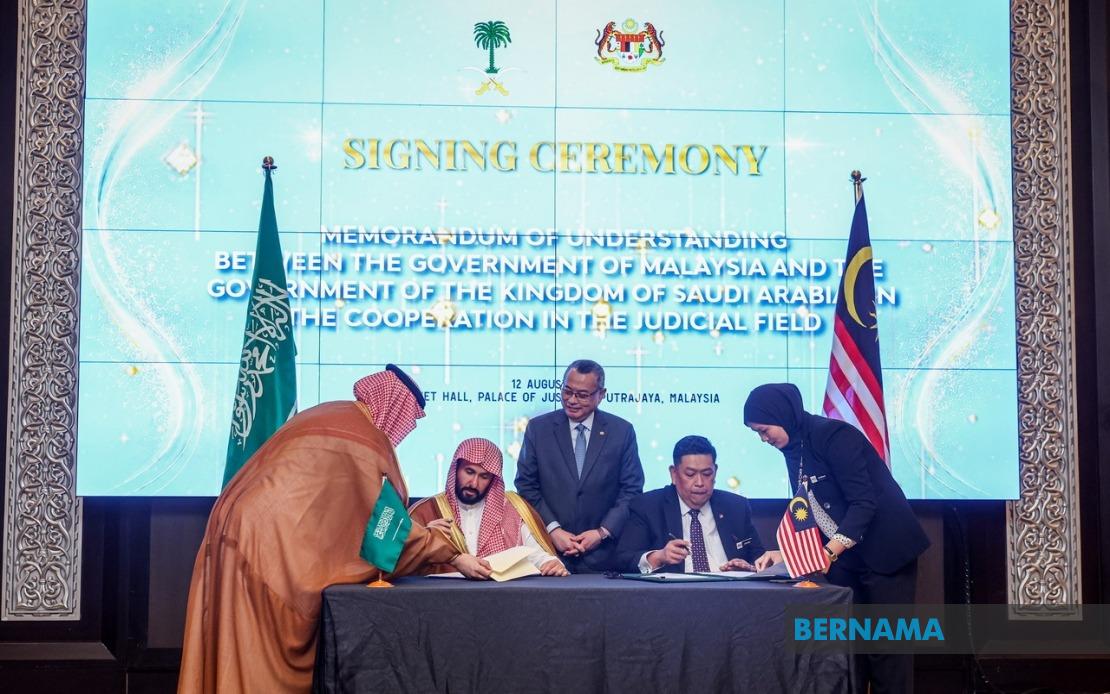
Malaysia and Saudi Arabia have taken a significant step in strengthening bilateral ties by signing a comprehensive memorandum of understanding focused on deepening judicial cooperation. The agreement, signed at the Palace of Justice in Putrajaya on August 12, was executed between Chief Registrar of the Federal Court of Malaysia Azhaniz Teh Azman Teh and Saudi Arabian Minister of Justice Sheikh Dr Waleed Mohammed Alsmani, with Chief Justice Tun Wan Ahmad Farid Wan Salleh as witness to the historic accord.
The MoU represents more than a ceremonial gesture; it establishes a formal institutional framework for sustained engagement between two major economies in the Muslim world. The agreement comes amid Sheikh Dr Waleed Mohammed Alsmani's official visit to Malaysia, reflecting the depth of bilateral relations and mutual commitment to judicial advancement. This partnership underscores how neighbouring and trading nations increasingly recognise that effective legal systems are foundational to economic stability and investor confidence.
At its core, the memorandum addresses several interconnected areas that reflect modern challenges facing the judiciary. Civil case management stands as a primary focus, acknowledging that both nations grapple with court backlogs and efficiency concerns. By establishing mechanisms for exchanging practical experience in this domain, Malaysia and Saudi Arabia position themselves to learn from each other's innovations in reducing case resolution times, streamlining procedural frameworks, and enhancing access to justice for their citizens.
Judicial technology and digitalisation form another cornerstone of the agreement, highlighting how both nations recognise that traditional paper-based court systems are increasingly inadequate for contemporary demands. Malaysia has made notable progress through its e-Court system, which digitises filings, hearing schedules, and case documentation. The framework allows Saudi Arabia's judicial authorities to study these technological implementations and adapt them to their own context, while Malaysia gains exposure to alternative approaches that may complement or enhance its existing digital infrastructure.
The exchange of publicly available judicial information and institutional visits create pathways for sustained professional dialogue beyond formal diplomacy. Such mechanisms enable judges, court administrators, and legal professionals from both countries to develop working relationships, understand comparative jurisprudence, and identify best practices that transcend cultural and legal system boundaries. Regular exchanges build institutional memory and foster a culture of continuous improvement within the judiciary.
A particularly noteworthy dimension of the partnership involves Malaysia's expertise in addressing sexual offences against children. The judicial dialogue component of Sheikh Dr Waleed's visit included sessions where Malaysian courts shared their specialised approaches to handling these sensitive cases. This knowledge transfer carries profound significance, as child protection represents a universal concern that transcends national boundaries. Malaysia's experience navigating the intersection of traumatic evidence, child testimony, and victim protection offers valuable lessons for any jurisdiction seeking to improve outcomes in this domain.
From a regional perspective, this judicial cooperation initiative contributes to a broader architecture of Southeast Asian engagement with Middle Eastern partners. As Malaysia deepens economic and diplomatic ties with the Gulf Cooperation Council nations, aligned legal frameworks and mutual understanding of judicial systems reduce friction in commercial disputes, contract enforcement, and cross-border litigation. For Malaysian businesses operating in Saudi Arabia or managing investments in the kingdom, a stronger judicial partnership signals improved predictability and fairness in dispute resolution.
The Malaysian Judiciary's stated enthusiasm for implementing the agreement's provisions suggests this will not remain a symbolic document gathering dust on shelves. The formal commitment to structured cooperation indicates that both judiciaries view this as a beginning rather than an endpoint. Institutional frameworks thrive when backed by dedicated personnel, allocated resources, and measurable objectives—elements that appear embedded in this arrangement.
For Malaysian legal professionals and court administrators, the partnership presents opportunities for professional development and international exposure. Exchange programmes and collaborative projects facilitate career enrichment while elevating Malaysia's profile within global judicial networks. Saudi Arabia, meanwhile, signals its intention to modernise its judicial infrastructure by learning from a Southeast Asian neighbour whose courts have navigated digitalisation whilst maintaining legal rigour and fairness.
The timing of this accord also reflects broader regional dynamics in Southeast Asia. As nations in the region navigate complex geopolitical relationships and seek to expand their diplomatic footprint beyond traditional Western partnerships, judicial cooperation agreements with Middle Eastern states demonstrate agency and strategic autonomy. They illustrate that legal system development is not solely a Western domain but a collaborative endeavour involving nations across different continents and legal traditions.
Looking forward, the success of this memorandum will depend on how enthusiastically both judiciaries pursue the outlined areas of cooperation. While the framework establishes the foundation, sustained political will, adequate funding, and commitment from judicial leadership at all levels will determine whether this partnership translates into tangible improvements in how both nations administer justice. The agreement's emphasis on knowledge-sharing and institutional learning suggests the parties view this relationship as mutually beneficial rather than one-directional aid.
For Southeast Asian nations observing this development, the Malaysia-Saudi Arabia judicial partnership offers a template for how countries can deepen cooperation in legal system modernisation while respecting institutional autonomy and national sovereignty. It demonstrates that effective international engagement in the judicial sphere does not require surrendering local legal traditions or independence but rather complements them through structured dialogue and collaborative problem-solving.

