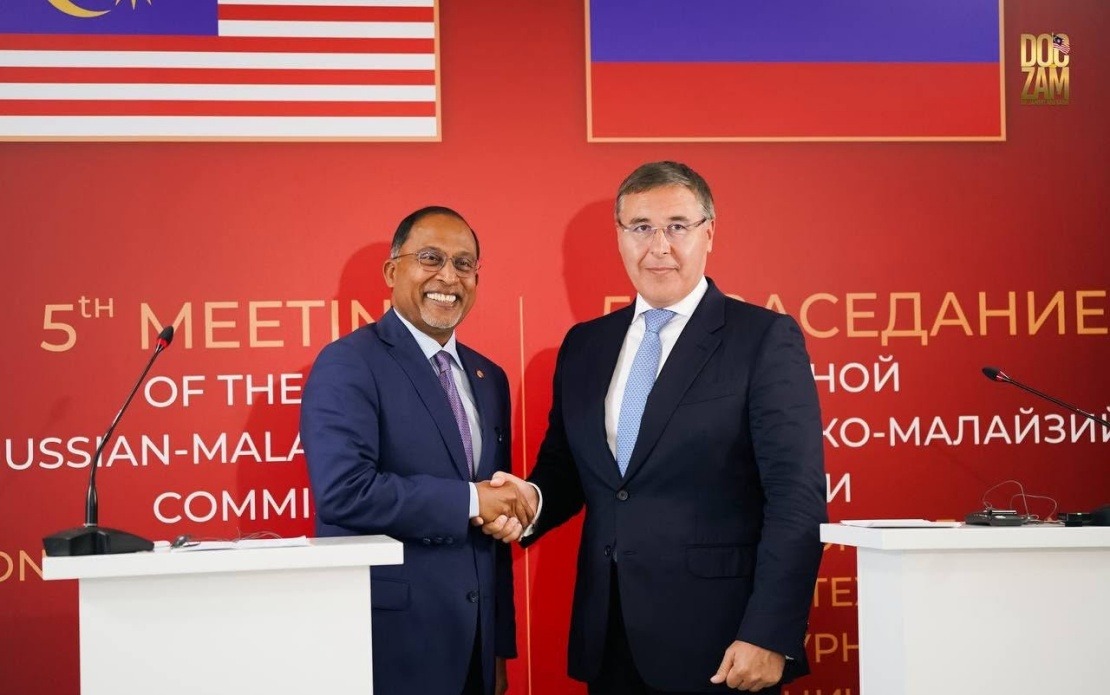
Malaysia and Russia are moving to formalise their bilateral cooperation framework through a comprehensive 2027 Joint Action Plan that both nations intend to finalise before the end of this year. Higher Education Minister Datuk Seri Dr Zambry Abd Kadir announced the agreement following the Fifth Meeting of the Malaysia-Russia Joint Commission for Economic, Scientific, Technical and Cultural Cooperation in Vladivostok, which he co-chaired with Russian Minister of Science and Higher Education Valery Falkov. The structured approach signals a deliberate shift towards deepening institutional relationships between the two countries, moving beyond symbolic gestures to practical collaboration that will yield measurable outcomes for Malaysian and Russian citizens.
The decision to crystallise cooperation frameworks reflects broader momentum in Malaysia-Russia relations, underpinned by high-level diplomatic engagement involving His Majesty Sultan Ibrahim, King of Malaysia, Russian President Vladimir Putin, and Prime Minister Datuk Seri Anwar Ibrahim. This year's joint commission meeting deliberately concentrated on translating these cordial ties into concrete initiatives that address shared priorities and mutual interests. Rather than remaining at the level of ceremonial exchanges, the two governments are now working to embed cooperation across multiple sectors, creating institutional mechanisms that will outlast individual administrations and personalities. This maturation of the bilateral relationship demonstrates both nations' commitment to sustained engagement despite geopolitical complexities.
In the critical arena of higher education and human capital development, Russia will continue providing 40 scholarships annually to Malaysian students, maintaining an established pipeline for academic exchange. Beyond this steady programme, both countries have embraced several new initiatives that promise to expand educational partnerships substantially. The planned Malaysia-Russia Rectors' Forum in 2027 will bring together university leaders from both nations to discuss collaborative research, institutional partnerships, and shared challenges in higher education. Simultaneously, the expansion of the MAI-UniKL Russian Aerospace Programme and the establishment of the Russia-Malaysia Youth Leadership Summer Camp demonstrate a commitment to nurturing the next generation of professionals in strategic fields. These educational investments carry particular significance for Malaysia, which increasingly seeks to reduce dependence on Western institutions and diversify its human capital development sources.
Trade and agricultural cooperation represents another pillar of the bilateral agenda. Both governments have prioritised discussions aimed at expanding market access and strengthening commercial ties, with particular emphasis on Malaysia's food security concerns. Fertiliser supply agreements, particularly for urea, position Russia as a potential stabiliser of Malaysia's agricultural inputs during periods of global supply chain disruption. For Russia, these arrangements offer market outlets for resources in Southeast Asian markets while building broader economic relationships beyond energy commodities. The focus on agricultural inputs reflects both nations' recognition that supply chain resilience and food security remain vulnerabilities requiring strategic partnership, especially in a region where fertiliser shortages have previously driven inflation and food price increases.
Strategic sector cooperation has expanded dramatically, encompassing artificial intelligence, digital technology, smart cities, and information security—domains that will shape regional competitiveness in the coming decades. Both countries have identified renewable energy, liquefied natural gas, and liquefied petroleum gas as cooperation priorities, addressing Malaysia's energy transition imperatives while providing Russia with alternative markets amid geopolitical pressures. The exploration of peaceful nuclear energy cooperation, contingent on respective regulatory frameworks, signals long-term thinking about meeting Malaysia's future energy demands sustainably. Telecommunications and cybersecurity collaboration will enhance both nations' digital infrastructure resilience, particularly important as Malaysia positions itself as a regional digital hub and Russia seeks to diversify its technology partnerships in Asia.
Financial cooperation has progressed substantively through engagement between Bank Negara Malaysia and the Bank of Russia, opening possibilities for deepened economic integration. The exploration of Labuan's role as an international financial centre and ASEAN gateway suggests Malaysia is positioning this jurisdiction as a conduit for Russia-Southeast Asia financial flows. Discussions around Islamic finance and digital assets cooperation point toward innovative arrangements that could benefit Malaysia's fintech ambitions while offering Russia alternative payment mechanisms amid international sanctions pressures. Such financial partnerships, while modest in absolute terms, carry symbolic weight in demonstrating both nations' commitment to building institutional relationships across multiple economic domains.
Beyond these headline areas, cooperation has extended to industrial manufacturing, healthcare, transport, green technology, climate change mitigation, the creative economy, and space exploration. This breadth illustrates how Malaysia-Russia ties have evolved beyond traditional commodity and energy exchanges into knowledge-intensive sectors. Healthcare collaboration, for instance, could facilitate medical research partnerships and pharmaceutical development, areas where Russian expertise remains substantial. Transport sector cooperation may encompass railway technology and logistics solutions relevant to Malaysia's infrastructure modernisation agenda. Climate change and green technology partnerships align both nations' stated commitments to environmental sustainability, though Russia's energy export dependence creates inherent tensions in achieving aggressive carbon reduction targets.
Three formal cooperation agreements were executed at the meeting, connecting Malaysian and Russian higher education institutions in meaningful ways. Universiti Teknologi MARA's partnerships with National Research University Moscow Power Engineering Institute and the Institute of Experimental Medicine establish conduits for engineering and biomedical research collaboration. Universiti Tun Hussein Onn Malaysia's agreement with the State University of Land Use Planning addresses environmental management and urban planning, sectors critical to Southeast Asian development challenges. These institutional agreements transform abstract bilateral declarations into operational relationships with defined objectives, resource allocation, and accountability mechanisms. They create opportunities for postgraduate research, faculty exchanges, and joint publications that advance knowledge in both societies.
The timing of the sixth Joint Commission meeting in Malaysia during 2027, coinciding with the 60th anniversary of diplomatic relations, carries symbolic and practical significance. This milestone celebration will provide Malaysia an opportunity to showcase developments resulting from cooperation agreements and to reinvigorate commitment to the relationship. For Malaysia, hosting the meeting reinforces its position as a Southeast Asian diplomatic hub and demonstrates its capacity to convene high-level international gatherings. The 60-year milestone also invites reflection on the relationship's historical trajectory and prompts consideration of evolving shared interests in a transformed regional and global context.
From a regional perspective, deepening Malaysia-Russia cooperation carries implications for Southeast Asia's great power balancing act. As ASEAN nations navigate competition between Western powers and rising non-traditional partners, Malaysia's strategic engagement with Russia demonstrates the region's commitment to diversified partnerships and non-alignment principles. This approach allows Malaysia to access Russian expertise and resources without surrendering autonomy or accepting limiting ideological commitments. However, it also requires careful management of perceptions among traditional partners concerned about Russian activities in the region. Malaysia's balancing act reflects broader Southeast Asian efforts to maintain strategic flexibility while pursuing tangible economic and technical benefits from multiple sources.
The joint commission framework itself represents institutional maturity in bilateral relationships. Rather than relying on episodic high-level visits or ad hoc agreements, Malaysia and Russia have established regularised mechanisms for dialogue, negotiation, and implementation oversight. The commitment to finalise the 2027 Joint Action Plan by year-end suggests both governments view these arrangements as serious commitments rather than aspirational rhetoric. This institutionalisation increases the likelihood that bilateral cooperation will achieve meaningful results and weather inevitable political fluctuations. For Malaysian policymakers, the emphasis on structured, results-oriented cooperation reflects contemporary best practices in international relations management, moving beyond symbolic gestures toward measurable outcomes that benefit Malaysian society across education, trade, technology, and strategic sectors.

