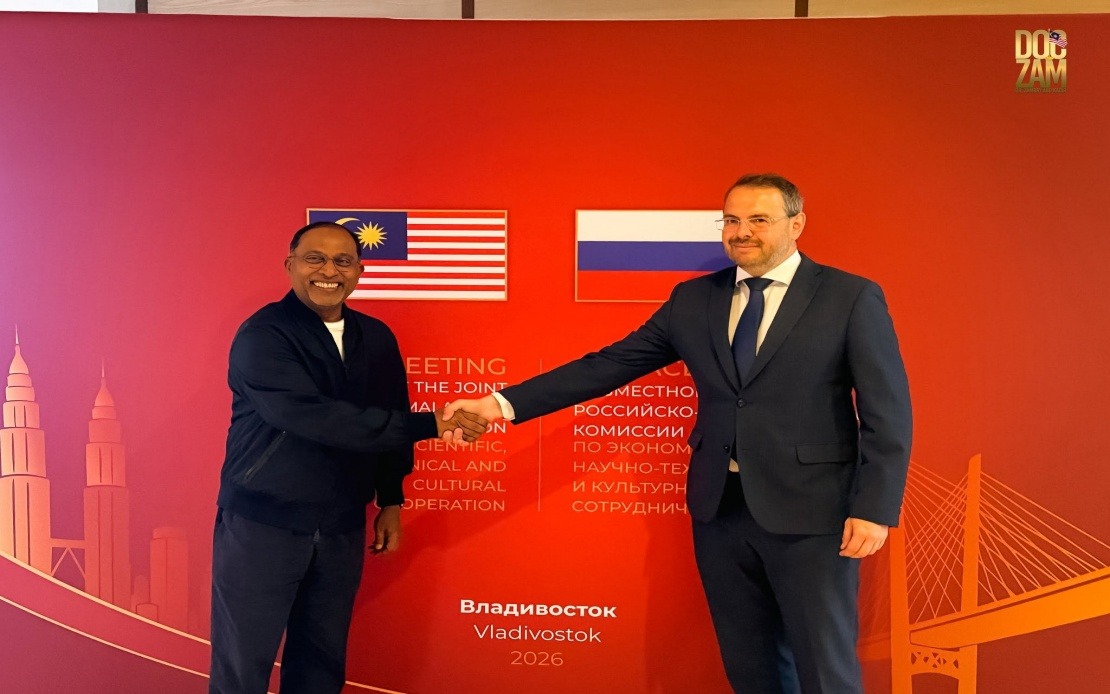
Malaysia and Russia are preparing to unlock fresh opportunities for strategic partnership across multiple sectors, with Higher Education Minister Datuk Seri Dr Zambry Abd Kadir heading a comprehensive delegation to the Fifth Malaysia-Russia JC-ESTC Meeting in Vladivostok this week. The encounter represents a significant moment for both nations to chart new directions in their bilateral relationship, moving beyond traditional frameworks to address contemporary challenges and harness emerging technologies that could reshape regional cooperation in Southeast Asia and beyond.
The agenda for the Vladivostok talks encompasses an ambitious range of priorities that reflects the evolving nature of modern state-to-state engagement. Trade and investment expansion will form a central pillar of discussions, as Malaysia seeks to deepen its economic footprint in Russia whilst simultaneously attracting Russian capital and expertise to the Southeast Asian market. Alongside commercial considerations, both delegations will explore possibilities in strategic sectors that remain crucial to national development objectives, including renewable energy, advanced manufacturing, and digital innovation—areas where complementarities between the two economies could generate mutual advantage.
Higher education constitutes a particularly significant dimension of the planned cooperation framework. Malaysia intends to substantially increase student and academic mobility between institutions in both countries, recognising that human capital development remains foundational to long-term strategic alignment. Beyond student exchanges, the framework emphasises university-to-university partnerships and collaborative research initiatives that could position Malaysian institutions as knowledge hubs within Asia whilst creating pathways for Russian academics to contribute to Southeast Asian research ecosystems. Joint ventures in emerging fields such as artificial intelligence, biotechnology, and quantum computing would position both nations competitively on the global innovation stage.
The composition of the Malaysian delegation underscores the breadth of sectoral ambitions underpinning these discussions. Representatives from seventeen government ministries and agencies will participate, spanning portfolios as diverse as economic development, energy security, agricultural advancement, and cultural affairs. This whole-of-government approach signals serious intent to translate diplomatic goodwill into practical outcomes that penetrate multiple layers of both economies. The Russian counterpart, Minister of Science and Higher Education Valery Falkov, will co-chair proceedings alongside Zambry, ensuring high-level political commitment from Moscow.
Established in 2015, the Malaysia-Russia JC-ESTC mechanism has historically functioned as an umbrella framework for bilateral engagement. However, Zambry's characterisation of the platform as needing to be increasingly action-oriented suggests frustration with dialogue that produces limited tangible results. The minister has explicitly stated that Malaysia expects the mechanism to generate concrete projects, investment flows, technology transfers, and expertise exchanges that deliver demonstrable benefits to ordinary citizens and commercial enterprises in both societies. This reorientation towards outcomes rather than process reflects contemporary expectations within Malaysian policymaking circles that bilateral forums must justify their existence through measurable deliverables.
The strategic logic underlying enhanced Malaysia-Russia cooperation merits careful examination within the broader regional context. Both nations possess complementary economic assets and technological capabilities that remain underutilised in current bilateral arrangements. Russia's advanced capabilities in energy production, aerospace engineering, and fundamental scientific research intersect with Malaysia's strengths in petrochemicals, electronics manufacturing, and financial services. Furthermore, as the regional balance of power in Asia undergoes recalibration amid great power competition, deepening ties with Russia provides Malaysia with strategic flexibility and reduces over-dependency on any single partnership.
The timing of this engagement carries particular significance for Malaysia's foreign policy positioning. As Malaysia navigates complex relationships with major powers whilst pursuing its own development agenda, diversifying partnerships becomes increasingly essential. Russia, despite sanctions and international isolation stemming from its actions in Ukraine, remains a major technological and scientific power with capabilities that complement Southeast Asian developmental needs. For Russian policymakers, engagement with Malaysia and other ASEAN nations offers opportunities to maintain influence and commercial connections despite Western restrictions, making mutual interest palpable on both sides.
Energy cooperation represents perhaps the most consequential frontier for expanded bilateral engagement. Russia possesses vast hydrocarbon reserves and sophisticated extraction technologies, whilst Malaysia commands significant oil and gas infrastructure alongside growing renewable energy ambitions. Collaborative frameworks in liquefied natural gas production, petrochemical development, and emerging clean energy technologies could establish Malaysia as a crucial node in East-West energy architecture. Such partnerships would simultaneously serve Russian interests in maintaining Asian market access and Malaysian objectives of securing diversified energy supplies and advancing decarbonisation targets.
The research and innovation dimension cannot be overlooked in assessing the meeting's potential impact. Malaysian universities and research institutions increasingly seek international partnerships to elevate academic standing and contribute meaningfully to global knowledge generation. Russian institutions, constrained by sanctions from accessing Western partnerships and technologies in certain domains, find attractive opportunities in collaborative frameworks with Asian counterparts. Joint research centres focusing on materials science, renewable energy technologies, and environmental remediation could emerge from these discussions, positioning Malaysia as a bridge between Russian scientific capabilities and Southeast Asian application contexts.
Zambry's emphasis on mutual respect and complementary strengths signals a diplomatic approach that respects Russian sensitivities whilst advancing Malaysian interests. The language of balanced partnership, rather than one-sided accommodation, suggests Malaysia's negotiating position remains firm. Both nations clearly recognise that enduring cooperation requires frameworks that serve genuine national interests rather than rhetorical commitments. The success of the Vladivostok meeting will ultimately be measured not by the grandeur of announced intentions but by the substance of follow-up mechanisms, resource allocations, and institutional arrangements that translate ambitions into operational reality.
As Malaysia looks forward to concrete outcomes from this engagement, regional observers will watch whether the Fifth JC-ESTC Meeting generates a new dynamic in bilateral relations. The comprehensive nature of the delegation, senior-level participation from both governments, and explicit focus on actionable outcomes all suggest serious momentum. However, translating such diplomatic engagement into sustained cooperation across multiple sectors requires institutional resilience, bureaucratic coordination, and genuine commitment from implementing agencies—challenges that have historically impeded bilateral initiatives despite auspicious beginnings. The forthcoming days in Vladivostok will reveal whether Malaysia and Russia can move beyond aspirational frameworks towards establishing the operational structures necessary for meaningful long-term partnership.

