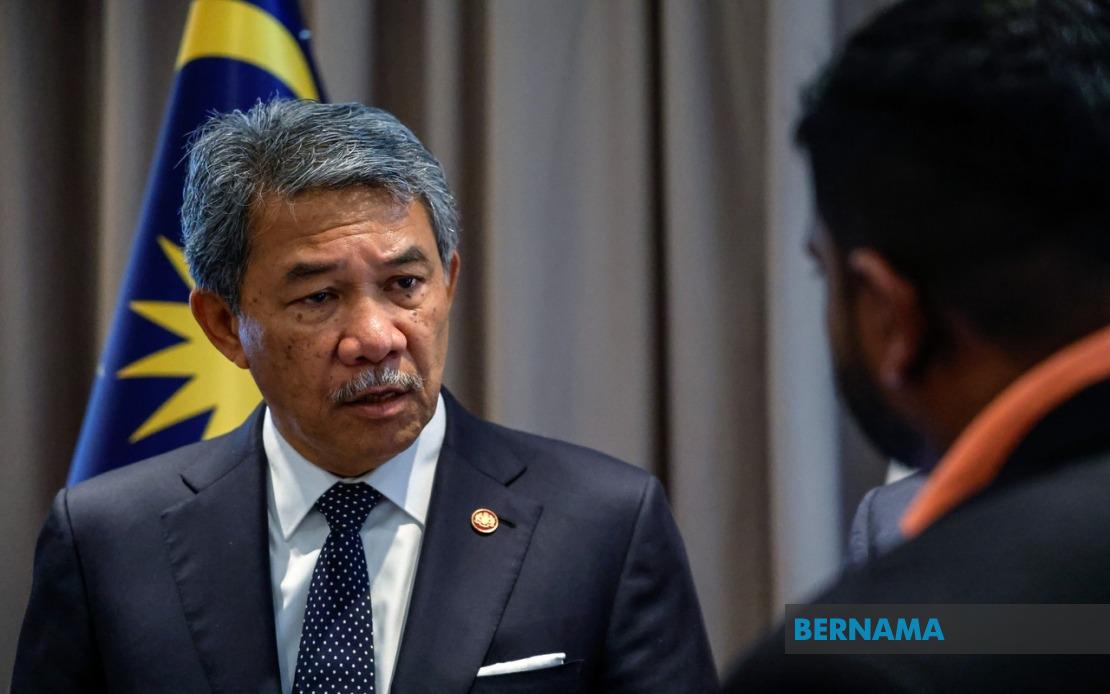
Malaysia and the Philippines have agreed to step up efforts to return over 5,000 undocumented Philippine nationals currently held in immigration detention facilities across Sabah, marking a significant development in bilateral efforts to address a longstanding humanitarian and administrative challenge. The agreement emerged from high-level discussions between the two nations' foreign ministers during the 9th Malaysia-Philippines Joint Commission Meeting held in Manila, reflecting the urgency both governments place on resolving the detention crisis.
Malaysian Foreign Minister Datuk Seri Mohamad Hasan outlined the scope of the repatriation challenge, noting that screening operations conducted by the Philippine Embassy in Kuala Lumpur have already identified more than 1,000 individuals cleared for immediate return to the Philippines. The four immigration detention centres now holding these migrants are operating far beyond their intended capacity, creating both financial strain on Malaysia's immigration authorities and humanitarian concerns regarding conditions. The bottleneck reflects years of accumulating undocumented migration, a perennial issue across Southeast Asia where porous borders and economic disparities continue to drive irregular cross-border movements.
The two governments have committed to exploring multiple repatriation routes, including sea routes and other practical alternatives suited to moving large numbers of people efficiently. This flexibility suggests recognition that traditional deportation channels have proven inadequate for the scale of the challenge. For Malaysia, clearing these detention facilities has become administratively critical, as the facilities were never designed to accommodate such concentrations of long-term detainees. The repatriation acceleration represents pragmatic acknowledgement that both nations must work in tandem to resolve a problem that affects border security, public resources, and humanitarian standards.
Beyond immediate repatriation, the bilateral discussions addressed the education of migrant children in Sabah whose families remain undocumented. Malaysia has agreed to examine mechanisms for continuing these children's schooling prior to their families' return to the Philippines. However, Mohamad emphasised that any educational provision must remain under direct Philippine government administration and supervision. This insistence on formal oversight reflects concerns about the proliferation of unregulated private schooling facilities that operate without adequate monitoring, a widespread issue throughout the region where informal education providers sometimes operate outside regulatory frameworks.
The education dimension underscores the complexity of managing undocumented populations beyond simple deportation logistics. Many of these families have lived in Malaysia for extended periods, and their children have attended schools within Sabah's education system. Abruptly severing these children from schooling during repatriation would create additional social disruption, necessitating coordination on curriculum continuity and credential recognition between Malaysian and Philippine authorities. The Malaysian government's willingness to study these provisions signals understanding that humane repatriation requires attending to social integration during transition periods.
Mohamad clarified that the discussions focused on operational migration management rather than broader territorial claims, noting that the contentious issue of Sabah's sovereignty was not substantially addressed during the Joint Commission Meeting. However, he took the opportunity to reinforce Malaysia's position on Sabah, emphasising international legal recognition and United Nations endorsement of Sabah as Malaysian territory. This statement appeared directed at managing domestic political sensitivities in both countries, where periodic assertions of historical claims can inflame nationalist sentiment despite their limited practical impact on bilateral relations.
The Malaysian foreign minister's comments regarding Sabah's status reflected awareness of prior statements by Philippine Senator Robin Padilla calling for President Ferdinand Marcos Jr to revive Manila's historical claim to the territory. Malaysia had indicated it would lodge a formal diplomatic protest through official channels in response to such assertions. By addressing this during the joint commission meeting, both nations sought to compartmentalise sovereignty discussions from the urgent practical work of managing migration, preventing rhetorical disputes from derailing cooperation on matters affecting thousands of people.
The repatriation initiative carries particular significance for Southeast Asia's migration landscape, where many nations grapple with undocumented populations straining administrative and infrastructure capacity. Malaysia's large migrant workforce, while economically important, also generates security and social challenges when workers remain in irregular status. The Philippines, as a major labour-exporting nation, bears responsibility for supporting the return and reintegration of its citizens, particularly vulnerable populations including those detained. This partnership model—where destination and origin countries coordinate on humane repatriation—offers a template applicable across the region.
Implementation will test both governments' administrative capacity and political commitment. Screening 5,000 individuals to verify nationality, process documentation, and arrange transportation represents a substantial undertaking. The identification of over 1,000 immediately eligible for repatriation suggests that with concerted effort, clearance of detention centres is achievable within reasonable timeframes. However, the remaining 4,000 cases likely involve more complex circumstances—disputed citizenship, missing documentation, or family circumstances complicating return. Gradual rather than rapid repatriation may prove more feasible despite political pressure for swift results.
For Malaysia, accelerating repatriation addresses immediate detention facility crises while reinforcing its commitment to orderly immigration management. For the Philippines, coordinated repatriation provides opportunity to demonstrate support for its nationals while strengthening labour mobility governance. The educational provisions add humanitarian dimension often absent from migration discussions, acknowledging that migrant children warrant protection regardless of their families' legal status. As Southeast Asian nations increasingly confront migration pressures, the Malaysia-Philippines approach demonstrates how bilateral cooperation, even among nations with historical territorial disputes, can deliver practical solutions to shared challenges affecting vulnerable populations.

