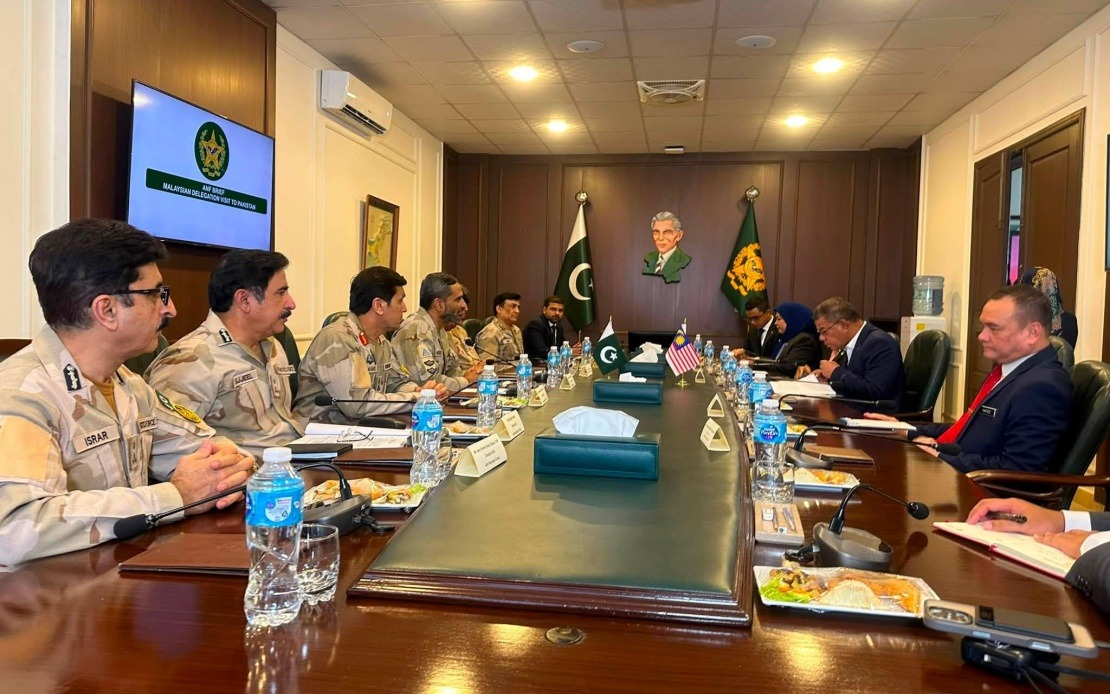
Malaysia is moving to formalize its drug enforcement partnership with Pakistan through a new Memorandum of Understanding that will establish a more systematic framework for tackling increasingly sophisticated narcotics threats. Home Minister Datuk Seri Saifuddin Nasution Ismail revealed the initiative during an official visit to Islamabad this week, following detailed discussions at the Anti-Narcotics Force (ANF) Pakistan headquarters where he met with Director-General Major General Abdul Moeed. The proposed agreement represents a recognition that the challenge posed by illicit drugs now transcends individual nations and regional boundaries, requiring coordinated action among international partners with complementary geographic positions and enforcement capabilities.
The strategic rationale for strengthening ties with Pakistan stems from that country's unique position on the frontline of Afghan drug production and trafficking routes. Pakistan sits at a critical juncture where narcotics flowing from Afghanistan enter global supply chains, many of which ultimately funnel towards East Asia and Southeast Asia. By formalizing cooperation with Islamabad, Malaysia seeks to gain earlier warning of emerging trafficking patterns and to coordinate interdiction efforts that disrupt drug supplies before they reach Malaysian shores. This upstream approach reflects a fundamental shift in how the Home Ministry conceptualizes national drug security, moving away from solely reactive border enforcement towards strategic intelligence partnership at source regions.
The substance of the proposed MoU goes significantly beyond ceremonial gestures or general commitments. Saifuddin Nasution emphasized that meaningful international cooperation demands mechanisms far more robust than written agreements alone. Active intelligence sharing between the two nations' law enforcement agencies will form the backbone of this effort, supplemented by coordinated intelligence-led operations that target trafficking networks operating across both countries' jurisdictions. Training exchanges and expertise transfers will enable Malaysian officers to benefit from Pakistani experience in counternarcotics work, while building institutional relationships that facilitate rapid information flow during active investigations. This multifaceted approach acknowledges that modern drug syndicates employ sophisticated operational security and constantly adapt their methods to evade detection.
The existing relationship between Malaysia and Pakistan already demonstrates significant operational substance. Between 2012 and 2018, the two nations jointly coordinated more than 28 major cases involving significant drug seizures and criminal prosecutions. These cases provided the foundation upon which the new MoU will build, expanding what has proven to be a practical and mutually beneficial partnership. Future cooperation will aim to increase the frequency and intensity of joint operations, moving beyond the reactive posture that characterizes much international drug enforcement towards proactive campaigns that anticipate and preempt trafficking activity. The establishment of a Joint Working Group between Malaysia's Home Ministry and Pakistan's Interior and Narcotics Control Ministry will provide an institutional mechanism for ongoing strategic direction and coordination.
The escalating complexity of modern drug threats underscores why partnerships like this have become essential. Synthetic drugs such as methamphetamine present particular challenges because their production is not geographically limited like heroin or cocaine, which rely on specific agricultural conditions. Methamphetamine laboratories can operate anywhere, making the global supply chains extremely difficult to map and intercept. Transnational organised crime networks exploiting this opportunity have become increasingly sophisticated in their logistics, finance, and security operations. These criminal enterprises often operate across multiple jurisdictions simultaneously, making individual country-level enforcement responses insufficient. Pakistani counterparts bring invaluable experience in tracking these networks through regions where their activity is heaviest, providing Malaysian agencies with strategic intelligence that enhances enforcement effectiveness back home.
Beyond narcotics, the Saifuddin Nasution visit to Pakistan encompassed discussions on complementary areas of security and government cooperation. A significant development was the signing of the International Transfer of Prisoners Agreement, which streamlines the process for nationals of either country serving sentences abroad to complete their sentences in their home country. This agreement carries both practical and humanitarian implications, affecting incarcerated individuals and their families while also reducing costs for the prison systems of both nations. The agreement also symbolizes deeper trust and administrative cooperation between the two countries' justice systems.
The Home Ministry delegation also conducted a detailed study visit to Pakistan's National Database and Registration Authority (NADRA), examining how that nation approaches digital identity management, biometric systems, and civil registration. NADRA Chairman Lt Gen Muhammad Munir Afsar briefed the Malaysian delegation on technological applications in border management, passport verification, and law enforcement support systems. Malaysia's Home Ministry identified significant opportunities for adopting similar technological approaches to enhance security operations and administrative efficiency. As the Malaysian government pursues digital transformation across public sector agencies, learning from Pakistan's established identity management infrastructure could accelerate the rollout of robust systems that support both citizen services and security functions. The emphasis on crisis management and cybersecurity in these discussions reflects both nations' recognition that contemporary threats increasingly manifest in digital domains requiring specialized technical capabilities.
Parallel to security discussions, the visit encompassed broader bilateral economic and diplomatic engagement. Saifuddin Nasution held discussions with Pakistan's Deputy Prime Minister and Foreign Minister Mohammad Ishaq Dar covering regional geopolitical developments and the role of dialogue in conflict resolution. Economic cooperation featured prominently, with specific focus on trade and investment opportunities between the two nations. Food security emerged as a significant topic, with discussions exploring potential supplies of rice and meat products from Pakistan to Malaysia, addressing medium-term supply resilience concerns. Visa facilitation measures to enhance people-to-people exchanges were also discussed, recognizing that durable international partnerships rest upon cultural and social connections beyond government-to-government relations.
The timing of this initiative reflects Malaysia's strategic positioning within broader regional and international security architecture. As Southeast Asia experiences growing drug trafficking pressures, particularly involving synthetic drugs produced in South Asia and China, coordination with Pakistan strengthens the region's collective capacity to resist these trends. Pakistan's experience managing narcotics flows through its own territory and its enforcement relationships with Afghanistan provide lessons directly applicable to Malaysian and Southeast Asian contexts. Meanwhile, Malaysia's position as a major transit and consumption market gives Pakistani authorities insights into trafficking dynamics that inform their own upstream interdiction efforts. This reciprocal value proposition creates incentives for sustained cooperation beyond any single bilateral agreement.
For Malaysian readers, the implications extend beyond abstract security cooperation. Drug enforcement effectiveness directly impacts public safety, community health, and the stability of neighborhoods across Malaysia. The synthetic drug problem particularly affects young Malaysians, with methamphetamine use representing a growing concern among adolescents and young adults. By strengthening international partnerships and attacking supply chains at their source, Malaysian authorities aim to reduce the availability and affordability of drugs entering the domestic market. The investment in intelligence-sharing and coordinated operations represents a sophisticated, evidence-based approach to drug security that recognizes that purely domestic enforcement responses cannot address challenges with fundamentally transnational dimensions.
The MADANI Government's emphasis on digital transformation as outlined by Saifuddin Nasution also signals important policy priorities for the Home Ministry. By studying Pakistan's experience with NADRA and other advanced systems, Malaysian officials are working to build identity and border management infrastructure that operates with both security and efficiency. These systems support not only law enforcement operations but also legitimate traveler facilitation, immigration management, and crisis response coordination. The integration of modern technology into security operations represents a key mechanism through which the government aims to deliver improved public services while maintaining and enhancing national security.
Looking forward, the success of the narcotics MoU will depend on consistent implementation and resource allocation to the planned intelligence-sharing mechanisms and joint operations. The Joint Working Group established between the two countries' interior ministries will bear responsibility for translating agreements into concrete operational activities. Regular strategic reviews will be necessary to assess whether the partnership is achieving tangible results in terms of drug seizures, dismantled trafficking networks, and disrupted supply chains. As both nations face persistent and evolving drug threats, maintaining political commitment to this partnership becomes essential, transcending potential fluctuations in broader bilateral relations.

