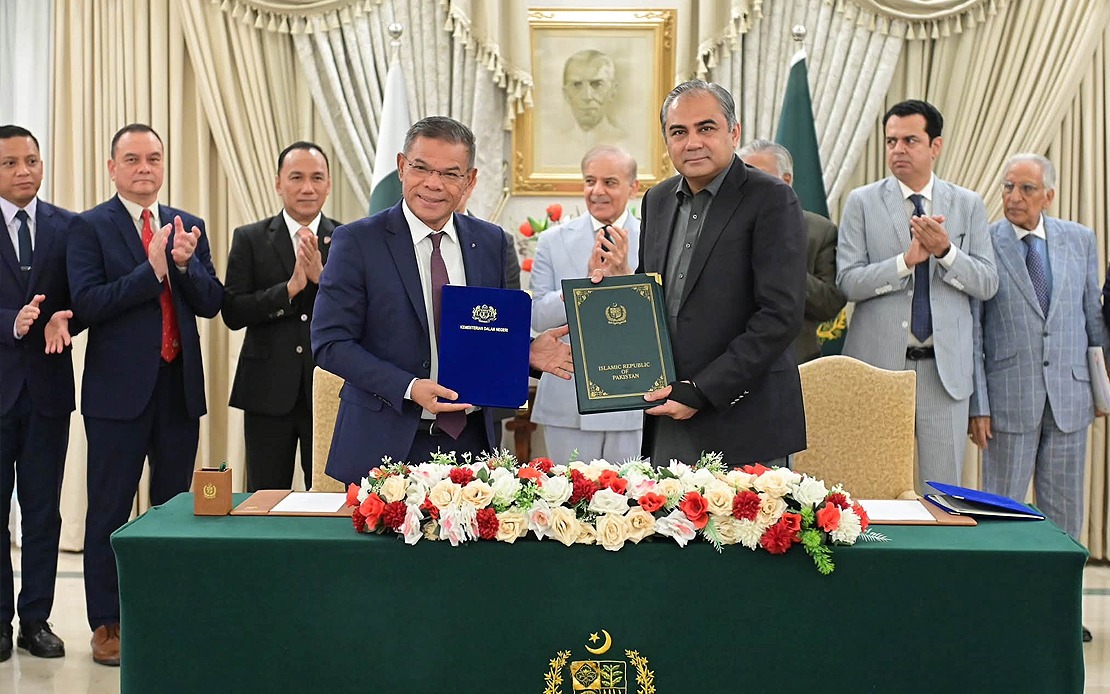
Malaysia and Pakistan have formalised a landmark agreement on prisoner transfers, adding a significant new dimension to their bilateral security and legal cooperation. Home Minister Datuk Seri Saifuddin Nasution Ismail signed the International Transfer of Prisoners (ITOP) Treaty with Pakistan's Interior and Narcotics Control Minister Syed Mohsin Raza Naqvi at the Prime Minister's Office in Islamabad, with Prime Minister Muhammad Shehbaz Sharif witnessing the ceremonial signing. The agreement represents a structured approach to managing the shared challenge of incarcerated nationals across borders, addressing humanitarian concerns while strengthening institutional ties between the two Commonwealth nations.
The treaty emerges from an extensive negotiation process spanning multiple rounds of discussions since September 2025, demonstrating the sustained diplomatic effort required to harmonise differing legal systems and correctional practices. Malaysia's Home Ministry coordinated closely with the Foreign Ministry, Attorney General's Chambers, Malaysian Prisons Department, and Royal Malaysia Police to develop terms acceptable to both governments. Cabinet approval, granted on May 13, signals the high-level political commitment underpinning this agreement, reflecting both administrations' recognition that prisoner transfers serve broader strategic interests in regional stability and bilateral relations.
The core mechanism of the treaty permits Malaysian prisoners currently serving time in Pakistani facilities to be repatriated to Malaysia to complete their remaining sentences within the domestic correctional system. Conversely, Pakistani nationals held in Malaysian prisons may be transferred back to Pakistan to finish their sentences there. This reciprocal arrangement addresses a longstanding practical challenge: prisoners incarcerated far from home often struggle with isolation, cultural displacement, and limited family contact, complicating rehabilitation efforts and reintegration prospects upon release. By enabling transfers to the prisoner's country of origin, the agreement acknowledges that effective rehabilitation must be contextually appropriate.
Beyond logistical convenience, the treaty framework emphasises rehabilitation as a shared objective. Both nations recognise that prisoners adapt more effectively to correction and reformation programmes when these are culturally aligned and conducted in familiar environments. Language barriers, dietary requirements, religious observance, and access to family support networks all factor into successful rehabilitation outcomes. The ITOP Treaty thus positions prisoner welfare alongside security considerations, creating space for evidence-based correctional approaches that reduce recidivism and facilitate smoother reintegration into society after release.
For Malaysia, the agreement holds particular significance given the volume of Malaysian nationals detained abroad and the resource implications of maintaining support networks across distant jurisdictions. Repatriating prisoners reduces consular burden and administrative costs while improving oversight of rehabilitation progress. From Pakistan's perspective, the treaty demonstrates willingness to cooperate on criminal justice matters with a key regional partner, enhancing Pakistan's standing within South and Southeast Asian security architecture. The bilateral nature of the arrangement ensures neither country bears disproportionate burden.
This treaty also reflects evolving international norms around prisoner rights and humane detention standards. The United Nations' Mandela Rules and international best practice frameworks increasingly encourage home-country imprisonment as preferable to foreign detention, citing psychological wellbeing and family-centred rehabilitation philosophy. Malaysia and Pakistan's formal adoption of these principles signals alignment with global correctional trends and commitment to international humanitarian standards, matters of genuine concern for civil society observers monitoring prison conditions across Asia.
The agreement's timing speaks to broader regional dynamics. As Southeast Asia and South Asia intensify economic and security interdependencies, legal frameworks governing cross-border movements of persons—whether criminals or otherwise—become increasingly important. Prisoner transfer treaties facilitate judicial cooperation more broadly, building trust between justice systems and creating infrastructure for handling extradition requests, witness testimony exchanges, and joint investigations. The ITOP Treaty thus functions as a foundational instrument supporting deeper security partnerships.
For Malaysian readers, understanding this treaty's implications requires recognising it as part of a longer trajectory of institutional deepening between Kuala Lumpur and Islamabad. Both nations share Commonwealth legal heritage, Muslim-majority populations, and strategic interests in maritime security and counterterrorism cooperation. Prisoner transfers, while seemingly technical, reflect maturation of bilateral mechanisms and confidence in reciprocal legal arrangements. This trust-building matters when either nation might eventually require Pakistan's or Malaysia's cooperation on more complex transnational crime matters.
The treaty's practical impact will depend substantially on implementation details—protocols for assessing transfer eligibility, timelines for processing requests, dispute resolution mechanisms, and coordination between respective justice systems. Successful administration requires sustained bureaucratic cooperation and goodwill between Home Ministries, correctional authorities, and diplomatic missions. Early implementation successes or challenges will likely influence expansion of similar agreements with other nations, establishing precedent for how Malaysia approaches prisoner management in a globalised context.
Minister Saifuddin Nasution's characterisation of the treaty as strengthening Malaysia-Pakistan relations underscores how security cooperation extends beyond traditional military or intelligence domains into criminal justice architecture. As transnational crime evolves—drug trafficking, human smuggling, organised crime—countries increasingly need mechanisms enabling coordinated responses. Prisoner transfer treaties, though humanitarian in purpose, simultaneously serve security functions by facilitating intelligence gathering and ensuring dangerous offenders serve time in secure facilities under cooperative oversight.
Looking forward, this agreement positions Malaysia favourably for negotiating similar arrangements with other trading and diplomatic partners. Australia, Singapore, Thailand, and several European nations maintain substantial prisoner transfer frameworks, and Malaysia's capacity to execute such agreements credibly enhances its attractiveness as a regional partner. The treaty thus carries symbolic weight beyond its immediate bilateral scope, signalling Malaysia's professionalism in managing international legal obligations and commitment to institutional standards that international partners value.
The ITOP Treaty ultimately represents pragmatic statecraft addressing genuine humanitarian and security imperatives simultaneously. Prisoners transferred home gain access to rehabilitative resources and family support, improving long-term outcomes; both governments reduce administrative strain and enhance correctional effectiveness; and bilateral institutions develop trust and capability to address transnational challenges collaboratively. As Malaysia continues navigating increasingly complex regional security environments, such agreements constitute essential infrastructure for effective governance and credible international partnerships.

