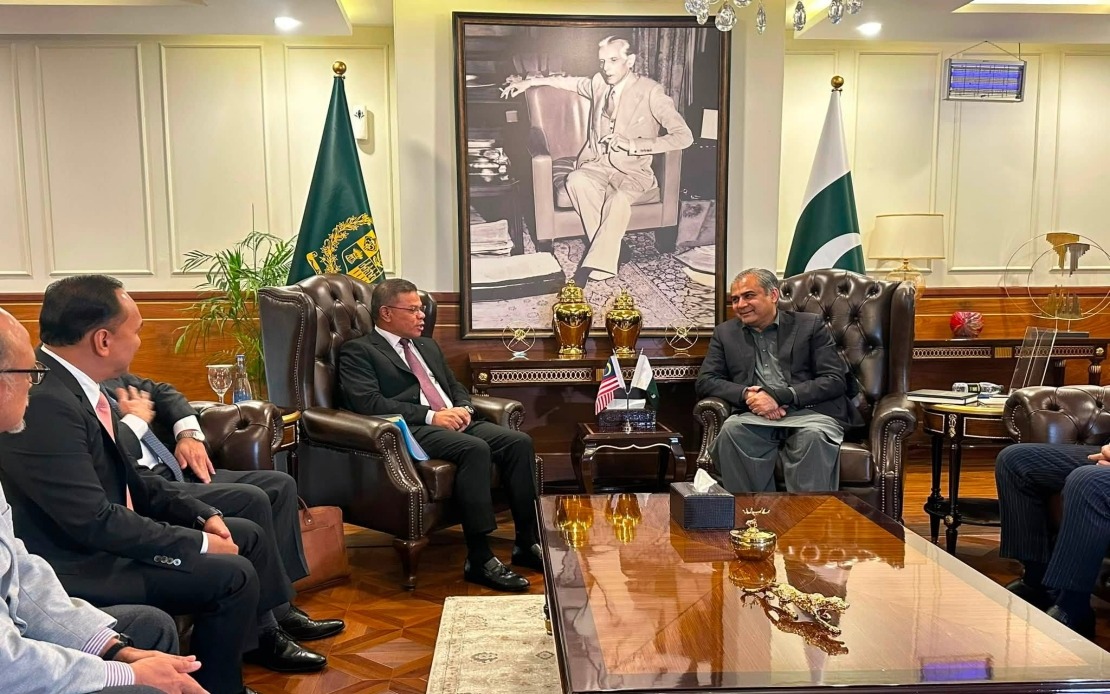
Malaysia and Pakistan are moving to deepen their bilateral relationship through expanded cooperation on security matters and law enforcement operations, according to Malaysian Home Minister Datuk Seri Saifuddin Nasution Ismail. The minister outlined the scope of the enhanced partnership during an official visit to Islamabad where he held substantive talks with Pakistan's Federal Minister of Interior and Narcotics Control, Syed Mohsin Raza Naqvi.
The two-day visit, which commenced earlier this week, provided both nations with an opportunity to evaluate their existing security frameworks and identify areas where collaborative efforts could yield tangible results. According to Saifuddin Nasution, the bilateral discussions encompassed a comprehensive range of law enforcement challenges facing the two countries, reflecting the multifaceted nature of modern security threats that transcend geographical boundaries. The agenda included matters spanning police coordination mechanisms, intelligence exchange protocols, strategies for combating organised terrorism, narcotics trafficking suppression, and initiatives to address crime that spans international borders.
Beyond these traditional law enforcement domains, the talks extended into emerging security concerns that have gained prominence in recent years. Cybersecurity emerged as a significant discussion point, underscoring the recognition by both governments that digital threats represent an increasingly critical dimension of national security. Immigration management, human trafficking networks, prisoner handling protocols, and maritime security enforcement also featured prominently in the discussions, demonstrating that Malaysia and Pakistan view security through an integrated lens encompassing both conventional and novel challenges.
The Malaysian minister articulated a vision that transcended routine bilateral engagement, characterising the visit as a platform for transforming cooperation into structured, actionable outcomes. He emphasised that the visit represented more than a ceremonial reaffirmation of historical ties; rather, it constituted a strategic effort to pool expertise and resources in response to increasingly intricate security environments. This perspective reflects a broader regional trend where countries are recognising that unilateral approaches to security challenges prove inadequate, necessitating coordinated regional and international responses.
A key institutional development emerging from the talks involves the establishment of a joint working group comprising officials from both nations' interior ministries. This mechanism is designed to serve as a permanent coordination body responsible for translating the agreements reached during high-level discussions into concrete operational initiatives. The working group structure suggests that both governments view this partnership as requiring sustained institutional engagement rather than episodic diplomatic exchanges. Such formalised arrangements typically prove more effective at ensuring continuity and accountability in implementing agreed-upon measures.
Saifuddin Nasution also highlighted Pakistan's contributions to regional peace architecture, particularly its role in facilitating dialogue aimed at promoting stability across South and Southeast Asia. In reciprocal fashion, he referenced Malaysia's experience in helping broker negotiations to resolve the longstanding Thailand-Cambodia border dispute, suggesting that both nations possess valuable expertise in conflict resolution that could inform their broader partnership. This mutual recognition of diplomatic capabilities indicates that the security cooperation extends beyond enforcement operations to encompass peace-building and conflict management dimensions.
The ceremonial dimensions of the visit reinforced the diplomatic significance attributed to the bilateral engagement. Saifuddin Nasution received a formal guard of honour from the Federal Constabulary, Pakistan's paramilitary force, and visited the Martyrs' Memorial in Islamabad, where he paid respects to those who died in service to Pakistan. These protocols, while ceremonial in nature, carry substantial symbolic weight within the diplomatic protocol of Muslim-majority nations, acknowledging shared religious and historical bonds alongside formal state-to-state relationships. The minister subsequently attended a special parade at Islamabad Police Lines, where he interacted with senior and junior police personnel, facilitating informal relationship-building among operational security professionals.
The timing of this enhanced security cooperation reflects broader geopolitical trends in South and Southeast Asia, where regional powers are strengthening bilateral partnerships amid evolving security dynamics. Pakistan, located at the intersection of South Asia, Central Asia, and the Middle East, faces distinctive security challenges stemming from terrorism, transnational crime, and regional conflicts. Malaysia, as a strategically positioned Southeast Asian nation with significant maritime interests and exposure to transnational criminal networks, shares many similar security concerns. The convergence of these challenges creates logical grounds for expanded cooperation.
For Malaysian stakeholders, the strengthened ties with Pakistan carry implications for domestic security operations. Enhanced intelligence sharing could improve Malaysia's capacity to counter terrorist financing networks and dismantle drug trafficking routes that frequently utilise Pakistani networks. The maritime enforcement dimension assumes particular significance given Malaysia's extensive coastline and involvement in regional maritime security arrangements. Pakistani expertise in managing transnational security challenges, refined through decades of confronting complex threats, could inform Malaysian approaches to similar problems.
The message conveyed by Saifuddin Nasution, relaying greetings from Prime Minister Datuk Seri Anwar Ibrahim, signals that this security partnership enjoys high-level political backing within the Malaysian government. Such endorsement from the prime ministerial office ensures that security cooperation receives the necessary bureaucratic priority and resource allocation to progress beyond preliminary agreements. The involvement of the prime minister's office also suggests that Malaysia views its relationship with Pakistan as integral to broader foreign policy objectives, not merely as a bilateral security arrangement.
Regionally, Malaysia's deepening ties with Pakistan may influence Southeast Asian security dynamics, particularly given Malaysia's role as a significant ASEAN member. Pakistani expertise in counter-terrorism and organised crime prevention could indirectly benefit regional security architecture through knowledge transfer and capacity-building initiatives that Malaysia might facilitate within ASEAN frameworks. Conversely, Pakistan may benefit from exposure to Southeast Asian approaches to maritime security and transnational crime prevention, which ASEAN nations have developed through years of collaborative regional initiatives.
The practical manifestation of these agreements through the working group mechanism will ultimately determine whether this diplomatic engagement translates into measurable security outcomes. The establishment of institutional structures designed to ensure continuity and accountability suggests that both governments have committed resources and political capital to make this partnership substantive rather than merely symbolic. The success of such arrangements typically depends on whether they facilitate genuine operational coordination among security agencies or remain largely ceremonial in practice.

