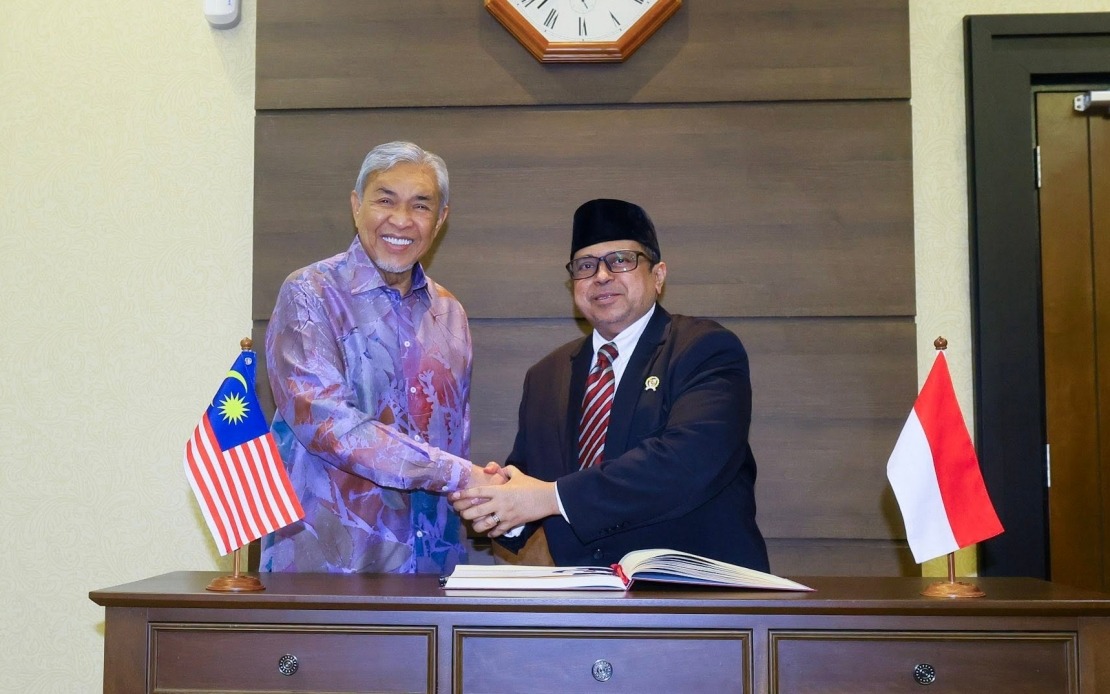
Malaysia and Indonesia have committed to deepening their partnership across the halal sector, signalling a strategic pivot toward cementing the region's dominance in one of the world's fastest-growing religious compliance markets. The commitment emerged during discussions between Deputy Prime Minister Datuk Seri Dr Ahmad Zahid Hamidi and Indonesian officials visiting Parliament on June 25, with both nations recognising the untapped potential of coordinated development in halal certification, manufacturing, and trade.
The focal point of this renewed cooperation involves establishing three interconnected institutional frameworks designed to elevate halal standards across jurisdictional boundaries. The Malaysia-Indonesia Halal Council (MIHC) will serve as the primary bilateral mechanism, creating a dedicated platform for the two countries to align regulatory approaches and facilitate cross-border investment. Simultaneously, both nations envision an ASEAN Halal Council that brings together the region's ten member states under harmonised protocols, and a broader World Halal Development Council that positions Southeast Asia as the global arbiter of halal authenticity and compliance.
This architectural approach reflects a sophisticated understanding of how fragmented halal certification currently constrains commerce within Asia and internationally. Each country maintains its own standards bodies—Malaysia operates through established certification frameworks while Indonesia's Halal Product Assurance Organising Body (BPJPH), represented in these talks by Dr Ahmad Haikal Hassan, brings distinct regulatory expertise. The multiplicity of standards has created friction for manufacturers seeking to serve regional markets, requiring separate certifications for each jurisdiction despite the underlying principles remaining essentially consistent. By institutionalising dialogue through these councils, both governments aim to eliminate redundancy whilst preserving the integrity that Muslim consumers expect.
Dr Ahmad Zahid, who chairs the Malaysia Halal Industry Development Council, positioned this cooperation as a logical extension of the countries' historical proximity and shared Islamic heritage. The Deputy Prime Minister noted that Malaysia and Indonesia's longstanding bilateral relationship provides the foundation necessary to pioneer integrated halal ecosystems at both regional and international scales. This framing carries significance beyond rhetorical flourish—it suggests that neither country views halal development as a zero-sum competition but rather as a complementary expansion where one nation's certification strength buttresses the other's market access.
The emphasis on trade expansion and investment harmonisation addresses real commercial constraints that have limited the halal sector's growth potential. Current estimates value the global halal market at approximately 2 trillion US dollars, yet Southeast Asian producers capture a disproportionately small share despite possessing the region's largest Muslim populations and manufacturing infrastructure. Certification barriers, inconsistent labelling requirements, and differing ingredient approval protocols force companies to navigate Byzantine regulatory landscapes. The proposed councils would systematically eliminate these friction points, allowing manufacturers in either country to produce goods with confidence that they will meet acceptance across the region.
The initiative also carries implications for Malaysia's competitive position within Southeast Asia's emerging economies. Indonesia, with its larger population and expansive domestic market, represents both an opportunity and a potential rival in halal sector development. By formalising cooperation through institutional structures rather than informal arrangements, Malaysia positions itself as a standard-setter and thought leader rather than risking subordination to Indonesia's sheer demographic scale. The councils create mechanisms through which Malaysian expertise in halal certification and Islamic finance can be deployed regionally, generating economic returns beyond Malaysia's borders.
From a geopolitical perspective, the halal sector framework demonstrates how Southeast Asian nations increasingly pursue economic integration through sectoral specialisation and standards harmonisation. Unlike the broader Regional Comprehensive Economic Partnership, which addresses trade comprehensively, this approach focuses on deepening cooperation within a specific market where Muslim-majority nations possess inherent advantages. This targeted methodology may offer a template for how ASEAN countries can leverage shared religious and cultural identity to create competitive advantage in global commerce.
The proposed World Halal Development Council represents perhaps the most ambitious component, suggesting aspirations to reshape global supply chains around Southeast Asian standards rather than merely adopting external frameworks. Currently, international halal governance remains dispersed across multiple Islamic organisations and national bodies without clear centralised authority. A council headquartered in the region could potentially establish Southeast Asia as the reference point for halal authenticity, positioning Malaysian and Indonesian institutions as ultimate arbiters whom global manufacturers must satisfy. This would represent a significant shift in how halal certification functions globally.
Implementing these frameworks will require navigating genuine complexities despite the apparent consensus between governments. Indonesia and Malaysia maintain different institutional structures for halal oversight, varying ingredient approval lists, and distinct cultural preferences within Islamic jurisprudence. The BPJPH operates within Indonesia's distinctive regulatory environment, whilst Malaysia's halal ecosystem integrates Islamic finance, cosmetics, pharmaceuticals, and hospitality within a comprehensive national strategy. Reconciling these approaches demands substantive technical work beyond ceremonial council establishment.
For Malaysian businesses, particularly those in food manufacturing, pharmaceuticals, cosmetics, and hospitality, the proposed cooperation offers substantial opportunities. Companies currently certified in Malaysia could potentially leverage harmonised standards to enter Indonesian markets more rapidly and cost-effectively. Conversely, Indonesian manufacturers could access Malaysia's sophisticated Islamic finance ecosystem and established brand recognition in global halal markets. This reciprocal advantage explains why both governments view the initiative as mutually beneficial rather than unidirectional.
The timing of this announcement reflects broader regional dynamics where Southeast Asian nations increasingly recognise halal commerce as a strategic economic sector worthy of government coordination equivalent to technology, agriculture, or traditional industries. The halal market encompasses not merely food and beverages but pharmaceuticals, cosmetics, tourism, financial services, and logistics—sectors collectively representing substantial portions of both economies. By institutionalising cooperation across these diverse domains, Malaysia and Indonesia signal that halal development has matured beyond niche religious accommodation into mainstream economic policy.
Moving forward, the success of these frameworks will depend on both countries translating announced commitments into operational structures with enforcement mechanisms and dispute resolution processes. The Malaysia-Indonesia Halal Council must evolve beyond periodic meetings into a body capable of mediating standards disputes and facilitating technical harmonisation. The ASEAN and global councils require commitment from other member states and international participation respectively. These challenges notwithstanding, the initiative represents significant progress toward the regional integration of what will increasingly constitute a defining feature of Southeast Asia's role in global commerce.

