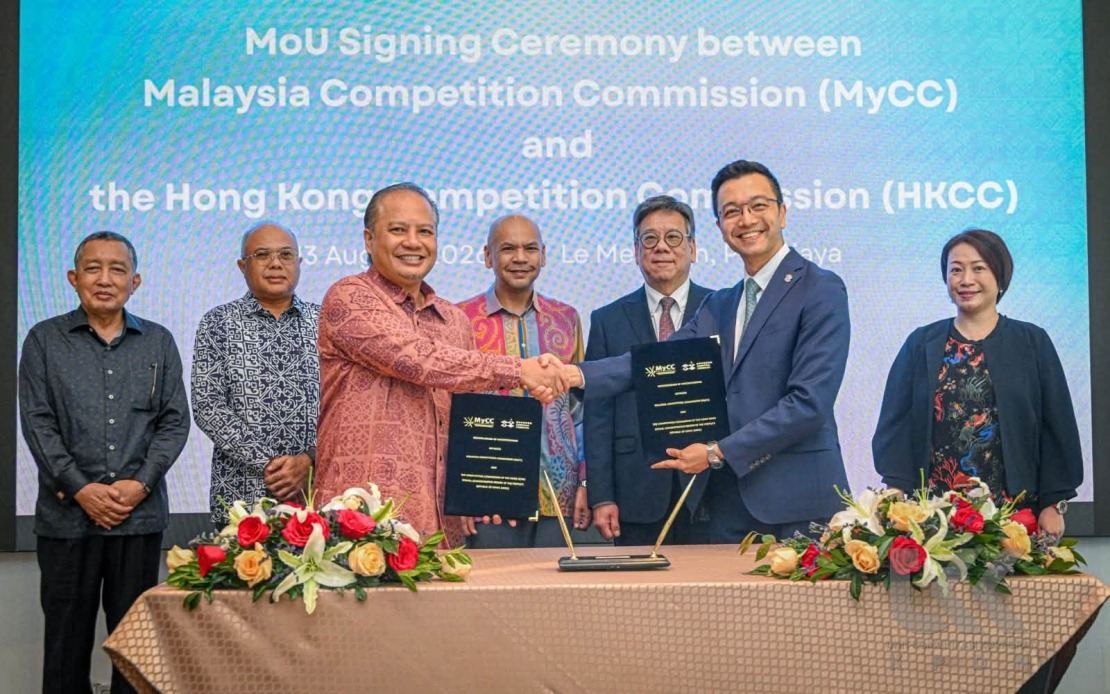
Malaysia has taken another significant step in building its international regulatory architecture by formalising cooperation with Hong Kong's competition watchdog, positioning the country as an active participant in cross-border market oversight mechanisms. The Malaysia Competition Commission (MyCC) and Hong Kong Competition Commission (HKCC) sealed the arrangement through a Memorandum of Understanding designed to create systematic channels for managing the increasingly complex landscape of regional business competition.
Domestic Trade and Cost of Living Minister Datuk Armizan Mohd Ali unveiled the agreement, emphasising that this partnership represents the fourth formal alliance MyCC has cultivated with overseas competition authorities. Previous agreements have been reached with the Türkiye Competition Authority, Korea Fair Trade Commission, and Philippine Competition Commission, demonstrating a deliberate strategic approach to establishing a network of bilateral relationships across multiple jurisdictions.
The minister framed the agreement within a broader policy context of protecting consumer interests and maintaining economic dynamism. He noted that modern business operations routinely traverse national boundaries, creating enforcement challenges that no single regulator can adequately address in isolation. This recognition reflects a fundamental shift in how competition authorities view their mandate—moving beyond territorial policing toward collaborative problem-solving across regions.
At the operational core, the MoU establishes mechanisms for exchanging intelligence on legislative developments and amendments to competition frameworks. Both authorities will maintain channels through which changes to substantive law, procedural rules, and enforcement priorities can be communicated swiftly, preventing regulatory misalignment and ensuring that businesses operating across both markets understand the evolving compliance landscape. This information-sharing dimension proves particularly valuable given the frequency with which Asian jurisdictions adapt their competition laws to address emerging digital economy issues and cross-border cartels.
The agreement goes beyond passive information exchange to encompass active collaboration on investigative techniques and enforcement methodologies. Officers from MyCC and HKCC may be seconded to each other's institutions, facilitating knowledge transfer about investigative practices, prosecution strategies, and evidentiary standards. Workshops and structured training initiatives will build institutional capacity, ensuring that both agencies develop complementary expertise rather than duplicating efforts or operating from divergent analytical frameworks.
Research cooperation constitutes another pillar, enabling the two bodies to jointly examine competition phenomena that affect markets in both jurisdictions. By pooling analytical resources and comparative data, MyCC and HKCC can develop more sophisticated understanding of how global supply chains, digital platforms, and multinational enterprises shape competitive dynamics in Southeast Asia and East Asia, translating these insights into more targeted enforcement activities.
For Malaysian businesses and consumers, this arrangement carries tangible implications. Companies engaged in regional operations gain clarity about how competition authorities in neighbouring jurisdictions view coordinated conduct or market-sharing arrangements. The prospect of coordinated enforcement creates incentives for compliance with both authorities' standards, reducing opportunities for regulatory arbitrage where businesses might exploit gaps between national regimes. Conversely, Malaysian enterprises benefit from knowing that their larger regional competitors face similar oversight, creating a more level competitive field.
The Minister's statement underscores that KPDN intends to continue expanding MyCC's international footprint systematically. This incremental approach—establishing bilateral partnerships with specific trading partners and neighbouring regulators—reflects pragmatic recognition that competition cooperation functions most effectively when grounded in shared economic interests and manageable administrative frameworks. Rather than pursuing overly ambitious multilateral arrangements that may prove difficult to operationalise, Malaysia is constructing a web of bilateral relationships that collectively enhance enforcement capacity.
The timing of this agreement aligns with broader regional integration trends, particularly as ASEAN economies increasingly coordinate on digital economy regulation and consumer protection. Hong Kong's position as a major financial centre and logistics hub means that competition enforcement coordination carries significance for supply chains extending through Southeast Asia. Cartels operating across Hong Kong and Malaysian markets, or anticompetitive conduct by multinational firms affecting consumers in both jurisdictions, become more difficult to sustain when authorities share investigative leads and coordinate enforcement timing.
From a capacity-building perspective, the partnership offers MyCC opportunities to learn from HKCC's experience managing competition enforcement in a highly internationalised economy. Hong Kong's regulatory environment presents comparable challenges around dominant online platforms, cross-border e-commerce, and complex supply chain arrangements—issues that increasingly preoccupy Malaysian regulators as the domestic economy becomes more integrated with regional digital networks.
The agreement also signals to the international business community that Malaysia takes competition law enforcement seriously and maintains institutional standards consistent with other developed economies. This positioning carries importance for attracting foreign direct investment and establishing Malaysia as a transparent, rule-based business environment where anticompetitive practices face genuine consequences. Investors increasingly view regulatory quality and enforcement consistency as competitiveness factors alongside labour costs and infrastructure.
Looking forward, the success of this MoU will depend on practical implementation rather than formal signatures. Regular meetings, active use of information-sharing channels, and willingness to undertake joint investigations where warranted will determine whether the agreement translates into tangible enforcement outcomes. The structural arrangements for communication, dispute resolution if authorities reach different enforcement conclusions, and resource allocation will prove critical to functionality. Both authorities will need to balance transparency obligations in their respective legal systems with confidentiality requirements that encourage frank information exchange.

